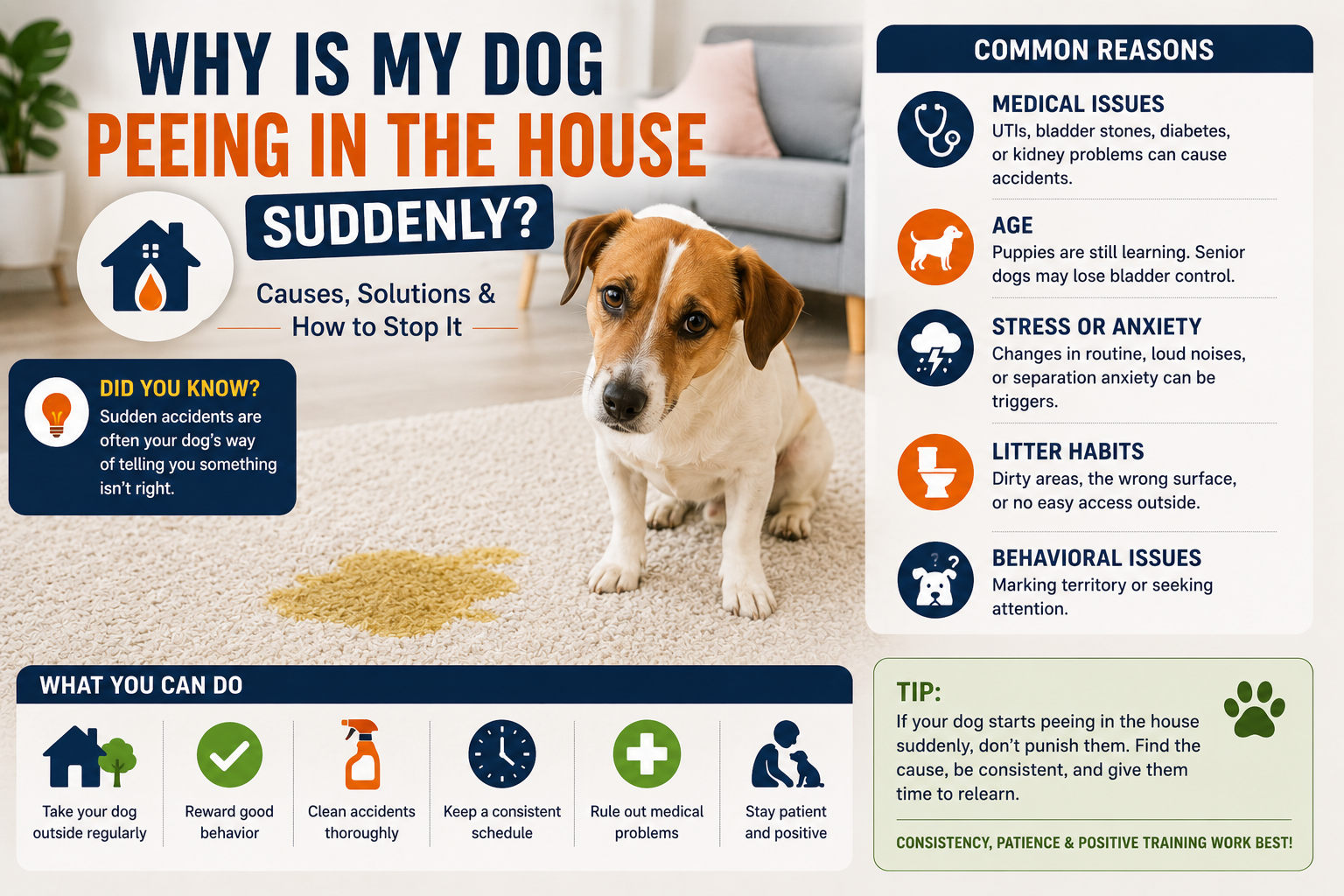
A previously house-trained dog that suddenly begins urinating indoors should not automatically be treated as disobedient. Urinary tract problems, increased urine production, pain, age-related changes, medication effects, mobility limitations, stress, marking, or changes in routine can all contribute. A sudden change deserves investigation before retraining or punishment.
Quick Answer
Increase opportunities for calm outdoor toilet breaks, clean accidents without punishment, and record when and how much the dog urinates. Contact a veterinarian when the change is sudden or persistent, especially if your dog strains, urinates very frequently, drinks more than usual, has blood in the urine, seems painful, or cannot pass urine normally.
First Ask: Is More Urine Being Produced?
Large puddles and increased thirst may indicate that the dog is producing more urine than before. Kidney, hormonal, metabolic, and medication-related problems can alter thirst and urine volume. This pattern is different from a dog that repeatedly passes tiny amounts.
Frequent Small Urinations
Repeated squatting with small amounts can occur with bladder or urinary irritation. Watch for licking around the urinary opening, blood, discomfort, strong odor, urgency, or asking to go out repeatedly. Difficulty passing urine can become urgent.
Other Medical Contributors
Pain and Mobility
A dog with arthritis, back pain, or weakness may not reach the door quickly enough or may avoid stairs and slippery floors.
Age-Related Changes
Senior dogs can develop medical or cognitive changes that affect house training. A veterinary examination is important before assuming the dog has simply “forgotten.”
Medication
Some medications increase thirst and urination. Ask the prescribing veterinarian whether this is expected rather than withholding water or stopping the drug.
Behavior and Environment Still Matter
Once medical causes are considered, look at routine changes, new pets, visitors, moving house, altered walk schedules, fear, and marking behavior. Behavior-related urination often requires management that addresses the trigger rather than punishment.
What to Record for Your Veterinarian
- Large puddles versus tiny frequent spots.
- How often your dog asks to go outside.
- Any straining, blood, odor, licking, or pain.
- Water intake and appetite.
- New medications or supplements.
- Whether accidents happen while awake, asleep, excited, or left alone.
Do Not Punish the Accident
Punishment does not treat infection, increased urine production, pain, or fear and can make a dog avoid urinating in front of you. Clean the area thoroughly, supervise when practical, and provide more frequent toilet opportunities while the cause is being investigated.
Emergency Urinary Signs
A dog that repeatedly strains but produces little or no urine, appears severely painful, develops a swollen abdomen, vomits, becomes weak, or collapses needs prompt veterinary care. Inability to urinate can be life-threatening.
Related Virixoo Guides
If accidents are accompanied by excessive thirst, read Why Is My Dog Drinking So Much Water?. If your dog strains and you are unsure whether the problem is urination or defecation, see Why Is My Dog Constipated?.
Sources & References
The American Animal Hospital Association notes that excessive thirst or urination can be associated with important health problems and should be discussed with a veterinarian.
FAQ
Why is my older dog suddenly peeing indoors?
Senior dogs can develop urinary disease, increased urine production, mobility problems, medication effects, or cognitive changes. A veterinary examination should come before assuming the issue is purely behavioral.
Should I limit water to stop accidents?
No, not unless your veterinarian specifically instructs you. Restricting water can be dangerous when disease is causing increased thirst or fluid loss.
Could stress cause indoor urination?
Yes, stress and marking can contribute, but a sudden change in a previously reliable dog should still be assessed for medical causes.
Bottom line: Sudden house-soiling is information, not misbehavior. Identify the urination pattern, keep water available, avoid punishment, and rule out medical causes before focusing on retraining.