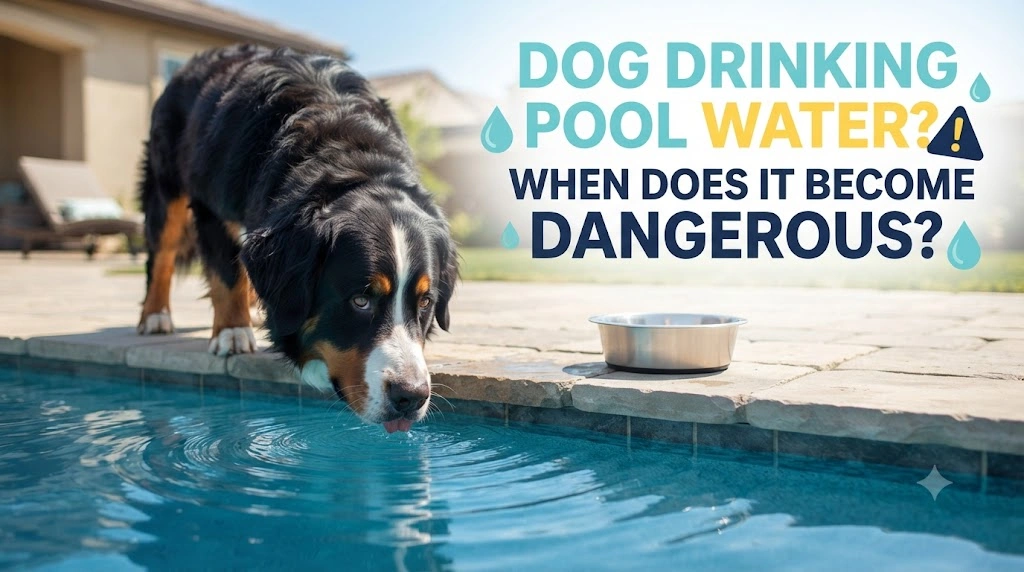
A few accidental licks of properly maintained pool water are usually different from repeatedly drinking large amounts. The main risks depend on what is in the water, how much the dog consumes, whether the pool uses salt, whether algae or chemicals are present, and whether the dog develops vomiting, weakness, diarrhea, tremors, or abnormal behavior.
Quick Answer
Keep a bowl of fresh water beside the pool and interrupt repeated pool drinking. Do not encourage the dog to use the pool as a water source. If the dog consumes a large amount of salt water or chemically treated water and then develops vomiting, diarrhea, weakness, confusion, tremors, seizures, or severe lethargy, seek veterinary care promptly.
Why Dogs Drink Pool Water
Dogs may drink while swimming because water repeatedly enters the mouth. Others become thirsty during play and simply use the nearest source. Some dogs seem attracted to moving or cool water. Providing easy access to fresh water before, during, and after swimming can reduce the temptation.
Chlorinated Pools
Properly maintained chlorinated pool water is diluted, but it is still not intended as drinking water. Small incidental amounts may cause no problem, while larger amounts can irritate the gastrointestinal tract and lead to vomiting or diarrhea. Concentrated pool chemicals are much more dangerous than diluted pool water and must be stored securely away from pets.
Saltwater Pools
Saltwater pools contain less salt than seawater but can still contribute to excessive sodium intake if a dog drinks a large volume. Dogs should not use any salt-containing pool as their main water source.
Algae and Poorly Maintained Water
Visible algae, stagnant water, or an unfamiliar outdoor water source raises additional concern. Some algae can produce dangerous toxins. Never allow a dog to drink from water with suspicious scum, discoloration, foul odor, or posted warnings.
Large-Volume Drinking Can Be a Problem by Itself
Even fresh water can be dangerous in extreme amounts consumed rapidly. Dogs that repeatedly swallow water during swimming can develop electrolyte disturbances. Supervise enthusiastic swimmers and give frequent breaks.
Signs to Watch For
| Sign | Why It Matters |
|---|---|
| Repeated vomiting | May indicate gastrointestinal irritation or more significant exposure |
| Weakness or confusion | Can occur with electrolyte disturbances |
| Tremors or seizures | Requires urgent veterinary care |
| Severe diarrhea | Can worsen dehydration and electrolyte changes |
| Abdominal bloating after swimming | May reflect large-volume water intake or another problem |
Prevent Repeated Drinking
Offer fresh water in a familiar bowl close to the pool. Call the dog out for regular rest breaks and avoid throwing toys continuously if the dog swallows water every time. A dog that gulps water while retrieving may need shorter swim sessions.
Rinse After Swimming
Rinsing the coat with fresh water can remove residual chlorine, salt, or pool chemicals and may reduce skin irritation. Dry the ears and coat appropriately for your dog, especially if the dog is prone to skin or ear problems.
What Not to Do
- Do not let the pool replace a fresh drinking bowl.
- Do not allow access to concentrated pool chemicals.
- Do not ignore vomiting or neurologic signs after heavy drinking.
- Do not assume clear-looking outdoor water is automatically safe.
When to Contact a Veterinarian
Contact a veterinarian if your dog drinks a large amount, repeatedly vomits, develops significant diarrhea, seems weak, or behaves abnormally. Seek emergency care for tremors, seizures, collapse, severe confusion, or rapidly worsening weakness.
Bottom Line
Incidental pool-water licking is different from repeated large-volume drinking. Keep fresh water available, supervise swimming, reduce opportunities to gulp pool water, and seek veterinary help when gastrointestinal or neurologic signs appear after a significant exposure.
Swimming Supervision Matters
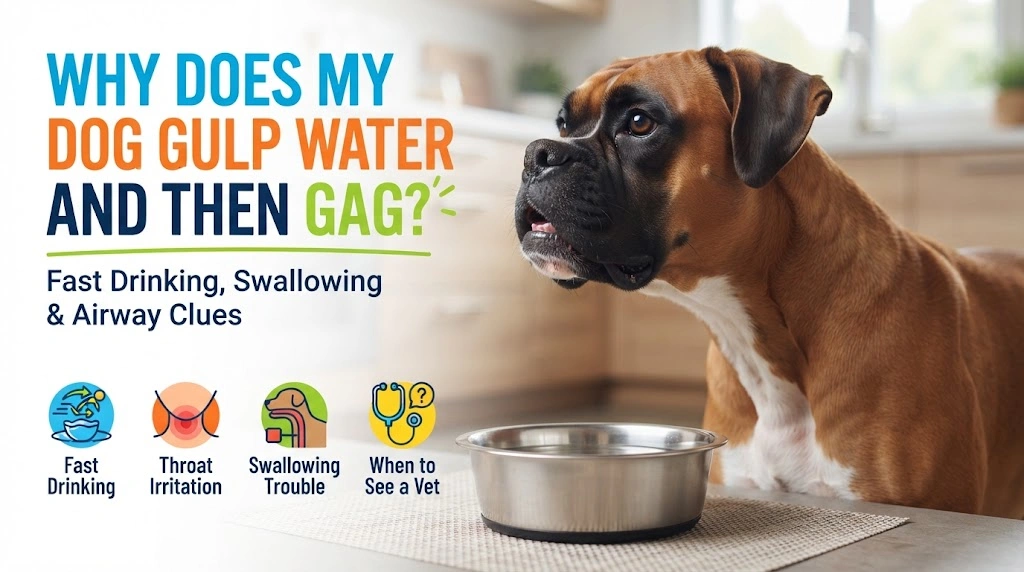
Dogs can swallow significant water during repeated toy retrieval, especially when they bite at splashes or carry a toy with the mouth partly open. Give frequent breaks on land and watch for coughing, bloating, vomiting, or unusual fatigue. Shorter swim sessions are safer than continuous high-arousal retrieval for dogs that gulp water.
Fresh water should remain available during every break so the dog is not relying on the pool because of thirst.
Why Dogs Swallow More Water During Fetch
Retrieving toys from water often requires swimming with the mouth open. Water enters around the toy, and excited dogs may swallow repeatedly without obvious drinking behavior. The faster and longer the game continues, the more water can be consumed.
Plan Breaks Before the Dog Looks Tired
Bring the dog out of the pool every few minutes, offer fresh water, allow a calm rest, and observe breathing and behavior. Waiting until the dog is exhausted can allow excessive water intake and heat stress to build at the same time.
Watch for Coughing After Swimming
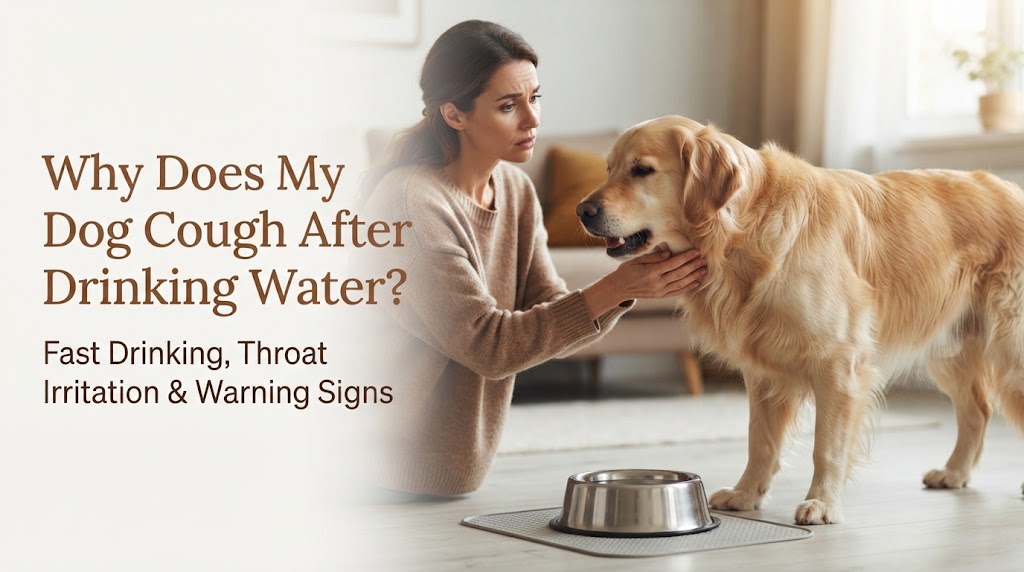
Occasional brief coughing may occur if water enters the airway, but persistent cough, breathing difficulty, extreme fatigue, or abnormal breathing after swimming deserves veterinary attention. Do not assume all post-swim coughing is harmless.
Pool Chemicals Must Be Stored Separately
Concentrated chlorine, algaecides, pH products, and other pool chemicals can be far more dangerous than diluted pool water. Keep containers closed, elevated, and inaccessible. If a dog contacts or swallows a concentrated product, contact a veterinarian or poison resource immediately and have the label available.
Saltwater Exposure Deserves Extra Caution
Repeated intake of salty water can disturb sodium balance. Early signs may include vomiting, diarrhea, weakness, or unusual behavior. Neurologic signs such as tremors or seizures are emergencies.
Fresh Water Should Be the Easy Choice
Place a large clean bowl in the shade beside the pool and refresh it often. Some dogs drink more readily if offered water during rest breaks rather than after they are already exhausted and thirsty.
After the Swim
Rinse the coat, dry the dog, check ears and paws, and continue to observe for several hours if the dog swallowed noticeable amounts of water. Call a veterinarian if vomiting, weakness, bloating, abnormal behavior, or breathing changes appear.
Why Fresh Water Before Swimming Helps
Offer fresh water before the dog enters the pool so it does not begin the session already thirsty. During play, call the dog out regularly and offer the bowl again. This simple routine can reduce intentional drinking from the pool even though it cannot prevent every accidental swallow.
What If the Dog Loves to Bite at Splashes?
Dogs that snap repeatedly at splashing water can swallow more than owners realize. Redirect to calmer swimming or remove the dog from the pool for a break. Avoid spraying water directly at the face as a game, because this can increase gulping and aspiration risk.
Why Symptoms After Swimming Need Context
Vomiting may come from swallowed pool water, exertion, heat, or another problem. Weakness and confusion are more concerning, especially after large-volume water intake. Tell the veterinarian whether the pool was chlorinated, saltwater, recently chemically treated, or visibly contaminated and approximately how long the dog was swimming.
What to Tell the Vet After a Significant Pool-Water Exposure
Report whether the pool was chlorinated, saltwater, recently treated with chemicals, or contaminated with algae. Estimate how long the dog was swimming and whether it was repeatedly retrieving toys or biting at splashes. Mention vomiting, diarrhea, coughing, weakness, tremors, or behavioral changes and how soon they began after swimming.
This timeline helps the veterinary team decide whether the concern is gastrointestinal irritation, electrolyte disturbance, aspiration, heat stress, or another problem.
What to Tell the Vet After a Significant Exposure
Report whether the pool was chlorinated, saltwater, recently treated with chemicals, or contaminated with algae. Estimate how long the dog was swimming and whether it was repeatedly retrieving toys or biting at splashes. Mention vomiting, diarrhea, coughing, weakness, tremors, or behavioral changes and how soon they began after swimming.
This timeline helps the veterinary team decide whether the concern is gastrointestinal irritation, electrolyte disturbance, aspiration, heat stress, or another problem. If concentrated chemicals may have been swallowed, bring the product label or a clear photo of it.
How to Make Future Swimming Safer
Offer fresh water before the dog enters the pool, schedule frequent land breaks, and stop play before the dog becomes exhausted. Avoid games that encourage repeated biting at splashes. Rinse the coat after swimming and supervise access to the pool area even when the dog is not actively swimming. Dogs that repeatedly gulp water may need shorter sessions or different water activities.