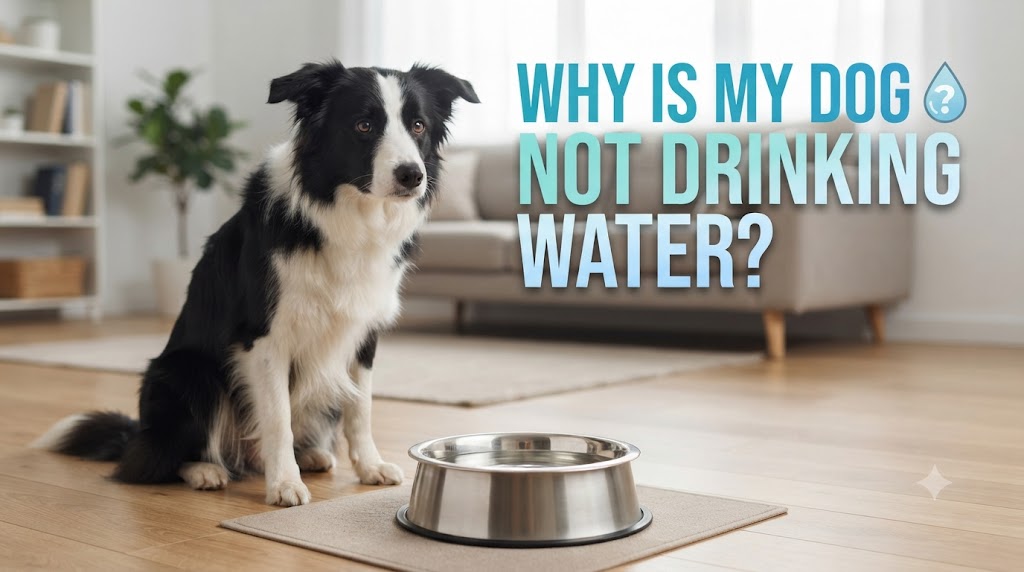
A dog drinking less than usual is not automatically dehydrated, but a sudden change deserves attention. Some dogs drink less because they are eating wet food, exercising less, or living in cooler weather. Others avoid water because they feel nauseated, have mouth pain, are weak, or cannot swallow comfortably. The safest approach is to look at the whole dog rather than trying to force a specific amount of water.
Quick answer
Keep fresh water freely available in clean bowls and confirm that your dog can reach them easily. Watch appetite, urination, gum moisture, energy, vomiting, diarrhea, and any sign of pain. Do not syringe large amounts of water into an unwilling dog. Contact a veterinarian when reduced drinking persists or occurs with illness, and seek urgent care for severe weakness, repeated vomiting, inability to swallow, collapse, or signs of significant dehydration.
First confirm that intake really changed
Fewer trips to the bowl do not always mean a problem. Wet or fresh food contains more moisture than dry kibble, so a diet change can reduce visible drinking. Cooler temperatures and lower activity can also lower water needs. In contrast, heat, exercise, nursing, and some medications increase them.
If you are concerned, measure how much water you place in the bowl over 24 hours and note whether another pet shares it. Do not withhold water to make measurement easier. The number is only useful when considered with diet, weather, activity, and urine output.
Common reasons a dog may drink less
Nausea
A nauseated dog may approach the bowl, lick the lips, swallow repeatedly, then turn away. Nausea occurs with many conditions, so this pattern tells you the dog feels unwell but does not identify the cause.
Mouth or dental pain
A fractured tooth, gum disease, mouth ulcer, foreign object, or jaw pain can make drinking uncomfortable. Watch for drooling, bad breath, facial swelling, food dropping from the mouth, or pawing at the face.
Difficulty bending down
Neck, back, or limb pain may make a low bowl difficult to reach. If the dog also struggles to rise, avoids stairs, or seems stiff, mention those signs to your veterinarian.
Stress or unfamiliar surroundings
Travel, boarding, a new home, or a noisy environment can temporarily disrupt routines. A dog that is otherwise bright may drink when placed in a quiet area. Persistent refusal should not automatically be blamed on stress.
How to check hydration safely
No single home test accurately measures dehydration. The often-repeated skin-tent test is influenced by age, body condition, and individual anatomy. Gum moisture, recent fluid loss, urine output, behavior, and a veterinary examination provide a better overall picture.
If your dog allows it, the gums are usually moist rather than sticky or dry. Watch for unusual weakness, sunken-looking eyes, marked lethargy, or reduced urination. Significant dehydration can affect circulation and organ function, so suspected moderate or severe dehydration requires professional assessment.
Vomiting and diarrhea change the risk
A dog losing fluid through repeated vomiting or diarrhea can become dehydrated even if it occasionally drinks. If every drink triggers more vomiting, offering larger bowls does not solve the problem. Puppies, small dogs, seniors, and dogs with chronic disease may become unstable faster during ongoing fluid loss.
Contact a veterinarian based on the dog’s age, size, medical history, duration of signs, and ability to keep water down. Do not wait for a universal “safe” number of hours.
Make water easy to reach
- Wash bowls regularly so food residue, hair, and biofilm do not build up.
- Place water where the dog can reach it without unnecessary stairs.
- Offer more than one station in a large home.
- Separate pets if one blocks access.
- Keep water away from harsh cleaning chemicals and extreme heat.
Do not force water into the mouth
Syringing water into an unwilling dog can cause aspiration if swallowing is abnormal. It can also create stress and does not address the reason the dog refuses water. A dog that is too weak to drink, coughs when drinking, or cannot coordinate swallowing needs veterinary evaluation rather than forced oral fluids.
Track the whole pattern
| Observation | Why it matters |
|---|---|
| Approximate water intake | Shows whether the change is mild or persistent |
| Urination | Reduced or increased output provides important context |
| Food intake | Loss of both appetite and thirst raises concern |
| Vomiting or diarrhea | Shows active fluid loss |
| Energy and mobility | Weakness or collapse increases urgency |
Food moisture can change bowl habits
Dry kibble contains relatively little moisture compared with canned or many fresh diets. A dog switching from dry food to a high-moisture diet may naturally visit the bowl less often. The reverse can happen after switching to dry food. Always use your dog’s own normal routine as the baseline rather than comparing one dog with another.
What counts as a meaningful change?
One quiet afternoon is less informative than a consistent change over a day or more, especially if activity or weather is different. A dog that normally drinks after every walk but suddenly ignores water after exercise in warm conditions deserves closer observation. Reduced drinking becomes more concerning when it occurs with reduced appetite, sticky gums, vomiting, diarrhea, fever, or lethargy.
When a dog wants water but cannot drink normally
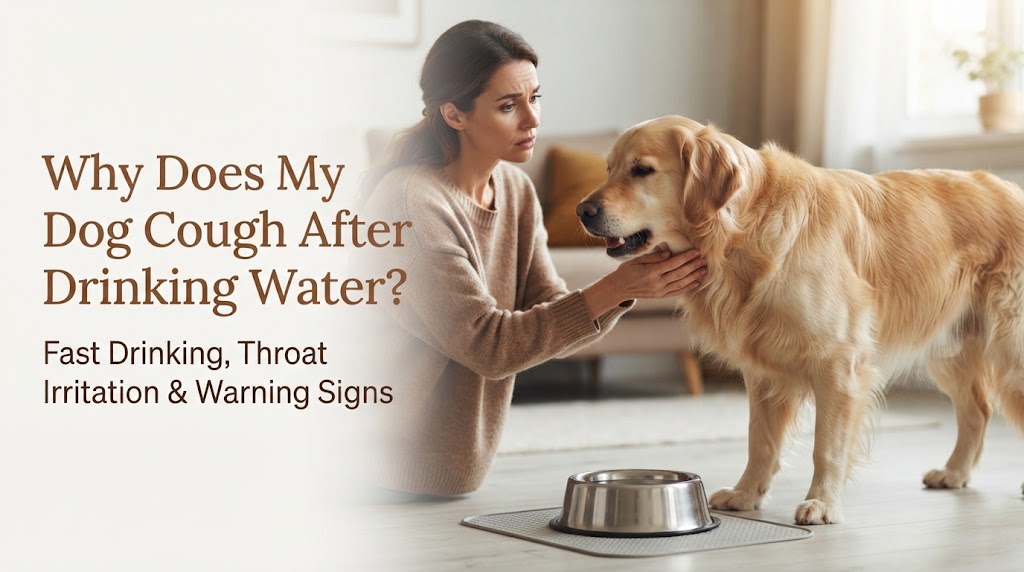
Some dogs appear thirsty but stop after trying to drink. Watch for coughing, choking, gagging, exaggerated swallowing, or water coming from the nose. These signs can indicate pain or a swallowing problem. Do not keep encouraging larger drinks if swallowing looks unsafe.
What if the dog is actually drinking too much?
If you discover that the bowl is emptying faster and your dog is urinating more, the problem is different. Read Virixoo’s guide to excessive drinking in dogs. Persistent excessive thirst should not be managed by restricting water.
Special situations
Puppies
Puppies can become unwell quickly when poor intake occurs with vomiting, diarrhea, infection, or parasites. A young puppy refusing both food and water while becoming weak should be assessed promptly.
Senior dogs
Older dogs may have dental disease, kidney disease, medication effects, mobility problems, or cognitive changes that alter drinking. A new change deserves more attention than a lifelong habit.
After surgery or sedation
Sleepiness may temporarily reduce drinking, but follow the discharge instructions you were given. Contact the clinic if your dog cannot keep water down, seems excessively sedated, or behaves very differently from what was expected.
When to call the veterinarian
Call when reduced drinking is clearly abnormal and persists, or when it appears with appetite loss, mouth pain, vomiting, diarrhea, urinary changes, or lethargy. Seek urgent care for collapse, severe weakness, repeated vomiting with inability to retain water, inability to swallow, severe breathing difficulty, seizures, or suspected poisoning.
Bottom line
When a dog drinks less, confirm the pattern without restricting water and look for the reason rather than forcing fluids. A healthy dog eating moisture-rich food may simply visit the bowl less often, while a sick dog may avoid water because of nausea, pain, weakness, or swallowing difficulty. Associated symptoms determine how quickly veterinary help is needed.
A simple hydration log
For a day or two, record each time the dog drinks, eats, urinates, vomits, or has diarrhea. Note whether the dog is willing to drink from more than one location and whether mobility or mouth discomfort seems to interfere. This is more useful than repeatedly estimating dehydration from skin elasticity alone.
If the dog becomes weaker, cannot keep water down, or has trouble swallowing, stop monitoring and seek care.
How to decide whether to monitor or call
Use your dog’s normal baseline as the reference. A mild, familiar pattern in a comfortable dog is very different from a new or rapidly changing problem. With dog not drinking enough water, contact a veterinary professional sooner when pain, weakness, bleeding, vomiting, breathing changes, appetite loss, or rapid progression appears. Online guidance can organize what you observe, but it cannot replace an examination when your dog is becoming unwell.
When you do call, give a simple timeline: when the change began, whether it is getting better or worse, what other symptoms are present, and what medications or recent exposures may be relevant. Clear information helps the veterinary team triage the situation efficiently.
How to encourage normal drinking without pressure
Healthy dogs are often more willing to drink when water is fresh, bowls are clean, and the location is quiet. Offer more than one bowl if the home is large, and place one near the dog’s main resting area if mobility is limited. Some dogs prefer room-temperature water, while others readily drink cooler water. The key is making access easy rather than repeatedly presenting the bowl to the dog’s face.
If your veterinarian has approved the current diet, adding a small amount of water to food can increase moisture intake in some dogs. This should not be used to hide a persistent refusal to drink, and it may not be appropriate for dogs on certain prescription diets or with swallowing problems.
Why urine output is a useful clue
Hydration and urine production are related but not identical. A dehydrated dog may produce less urine, while some diseases cause increased drinking and increased urination. Note whether your dog asks to go outside more or less often, produces unusually small or large amounts, strains, or has accidents. Inability to urinate is an emergency and should not be treated as a hydration problem at home.
What the veterinarian may ask
Be ready to describe when reduced drinking began, what food the dog eats, whether there has been vomiting or diarrhea, and what medications or supplements are being used. The veterinarian may also ask about recent travel, heat exposure, dental problems, urination, and changes in appetite. A concise timeline often helps more than an exact water measurement.