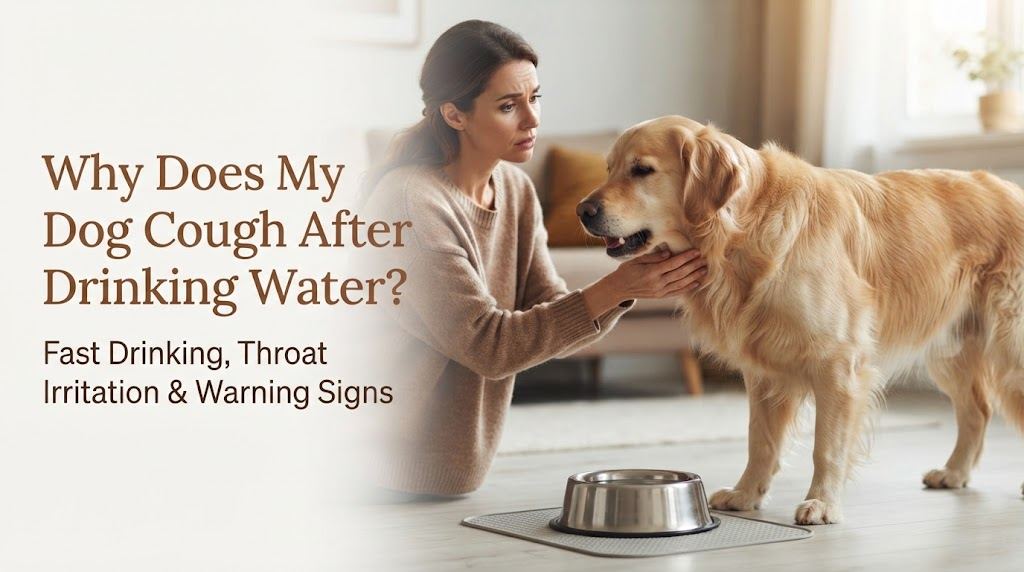
Repeated coughing after water can involve fast drinking, throat irritation, swallowing difficulty, or an underlying airway problem.
Quick Answer
An occasional cough immediately after gulping water can happen when a dog drinks too fast, but repeated coughing deserves attention because throat, swallowing, or airway problems can also be involved. Note whether coughing occurs only after drinking or at other times, and seek prompt veterinary care if breathing becomes difficult, gums look blue or gray, or the dog collapses.
What This Pattern Can Tell You
Observe whether the cough occurs during swallowing, immediately afterward, or at unrelated times. Note drinking speed, cough sound, frequency, breathing at rest, appetite, energy, and any regurgitation or nasal discharge. A short video can be useful if recording does not delay care.
Common Reasons
1. Drinking too quickly
Fast gulping can briefly disrupt the coordination of swallowing and breathing, triggering a cough just after the bowl. This is more plausible when the dog is otherwise comfortable and the cough stops quickly.
2. Brief throat irritation
Water can occasionally irritate the throat or laryngeal area, especially after excitement or panting. Recurrent irritation should not automatically be blamed on drinking speed.
3. Swallowing dysfunction
Problems coordinating swallowing can allow liquid to enter the wrong pathway. Repeated coughing during or immediately after swallowing, regurgitation, weight loss, or recurrent respiratory illness increases concern.
4. Upper-airway disease
Inflammation or structural problems involving the throat or upper airway may make drinking a reliable cough trigger. Noisy breathing, voice changes, exercise intolerance, or progressive episodes add weight to this possibility.
5. An existing cough triggered by drinking
A dog with an underlying respiratory or cardiac problem may cough at many times, with drinking simply provoking an already sensitive airway. Look for coughing at night, during exercise, or while resting.
What You Can Do Safely Now
If gulping is the only apparent trigger and your dog is otherwise normal, offer calm access to water and avoid exercise immediately around drinking. Do not restrict needed water. Recurrent episodes should be discussed with a veterinarian because swallowing and airway problems cannot be diagnosed at home.
When to Contact a Veterinarian
Seek urgent care for difficult or noisy breathing at rest, blue or gray gums, collapse, severe distress, or suspected aspiration with rapidly worsening breathing. Repeated coughing with drinking, regurgitation, feverish behavior, weight loss, or coughing at other times warrants veterinary assessment even if it is not an emergency.
What to Tell Your Veterinarian
Share when the change began, whether it was sudden or gradual, how often it occurs, what seems to trigger it, and any photos or video that safely capture it. Also mention relevant changes in appetite, drinking, energy, breathing, movement, medications, recent injuries, grooming, travel, or environmental exposures.
Bottom Line
Repeated coughing after water can involve fast drinking, throat irritation, swallowing difficulty, or an underlying airway problem. Use the pattern and accompanying signs—not a single symptom in isolation—to decide how quickly professional assessment is needed.