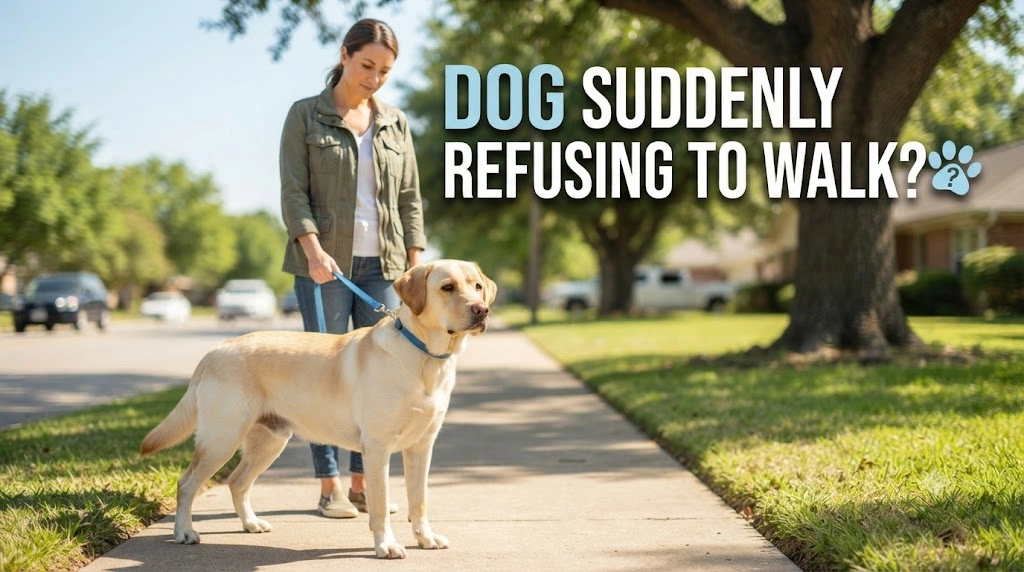

Sudden refusal to jump into the car can reveal joint, paw, muscle, or back pain, poor traction, fear after a bad experience, or reduced confidence with height. The key is to interpret the exact pattern instead of assuming one diagnosis from a single behavior.
Quick Answer
Sudden refusal to jump into the car can reveal joint, paw, muscle, or back pain, poor traction, fear after a bad experience, or reduced confidence with height. A new pattern that persists, worsens, causes pain, or interferes with normal eating, drinking, breathing, movement, sleep, or elimination should be assessed by a veterinarian.
Why This Pattern Is Different
Jumping into a vehicle combines hind-limb power, spinal movement, traction, and confidence. A dog may still walk normally while avoiding this single demanding action.
Possible Causes
Hip, Knee, or Back Pain
Arthritis and soft-tissue injury can become obvious during jumps before level walking changes.
Paw or Nail Pain
A cracked nail, sore pad, or swollen paw can make push-off painful.
Poor Traction
Slippery pavement or a slick vehicle surface can reduce confidence.
Fear or Motion-Sickness Association
A dog that feels nauseated in the car may resist getting in despite normal strength.
When to Call the Veterinarian
Arrange evaluation when the change persists or appears with stiffness, limping, pain, or reluctance to jump elsewhere. Seek prompt care for a non-weight-bearing limb, marked swelling, severe back pain, or trauma.
Related Virixoo Guides
Why Is My Dog Limping? Split or Cracked Dog Toenail
Bottom Line
Sudden refusal to jump into the car can reveal joint, paw, muscle, or back pain, poor traction, fear after a bad experience, or reduced confidence with height. Focus on what is new, whether basic functions are changing, and whether the sign is becoming more frequent or painful. Early evaluation is preferable to repeatedly testing a dog that is trying to avoid discomfort.