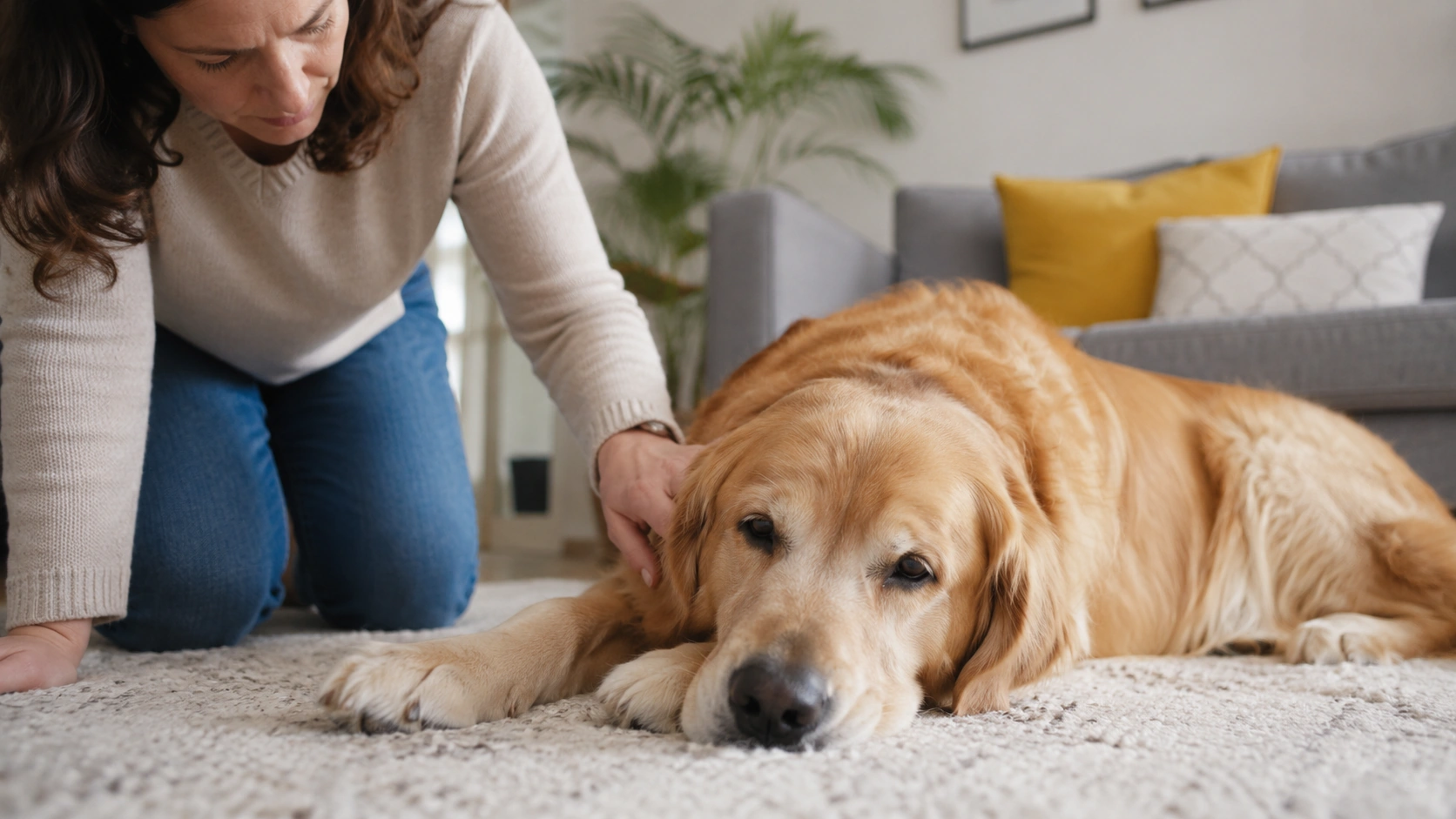
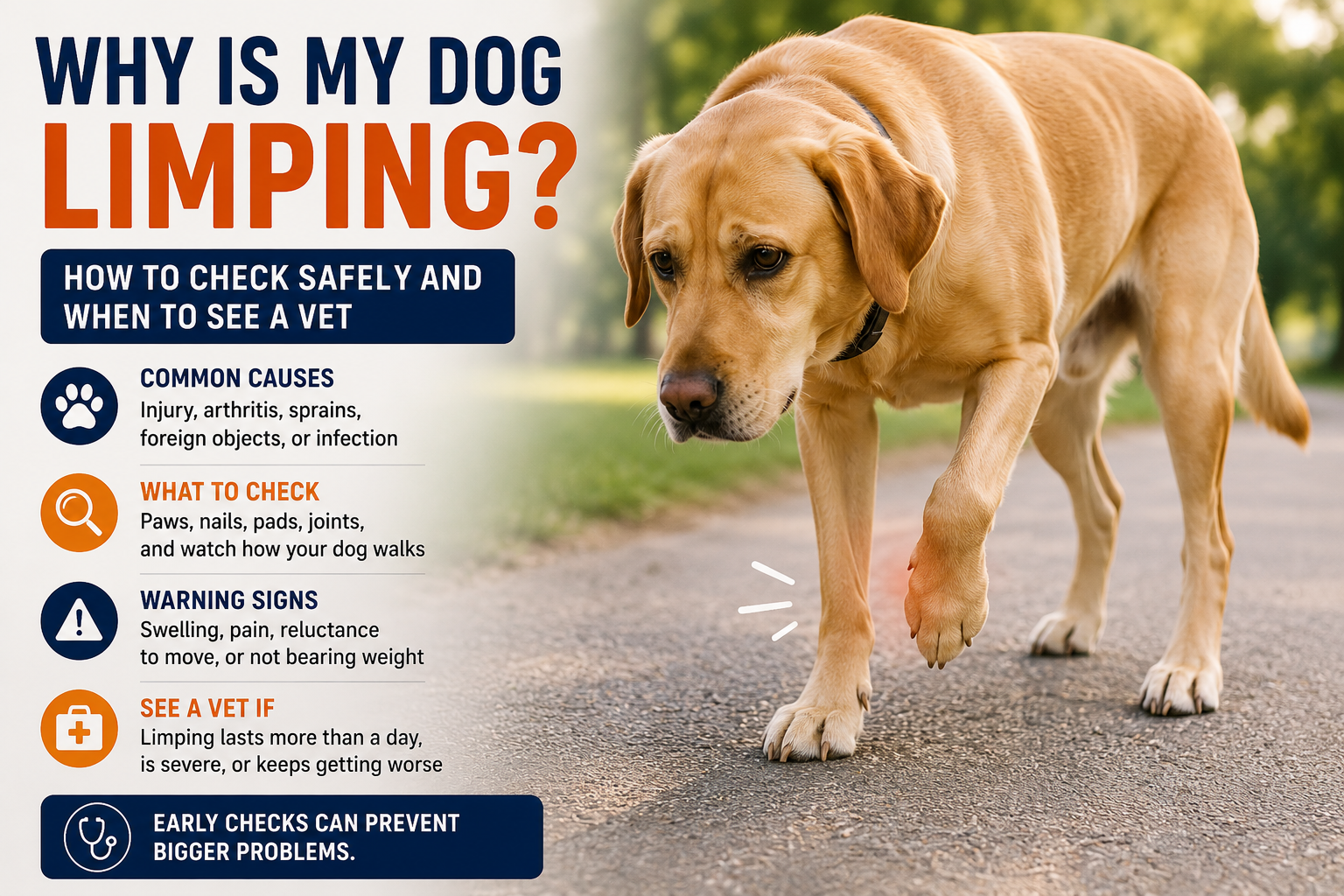
Limping means a dog is protecting a painful or uncomfortable limb, but the source is not always obvious. A thorn between the toes, torn nail, muscle strain, joint injury, fracture, arthritis flare, infection, or deeper bone problem can all change gait. The safest first response is to limit activity and perform only a gentle visual check.
Quick Answer
Stop running, jumping, and rough play. Look at the paw pads, nails, and between the toes for an obvious cut, thorn, swelling, or foreign material. Do not force a painful joint through its range of motion and do not give human pain relievers. Veterinary assessment is appropriate for persistent limping and urgent for severe pain, major swelling, deformity, trauma, or inability to bear weight.
Start With the Paw
If your dog allows handling safely, inspect the paw in good light. Look for broken nails, cuts, burns, thorns, grass awns, swelling, redness, or material stuck between pads. Stop if the dog becomes distressed or tries to bite; pain can make even a gentle dog defensive.
Common Categories of Limping
Minor Soft-Tissue Strain
A dog may limp after an awkward landing or unusually intense activity. Mild strains can improve with rest, but persistent pain cannot be diagnosed as a simple strain without examination.
Paw or Nail Injury
Small paw injuries can cause dramatic limping because every step puts pressure on the area. A deeply torn nail, puncture, persistent bleeding, or embedded object may require veterinary treatment.
Joint or Ligament Problems
Knees, hips, elbows, shoulders, wrists, and ankles can all be sources of lameness. Dogs may appear stiff after rest, hesitate on stairs, sit differently, or avoid jumping.
Fracture or Significant Trauma
Falls, vehicle accidents, collisions, and other trauma can cause fractures or internal injuries. Do not attempt to straighten or splint a limb unless a veterinary professional specifically guides you.
Bone or Systemic Disease
Persistent or progressive limping, especially with swelling, fever, weight loss, or reduced appetite, deserves a full veterinary workup. A limp alone cannot tell you whether the cause is soft tissue, joint, bone, nerve, or another process.
A Useful Observation Checklist
- Which leg appears affected?
- Is the dog completely non-weight-bearing or just shortening the stride?
- Did the limp begin suddenly or gradually?
- Was there a fall, jump, collision, long hike, or intense play session?
- Is there swelling, heat, a wound, or a damaged nail?
- Does the limp worsen after exercise or after resting?
- Are appetite, energy, and behavior otherwise normal?
What Not to Do
Do not give ibuprofen, naproxen, acetaminophen, or other human pain medicines unless a veterinarian has specifically prescribed an appropriate product and dose for your dog. Do not repeatedly manipulate a painful leg to “find the spot.” Excessive handling can worsen pain and increase bite risk.
When Veterinary Care Is Needed
Seek prompt care if your dog cannot use the limb, cries out, has obvious deformity, major swelling, a deep wound, uncontrolled bleeding, or has been hit by a vehicle or suffered major trauma. A mild limp that does not resolve promptly with rest, keeps returning, or is progressively worsening also deserves an examination.
Related Virixoo Guides
If your dog is licking one paw repeatedly, read Why Does My Dog Lick His Paws?. For appetite changes that accompany pain, see Why Is My Dog Not Eating?.
Sources & References
The American Veterinary Medical Association provides pet-care guidance and emphasizes veterinary evaluation for health changes rather than unmonitored home medication.
FAQ
Can I wait a day if my dog has a mild limp?
Some mild limps improve with strict rest, but severity, age, history, and accompanying signs matter. Contact your veterinarian if you are unsure, and seek prompt care for inability to bear weight or significant pain.
Should I massage the sore leg?
Not until the cause is known. Massage can be inappropriate for fractures, acute injuries, or painful inflammation.
Why does my dog limp after getting up but improve while walking?
That pattern can occur with joint stiffness and other orthopedic problems, but it is not specific enough to diagnose at home.
Bottom line: Restrict activity, inspect the paw gently, avoid human pain medication, and use persistence or severity—not guesswork—to decide when a limp needs veterinary assessment.