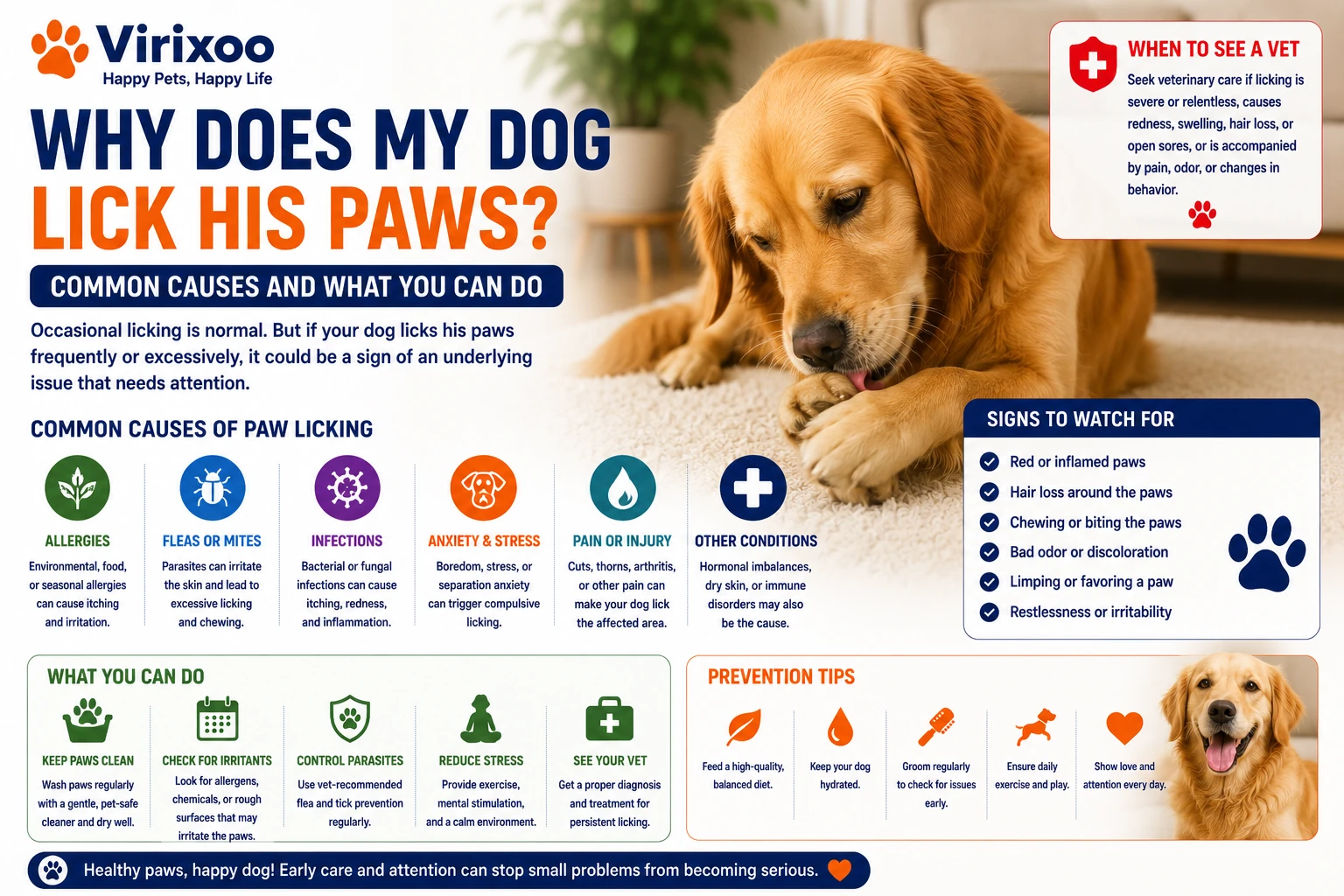
A few licks after a walk can be normal; repeated licking is different. If your dog keeps returning to one paw or spends long periods chewing several paws, look for a physical trigger before assuming it is simply a habit.
Why dogs lick their paws
1. Something is stuck or irritating the paw
Grass seeds, small thorns, road debris, salt, sand, or sticky material can irritate the pads or spaces between the toes. Compare all four paws and look for swelling, redness, cuts, or a foreign object that is sitting superficially. Do not dig into the skin to remove deeply embedded material.
2. A minor injury
Cracked pads, torn nails, abrasions, and insect stings can lead to sudden licking of one paw. Limping, guarding the foot, bleeding, or obvious pain increases the need for veterinary assessment.
3. Allergy or skin disease
Dogs with environmental allergies commonly develop itchy feet. Several paws may be affected, and ear or skin problems may occur at the same time. Food-related reactions are another possibility, but they cannot be diagnosed simply from paw licking.
4. Infection
Moisture and repeated licking can contribute to an unhealthy skin environment. Odor, discharge, marked redness, swelling, crusting, or sores should be evaluated by a veterinarian because bacterial or yeast overgrowth may require targeted treatment.
5. Pain away from the skin
Some dogs lick an area that hurts because of a joint, nail, toe, or other musculoskeletal problem. Persistent licking of one limb without obvious skin disease is still worth discussing with your veterinarian.
6. Stress or repetitive behavior
After medical causes have been considered, stress, boredom, or a repetitive behavior pattern may play a role. Increasing appropriate exercise, enrichment, predictable routines, and calm training can help, but compulsive licking should not be treated as purely behavioral until physical causes are addressed.
A simple paw check
- Choose a calm, well-lit area.
- Compare the paw with the opposite foot.
- Inspect the pads, nails, nail beds, and spaces between toes.
- Note heat, swelling, odor, moisture, redness, cuts, or discharge.
- Stop if your dog is painful or becomes defensive.
After walks
If your dog is sensitive to outdoor irritants, rinsing or wiping paws with plain water and drying them thoroughly may help remove surface debris. Avoid harsh cleaners or fragranced products unless your veterinarian recommends them.
When veterinary care is important
Contact a veterinarian for persistent licking, recurring redness, limping, swelling, broken nails, discharge, odor, bleeding, deep wounds, or significant pain. Sudden facial swelling, hives, breathing trouble, or collapse requires urgent veterinary attention.
Related Virixoo Guides
If your dog also has repeated ear or head-shaking symptoms, read Why Does My Dog Shake His Head?.
Sources & References
Pet owners can find general preventive-care information through the American Veterinary Medical Association pet-owner resources.
FAQ
Why does my dog lick only one paw?
A localized problem such as a foreign object, nail injury, sting, wound, or pain becomes more important to consider when only one paw is affected.
Why are my dog's paws red from licking?
Repeated licking can irritate skin, but redness may also be part of the original problem. Persistent redness needs veterinary assessment rather than simply stopping the licking.
Can boredom cause paw licking?
It can contribute in some dogs, but persistent licking should first be evaluated for medical causes.
Bottom line: Treat paw licking as information. Check the feet carefully, notice whether one or several paws are affected, and seek veterinary help when the behavior persists or there are signs of injury, infection, or pain.