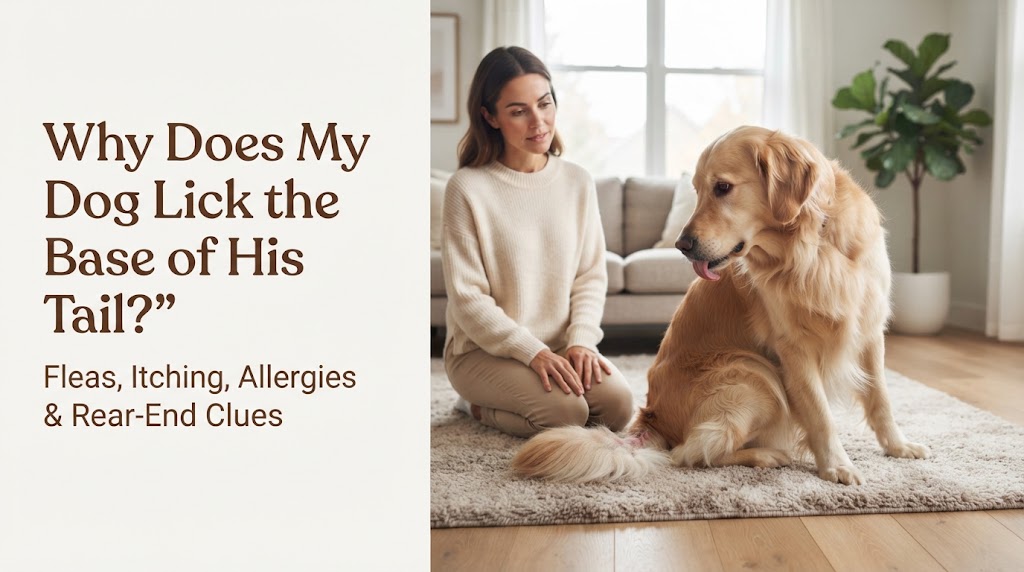
Repeated licking at the base of the tail is usually a sign of itch or discomfort rather than a harmless grooming habit. Fleas and flea-allergy dermatitis are especially important because some sensitive dogs react intensely even when owners never see a live flea.
Quick Answer
Part the coat over the lower back and tail base and look for flea dirt, redness, scabs, moist skin, hair loss, swelling, or wounds. Also notice scooting, a strong odor, or discomfort near the anus. Persistent licking, broken skin, pain, or recurrent episodes deserve veterinary assessment.
Why the tail base is an important clue
The location of itching helps narrow the possibilities. Flea-related itch commonly affects the lower back, tail base, groin, and thighs, while allergy or infection can involve several body regions. Licking focused closer to the anus may point toward anal-sac or local rear-end discomfort.
Fleas and flea allergy
A dog can have flea-allergy dermatitis without an obvious flea infestation. Fleas move quickly and may be removed during grooming. Black specks in the coat that smear reddish-brown when damp can be flea dirt, but absence of visible fleas does not rule them out.
Skin allergy or secondary infection
Environmental or food-related allergy can drive recurrent itching, and repeated licking damages the skin barrier. Bacterial or yeast overgrowth may then add odor, redness, greasy skin, crusting, or tenderness. Treating only the licking will not correct the underlying trigger.
Anal-area discomfort and local injury
Scooting, licking under the tail, difficulty sitting, swelling, or a strong fishy odor can accompany anal-sac problems. A bite, small wound, hot spot, or insect sting near the tail base can also cause sudden focused licking.
What to do now
Prevent self-trauma and keep the area dry and clean without applying human creams, essential oils, or leftover medications. Check that veterinarian-recommended parasite prevention is current. Photograph visible skin changes so progression can be compared.
When to call a veterinarian
Arrange care if licking continues for more than a short episode, repeatedly returns, causes hair loss or sores, or occurs with odor, discharge, swelling, scooting, pain, lethargy, or appetite change. Rapid swelling, severe pain, uncontrolled bleeding, or marked illness needs prompt care.