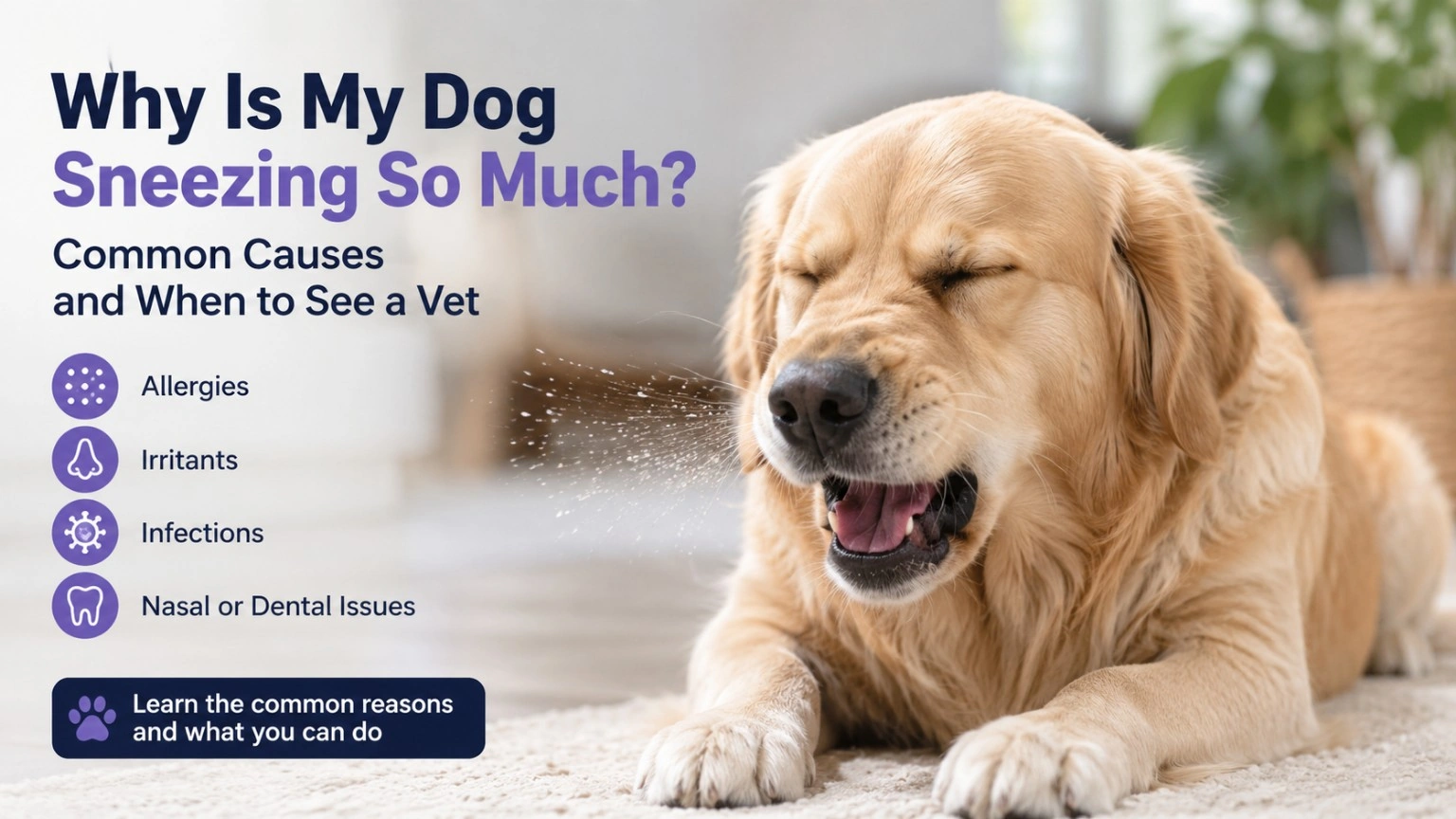
A few sneezes can be completely normal, but repeated or forceful sneezing is a clue that something is irritating the nose or upper airway. Dust, smoke, perfume, pollen, play, nasal foreign material, infection, dental disease, nasal mites, and less common structural problems can all produce sneezing. The pattern and accompanying signs are more useful than the sneeze alone.
Quick Answer
If your dog sneezes a few times and then returns to normal, observation may be reasonable. Move the dog away from smoke, aerosol sprays, strong fragrances, or visible dust. Contact a veterinarian when sneezing is frequent, persistent, one-sided, accompanied by thick or bloody nasal discharge, facial pain or swelling, reduced appetite, lethargy, or breathing difficulty. Sudden violent sneezing after running through tall grass may raise concern for plant material lodged in the nose.
What Sneezing Actually Does
Sneezing is a protective reflex that forcefully pushes air out through the nose to clear irritants or material from the nasal passages. It is different from reverse sneezing, which usually involves rapid repeated inhalations and a snorting or honking sound. Virixoo has a separate guide to reverse sneezing in dogs.
Common Reasons Dogs Sneeze
1. Dust, Smoke, Fragrance and Household Irritants
Powder, dust, smoke, candles, perfume, cleaning sprays, air fresheners, and other airborne particles can irritate the nose. Sneezing from a brief exposure often improves after the dog moves to clean air. Repeated exposure can prolong irritation, especially in sensitive dogs.
2. Outdoor Irritants
Pollen, dry soil, plant fragments, and windblown debris can trigger sneezing after outdoor activity. A few sneezes after sniffing dusty ground can be normal. Persistent sneezing after exploring tall grass deserves more attention because plant awns or other material can enter a nostril and remain lodged inside.
3. Play Sneezing
Some dogs sneeze during excited play. When the sneeze occurs only during play, is brief, and the dog has no discharge, congestion, pain, or illness, it is usually less concerning. Context matters: the same dog that suddenly begins sneezing at rest all day needs a different assessment.
4. Respiratory or Nasal Infection
Infection can cause sneezing with nasal discharge, congestion, coughing, reduced appetite, feverish behavior, or lower energy. The type of infection cannot be determined by discharge color alone. A veterinarian may need to examine the nose, mouth, throat, and chest and decide whether additional testing is necessary.
5. Nasal Foreign Material
Grass awns, small plant fragments, dirt, or other debris can lodge in the nasal passage. Sudden repeated sneezing, pawing at the nose, one-sided discharge, or a little blood after outdoor exploration increases concern. Do not insert tweezers or tools into a dog’s nostril; removal may require sedation and visualization.
6. Dental Disease
The roots of some upper teeth lie close to the nasal structures. Advanced dental infection can sometimes contribute to nasal signs. Bad breath, chewing difficulty, facial swelling, or oral pain alongside chronic sneezing makes a mouth examination important. For dental odor, see Why Does My Dog Have Bad Breath?.
7. Allergies
Dogs can have environmental allergies, but canine allergy more commonly causes itchy skin, paw licking, and ear disease than isolated sneezing. Seasonal sneezing with itchy skin or watery eyes may still fit an allergic pattern. If your dog is also itchy, read Does My Dog Have Allergies?.
8. Nasal Mites or Less Common Nasal Disease
Nasal mites, fungal disease, polyps, and tumors are less common than simple irritants but can cause persistent sneezing, nasal discharge, bleeding, noisy breathing, or facial changes. Chronic or one-sided symptoms deserve veterinary evaluation rather than repeated home treatment.
One Nostril vs. Both Nostrils
One-sided discharge or sneezing can increase suspicion for a localized problem such as foreign material, dental disease, fungal disease, or a mass, although it does not diagnose any one condition. Discharge from both sides may occur with broader nasal or respiratory disease. Your veterinarian will combine this detail with duration, age, examination findings, and other symptoms.
What the Nasal Discharge Can Tell You
| What You See | Useful Response |
|---|---|
| Brief clear moisture after a few sneezes | Observe if the dog is otherwise normal |
| Persistent thick discharge | Arrange veterinary assessment |
| Discharge from one nostril only | Report the one-sided pattern to your vet |
| Blood after repeated violent sneezing | Contact a veterinarian, especially if bleeding continues |
| Facial swelling, pain or breathing effort | Prompt or urgent veterinary care |
What You Can Do at Home
- Move your dog away from smoke, fragrances, sprays, and dusty rooms.
- Keep the resting area well ventilated and avoid aerosol cleaners nearby.
- Note whether sneezing started after a walk, grooming, home renovation, or a new scented product.
- Photograph nasal discharge if it is intermittent.
- Record whether discharge is one-sided or both-sided and whether coughing is present.
- Keep normal access to water unless your veterinarian has given different instructions.
Do Not Put Anything Inside the Nose
Do not insert cotton swabs, tweezers, oils, drops, or other home remedies into the nostril. The nasal passages are sensitive, foreign material can be pushed deeper, and some substances can irritate tissue. Human decongestants and cold medicines can also be unsafe for dogs and should not be given without veterinary direction.
Sneezing vs. Coughing vs. Reverse Sneezing
A sneeze is mainly an outward burst through the nose. A cough is usually a forceful expiration from the airway and may sound dry, wet, honking, or gagging. Reverse sneezing is usually an inward snorting episode. Videos are often useful because dogs may not perform the behavior during an appointment. For true coughing, see Why Is My Dog Coughing?.
When to Contact a Veterinarian
Arrange an appointment for sneezing that persists, becomes more frequent, repeatedly returns, or occurs with thick discharge, reduced appetite, facial discomfort, bad breath, feverish behavior, or lethargy. Chronic sneezing in an older dog deserves assessment even if the dog seems comfortable between episodes.
When Sneezing Is Urgent
Seek prompt care when sneezing is severe and nonstop, when there is significant nasal bleeding, when your dog is struggling to breathe, or when the gums appear very pale, blue, or gray. Facial trauma, suspected toxin exposure, or rapidly increasing facial swelling also increases urgency.
Related Virixoo Guides
If the sound is actually repeated inward snorting, read Why Does My Dog Reverse Sneeze?. For coughing, see Why Is My Dog Coughing?. For breathing that remains fast while resting, use Why Is My Dog Breathing Fast While Resting?.
Trusted References
VCA Animal Hospitals explains common causes and diagnostic considerations in its guide to sneezing and nasal discharge. PetMD’s veterinarian-reviewed dog sneezing guide also reviews irritants, foreign material, infection, and warning signs.
FAQ
Why does my dog keep sneezing but seems fine?
Short-lived sneezing can follow dust, play, or a mild irritant, but frequent sneezing without a clear trigger can still indicate nasal irritation or disease. Track frequency and any discharge and contact your veterinarian if the pattern persists.
Can dogs sneeze from allergies?
Yes, although allergies in dogs commonly produce itchy skin, paw licking, or ear problems. Sneezing can occur, especially with environmental exposure, but persistent nasal signs should not automatically be labeled allergy.
Why is my dog sneezing blood?
Forceful sneezing can irritate tissue, but blood can also occur with foreign material, infection, trauma, or other nasal disease. Contact a veterinarian, particularly if bleeding repeats, is more than a tiny streak, or occurs with weakness or breathing difficulty.
Bottom line: A few sneezes are often harmless. The pattern becomes more important when sneezing is persistent, one-sided, bloody, painful, or accompanied by discharge, lethargy, appetite change, or breathing problems.