Hair loss in dogs can result from scratching and licking, but it can also occur when hair growth itself is disrupted. Parasites, allergies, skin infections, hormonal disorders, friction, genetics, and other diseases can produce thinning or bald areas. The distribution of hair loss and whether the skin is itchy provide important clues.
Quick Answer
Photograph the affected areas, check for redness, crusts, odor, wounds, fleas, and excessive licking, and note whether the hair loss is symmetrical or localized. Do not treat unexplained bald patches with random creams or supplements. Persistent, spreading, inflamed, or non-itchy symmetrical hair loss deserves veterinary assessment.
Hair Loss Caused by Itching
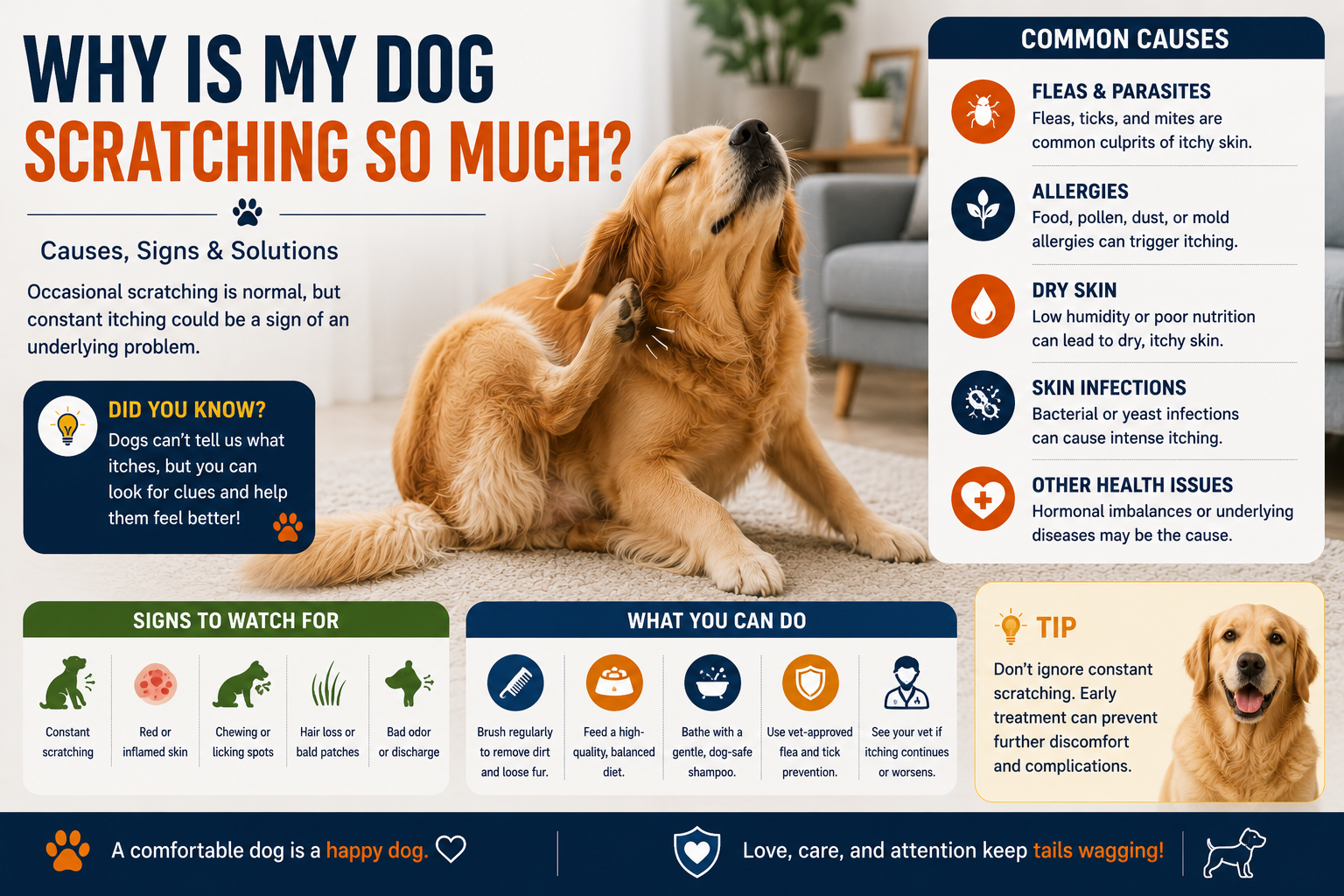
Dogs with allergies, fleas, mites, or skin infection may scratch, chew, rub, and lick until hair breaks or falls out. In these cases, treating the itch's underlying cause is more important than trying to stimulate hair growth directly.
Skin Infection
Bacterial and yeast overgrowth can accompany allergy or damaged skin. Odor, redness, greasy areas, crusts, pustules, and circular patches are reasons to have the skin examined. A veterinarian may use skin samples or other tests to determine what is present.
Parasites
Fleas and mites can cause hair loss, but parasites are not always visible. Flea-allergic dogs may react intensely to a small number of bites. Use parasite control appropriate for your dog and household rather than combining products without professional guidance.
Hormonal and Internal Causes
Some endocrine disorders can cause thinning coats or symmetrical hair loss with less obvious itching. Changes in weight, thirst, urination, energy, or skin quality can provide additional clues. Blood testing may be needed when an internal cause is suspected.
Pattern Matters
- Base of tail and rear: flea-related itch is one possibility.
- Paws, face and ears: allergy patterns may be considered.
- Single circular or focal patch: infection, trauma, parasite, or localized disease may be involved.
- Symmetrical trunk thinning: hormonal or hair-cycle disorders may be considered.
- Area under collar or harness: friction and fit should be checked.
When to See a Veterinarian
Arrange an exam when hair loss spreads, persists, repeatedly returns, is accompanied by intense itching, odor, sores, skin color changes, lethargy, weight change, or increased thirst. Puppies, immunocompromised dogs, and dogs with rapidly worsening skin disease should be assessed promptly.
Related Virixoo Guides
For paw-focused itching, see Why Does My Dog Lick His Paws?.
Sources & References
Cornell University's canine atopic dermatitis resource explains how allergic skin disease can cause chronic itch and recurrent skin and ear infections.
FAQ
Will dog hair grow back?
Often it can once the underlying problem is controlled, but regrowth depends on the cause and whether follicles have been permanently damaged.
Should I change food immediately?
No single food change diagnoses hair loss. If food allergy is suspected, a veterinarian may recommend a controlled elimination diet rather than repeated random switches.
Can stress cause hair loss?
Stress can influence grooming and behavior, but visible bald patches should not automatically be attributed to stress without checking for medical causes.
Bottom line: Hair loss is most useful as a pattern: where it occurs, whether it itches, and what the skin looks like. Document those details and pursue the underlying cause rather than treating the missing hair itself.