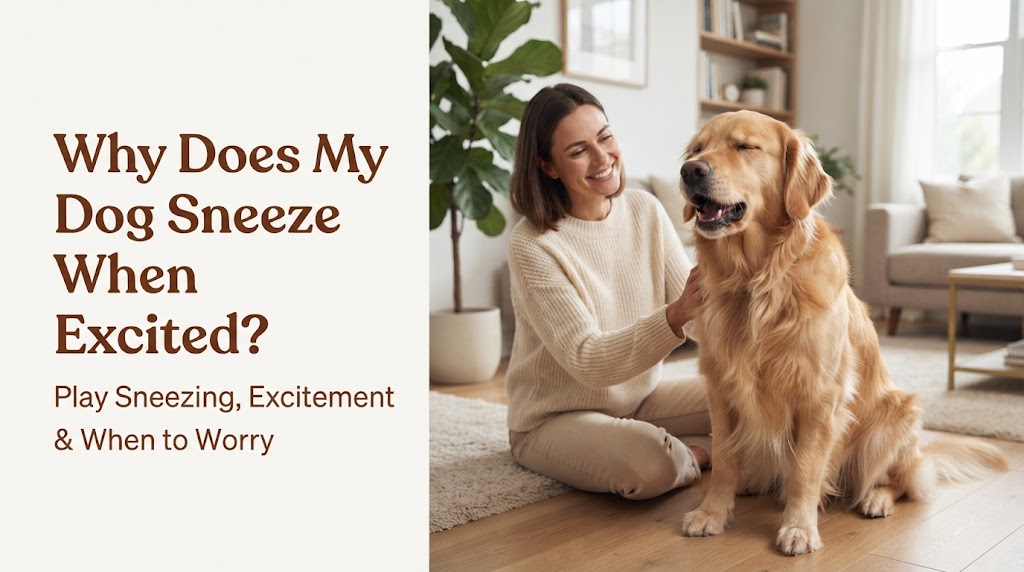
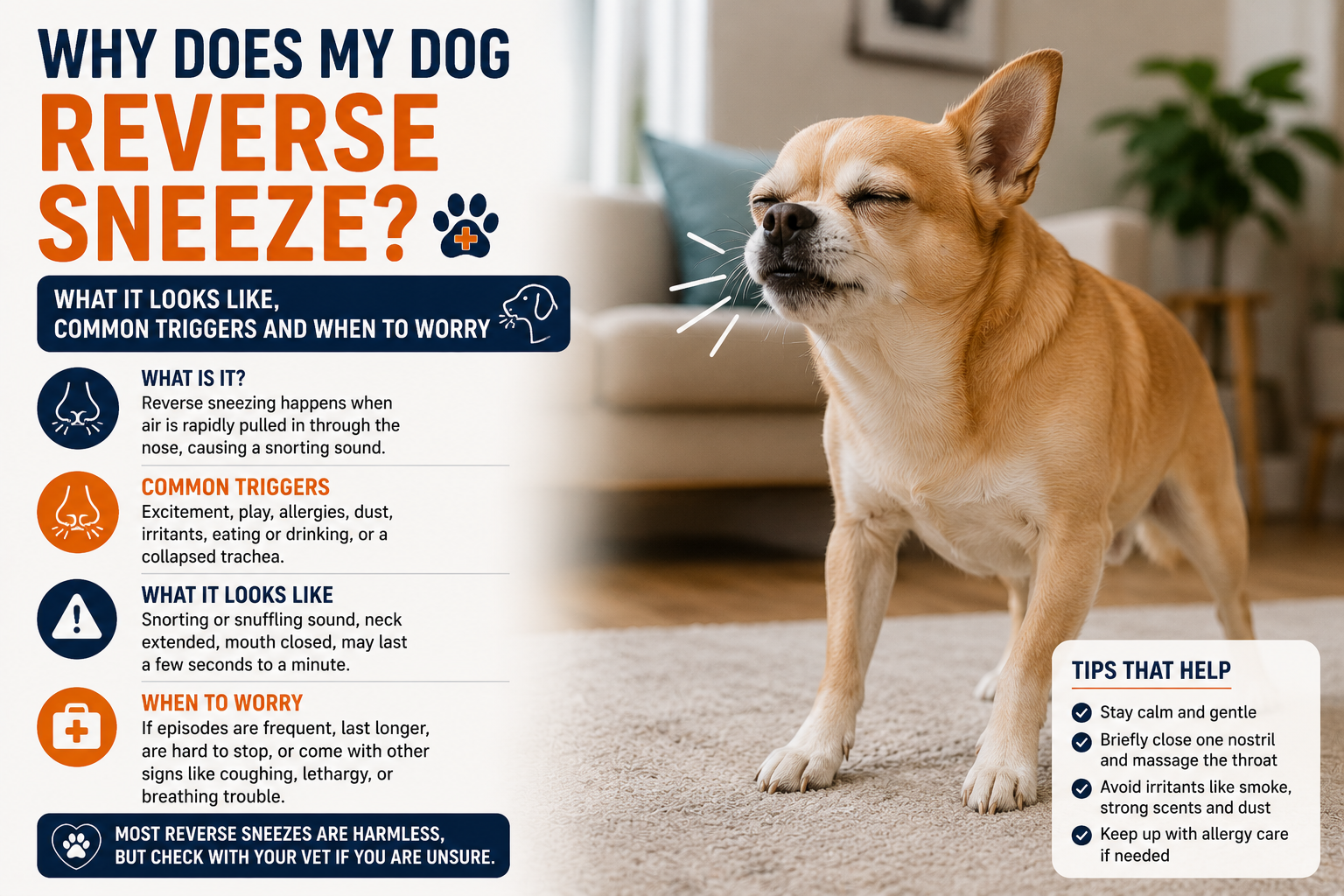
Reverse sneezing can look alarming because a dog rapidly pulls air inward through the nose with repeated snorting or honking sounds. Many episodes are brief and self-limited, but owners should learn to distinguish a typical event from choking, coughing, or true breathing difficulty.
What Reverse Sneezing Usually Looks Like
A dog may suddenly stand still, extend the neck, and make several rapid inspiratory snorts. The episode often lasts seconds to a short period and then stops. Between episodes, many dogs act completely normal. Because videos are extremely useful for distinguishing respiratory sounds, safely record an episode if you can.
Possible Triggers
Reverse sneezing can be associated with irritation in the nose, throat, or soft-palate area. Excitement, leash pressure, eating or drinking quickly, dust, fragrances, pollen, or other irritants may appear to trigger episodes in some dogs. Repeated events can also occur with nasal or upper-airway disease, so frequency and accompanying signs matter.
What to Do During an Episode
- Stay calm so you do not add excitement.
- Move the dog away from smoke, sprays, dust, or obvious irritants.
- Allow the dog to stand comfortably and breathe.
- Do not put fingers deep into the mouth or throat unless you can clearly see and safely remove a loose object at the very front.
- Time the episode and record video if safe.
Reverse Sneezing vs. Choking
| Feature | Typical Reverse Sneeze | More Concerning |
|---|---|---|
| Air movement | Repeated noisy inward snorts | Unable to move air effectively |
| Duration | Often brief | Persistent or worsening |
| Between episodes | Often completely normal | Weak, distressed, coughing, or abnormal breathing |
| Gum color | Normal pink for that dog | Blue, gray, or very pale |
When to Call a Veterinarian
Book an examination if episodes are new and frequent, increasing in intensity, associated with nasal discharge, bleeding, facial pain, coughing, reduced appetite, or noisy breathing between episodes. A veterinarian may examine the mouth, nose, throat, heart, and lungs and decide whether further testing is needed.
When It Is an Emergency
Treat collapse, blue or gray gums, severe breathing effort, inability to inhale, or suspected airway obstruction as an emergency. Do not assume an episode is reverse sneezing when the dog is clearly struggling for air.
Related Virixoo Guides
If the sound is more like a cough, read Why Is My Dog Coughing?. For heavy open-mouth breathing, see Why Is My Dog Panting So Much?.
Sources & References
For guidance on recognizing dangerous breathing signs, see Cornell University's canine respiratory distress resource.
FAQ
Is reverse sneezing dangerous?
A brief episode in a dog that is completely normal afterward may be benign, but repeated or changing episodes deserve veterinary assessment.
Can allergies trigger reverse sneezing?
Irritants and upper-airway inflammation may contribute in some dogs, but repeated reverse sneezing is not enough to diagnose an allergy.
Should I close my dog's nostrils to stop it?
Avoid forceful home maneuvers. Staying calm, removing irritants, and letting the episode pass is safer unless your veterinarian has specifically taught you an approach for your dog.
Bottom line: Typical reverse sneezing is brief and noisy but often resolves quickly. Frequency, nasal signs, and breathing quality between episodes determine when veterinary evaluation becomes important.