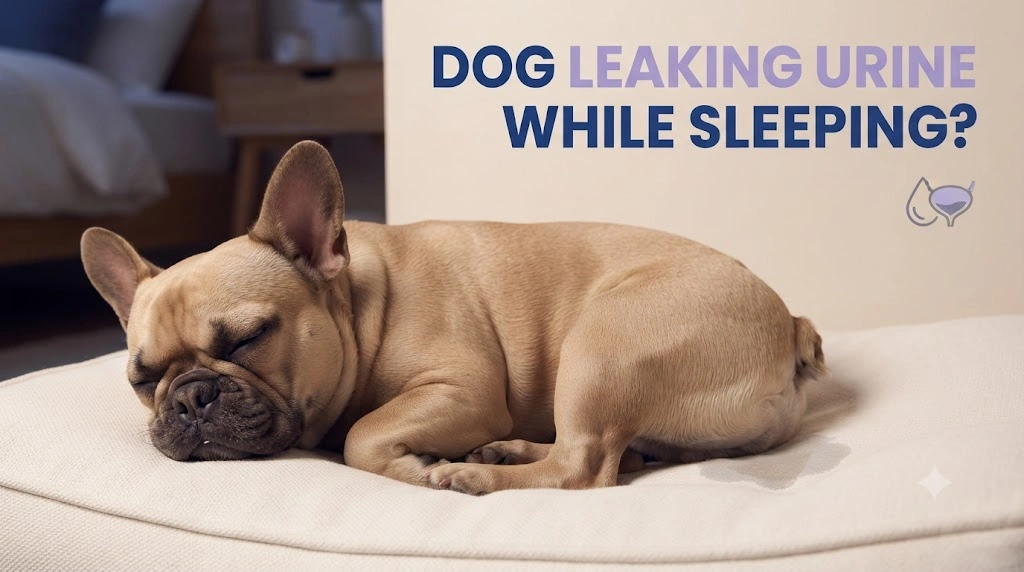
Urine leaking while a dog sleeps is usually different from a conscious house-training accident. A dog with urinary incontinence may remain asleep while urine drips or leaves a wet patch on bedding. Causes can include urethral sphincter weakness, urinary tract disease, neurologic problems, medication effects, or other medical conditions. The pattern should be evaluated rather than punished.
Quick Answer
If your dog is leaking urine during sleep, note how often it happens, how much urine is present, whether the dog urinates normally when awake, and whether there is increased thirst, straining, blood, odor, licking, or weakness. Arrange a veterinary examination, especially if the problem is new. Seek urgent care if the dog cannot urinate when awake, seems very painful, has severe weakness, or develops neurologic signs.
What Sleep Leakage Looks Like
Owners often find a damp patch where the dog was lying, wet fur around the hindquarters, or small drips after the dog rises. The dog may appear unaware that it happened. This differs from a dog that wakes, squats, and intentionally urinates indoors.
Why the Pattern Matters
Leakage only during deep sleep may suggest a sphincter-control problem, while frequent small urinations and straining can point toward urinary tract irritation. Increased thirst and large volumes of urine may indicate a broader medical issue affecting water balance.
Common Medical Categories
Urethral sphincter weakness
Some dogs, particularly certain spayed females, can develop reduced urethral closure pressure. Leakage often occurs while resting or sleeping.
Urinary tract inflammation
Infection or bladder irritation may cause urgency, frequent urination, licking, odor, or blood. These signs can occur with or without sleep leakage.
Neurologic problems
Spinal or nerve disease can affect bladder control, especially when leakage occurs with weakness, abnormal gait, or reduced tail or hind-limb function.
Diseases that increase urine volume
Conditions that cause increased thirst and urination can overwhelm normal bladder capacity and contribute to accidents or leakage.
Track the Pattern for the Veterinarian
| What to Record | Why It Helps |
|---|---|
| Sleep vs. awake leakage | Helps distinguish incontinence from conscious urination |
| Amount of urine | Small drips and large puddles can reflect different patterns |
| Water intake | Increased thirst may change the diagnostic approach |
| Straining or frequent trips | Can suggest urinary tract irritation |
| Weakness or gait change | Raises concern about neurologic involvement |
Do Not Punish the Dog
A dog that leaks urine while asleep is not choosing to urinate indoors. Punishment can create anxiety without improving bladder control. Use washable bedding and waterproof covers while the medical cause is being investigated.
Skin Care Matters
Urine that remains on the skin can cause irritation. Gently clean and dry the fur and skin after leakage. If redness, odor, or sores develop, tell your veterinarian.
When Increased Thirst Is Part of the Picture
If the dog is drinking much more than usual and producing large amounts of urine, the problem may be broader than bladder control alone. Do not restrict water. Record the pattern and discuss it with your veterinarian.
What the Veterinarian May Check
Evaluation may include a physical and neurologic examination, urinalysis, urine culture, blood tests, and imaging depending on the dog's age and symptoms. Treatment depends on the cause; there is no single medication appropriate for every dog with leakage.
What Not to Do
- Do not punish the dog.
- Do not restrict water to reduce wet bedding.
- Do not give leftover antibiotics.
- Do not assume aging alone explains new leakage.
- Do not ignore weakness or inability to urinate.
When to Seek Urgent Care
Seek urgent veterinary care if the dog repeatedly strains but cannot pass urine, has a painful swollen abdomen, develops severe weakness or paralysis, or shows rapidly worsening illness.
Bottom Line
Urine leakage during sleep is usually a medical sign rather than a training failure. Track when it occurs, look for changes in thirst and urination, protect the skin and bedding, and arrange veterinary evaluation so the underlying cause can be identified and treated appropriately.
How to Protect Sleep and Skin While You Wait for Answers
Use washable absorbent bedding or a waterproof layer beneath the dog's normal bed. Keep the sleeping area dry and clean, and gently wash urine from the skin when needed. Avoid heavily perfumed cleaners on irritated skin. Comfort matters because chronic dampness can create secondary skin problems.
Continue normal toilet opportunities and do not reduce water access in an attempt to keep the bed dry. The goal is to manage the environment while the medical cause is investigated.
How Incontinence Differs From Marking
Marking is a conscious behavior that usually involves small amounts of urine placed in specific locations while the dog is awake. Sleep leakage happens without awareness. This distinction matters because training approaches that might help marking will not correct a medical loss of bladder control.
Why Age and Reproductive Status Matter
Urinary incontinence is more common in some groups of dogs, but age or spay status should never be used as the diagnosis by itself. New leakage still deserves evaluation because infection, stones, neurologic disease, and other conditions can produce similar signs.
Check for Increased Thirst
If the water bowl empties faster, the dog asks to go out more often, or urine puddles are larger, tell the veterinarian. Diseases that increase urine production can contribute to accidents and may require blood and urine testing.
Watch How the Dog Urinates When Awake
Straining, frequent small urinations, blood, discomfort, or repeated squatting suggests urinary tract irritation rather than simple sphincter weakness. Inability to pass a normal stream is urgent.
Neurologic Clues
If leakage occurs with hind-limb weakness, tail changes, back pain, or altered gait, spinal or nerve disease may affect bladder control. These signs should be reported promptly.
Keep a Two-Week Record
Note which nights leakage occurs, approximate puddle size, water intake changes, medications, exercise, and whether the dog urinated before bed. Patterns can help the veterinarian evaluate treatment response later.
Treatment Depends on the Cause
Some dogs respond well to medications that improve urethral closure, while others need treatment for infection, stones, endocrine disease, or neurologic problems. This is why using another dog's medication or leftover antibiotics is inappropriate.
Why Bed-Wetting Can Be the First Sign Owners Notice
Many dogs with urinary leakage behave completely normally while awake. The first clue may be a damp bed, wet fur after a nap, or a small urine trail when the dog stands. Because the dog is often unaware, owners should avoid interpreting the event as disobedience.
Why Urinalysis Is Often Useful
Urine testing can provide information about concentration, blood, inflammation, crystals, and infection. Depending on findings, the veterinarian may recommend a culture or other tests. This helps distinguish sphincter-related leakage from urinary tract disease or conditions that increase urine production.
What to Do With Bedding
Wash bedding with a pet-safe detergent and dry it thoroughly. Waterproof liners can protect mattresses or flooring, but the dog should still have a soft comfortable sleeping surface. If urine repeatedly contacts the skin, trim or clean fur only as needed and report redness or odor to the veterinarian.
Why Treatment Response Should Be Tracked
If the veterinarian starts medication or treats an underlying urinary problem, continue recording wet nights, urine volume, thirst, and awake urination. Improvement may be gradual, and a simple log can show whether leakage is truly decreasing. Report side effects or worsening symptoms rather than changing the dose on your own.
Successful treatment means more than a dry bed: the dog should also urinate comfortably when awake and maintain normal thirst, energy, and skin health.
Why Treatment Response Should Be Tracked
If the veterinarian starts medication or treats an underlying urinary problem, continue recording wet nights, urine volume, thirst, and awake urination. Improvement may be gradual, and a simple log can show whether leakage is truly decreasing. Report side effects or worsening symptoms rather than changing the dose on your own.
Successful treatment means more than a dry bed: the dog should also urinate comfortably when awake and maintain normal thirst, energy, and skin health. If leakage improves but straining, blood, or excessive thirst appears, the plan may need to be reassessed.
How to Make Nighttime Management Easier
Give the dog a normal toilet opportunity before bed, keep access to water unchanged, and use washable absorbent bedding. For dogs with mobility problems, make the route to the toilet area easy and non-slip. Good management reduces mess and skin irritation while the medical cause is being treated; it should never replace veterinary evaluation of a new incontinence pattern.