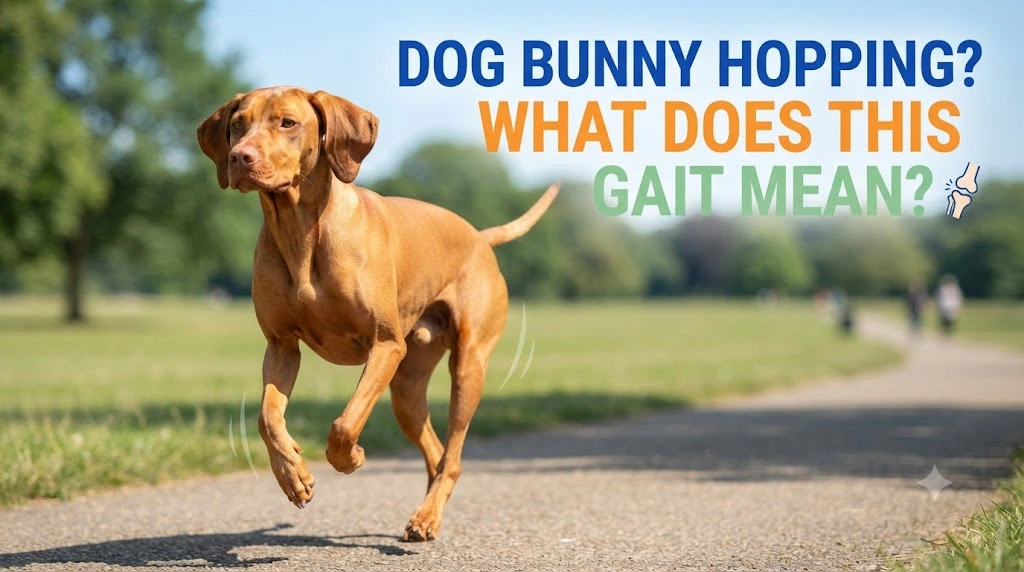
A bunny-hopping gait describes a dog moving both hind legs forward together, especially when running. Some dogs briefly use this pattern during fast play, but repeated bunny hopping can also occur with hip pain, knee problems, muscle weakness, spinal disease, or other orthopedic conditions. The pattern deserves more attention when it is new, frequent, painful, or paired with stiffness.
Quick Answer
Record a short video from the side and behind while your dog moves naturally. Note whether the pattern happens only at a fast run or also during walking and trotting. Contact a veterinarian if bunny hopping is persistent, new, associated with pain, reluctance to jump, difficulty rising, or reduced activity.
What Bunny Hopping Looks Like
Instead of alternating the hind legs normally, the dog brings them forward at nearly the same time. This may be easiest to see while running up stairs, playing, or accelerating.
Hip Problems
Hip discomfort can make alternating extension uncomfortable, leading some dogs to move both hind limbs together. Hip dysplasia is one possible cause, especially in young large-breed dogs, but the gait alone does not diagnose it.
Knee and Muscle Problems
Knee pain, muscle strain, weakness, or imbalance can also alter running. A complete orthopedic examination is needed because several problems can create similar movement patterns.
Spinal or Neurologic Causes
Weakness, wobbling, toe dragging, crossing the hind legs, or loss of coordination suggests neurologic involvement rather than a simple running preference.
What to Observe
| Observation | Why It Helps |
|---|---|
| Only during fast running | May be less concerning if otherwise normal |
| Also during walking | More likely to reflect abnormal gait |
| Difficulty rising | Can indicate pain or weakness |
| Reluctance to jump | May suggest hip, back, or knee discomfort |
| Toe dragging or wobbling | Raises neurologic concern |
Do Not Over-Test the Dog
Do not repeatedly make the dog sprint, climb stairs, or jump to reproduce the gait. One or two natural videos are enough. Repeated testing can worsen pain.
Puppies and Growth
Young dogs can look awkward as they grow, but persistent abnormal movement should not automatically be dismissed as clumsiness. Large-breed puppies in particular benefit from early assessment when gait changes are consistent.
Weight and Conditioning
Excess body weight increases stress on joints, while poor conditioning can contribute to weakness. These factors may worsen an underlying orthopedic problem but should not be assumed to be the only cause.
What the Veterinarian May Do
The veterinarian may examine hip range of motion, knees, spine, muscle symmetry, and neurologic function. Imaging may be recommended depending on age, breed, pain, and examination findings.
When to Seek Care Promptly
Prompt assessment is appropriate for sudden severe lameness, inability to bear weight, intense pain, weakness, or neurologic deficits. Emergency care is needed for sudden paralysis or inability to stand.
Bottom Line
Bunny hopping is a movement pattern, not a diagnosis. A brief pattern during high-speed play may be harmless, but persistent or new bunny hopping with stiffness, pain, weakness, or reduced activity deserves veterinary evaluation.
Why Stairs Can Make Bunny Hopping More Obvious
Climbing stairs requires strong coordinated hind-limb extension. Dogs with hip or knee discomfort may use both hind legs together to reduce alternating load. Do not repeatedly send the dog up stairs to test the gait. One natural observation is enough.
Muscle Asymmetry Can Be a Clue
Over time, chronic orthopedic problems can lead to reduced muscle mass on one side or around the hindquarters. Stand behind the dog and compare muscle bulk without squeezing painful areas. Visible asymmetry should be mentioned to the veterinarian.
Why Early Assessment Matters in Growing Dogs
Young dogs are still developing bones, joints, and muscles. Persistent abnormal movement during growth deserves evaluation because early management may improve comfort and long-term mobility. Avoid assuming that every awkward gait will disappear with age.
How Hip Dysplasia Can Affect Movement
Hip dysplasia can create joint looseness, inflammation, and pain. Some dogs compensate by using both hind legs together during acceleration or stairs. However, many dogs with hip dysplasia do not bunny hop, and some dogs that bunny hop have completely different problems. Examination and, when indicated, imaging are needed.
Knee Problems Can Mimic Hip Problems
Patellar instability, cruciate ligament disease, or other knee conditions can alter hind-limb timing. If one leg is more affected, you may also see intermittent skipping, toe-touching, or reduced weight-bearing.
Why Body Condition Matters
Excess body weight increases the load on hips and knees. If a joint problem is diagnosed, maintaining an appropriate body condition can be an important part of long-term management. Weight loss should be gradual and guided by a veterinarian when health conditions are present.
Exercise Should Match the Diagnosis
Do not assume complete rest or intense exercise is automatically best. Some orthopedic conditions benefit from controlled low-impact activity, while others need temporary restriction. Follow the plan based on the actual diagnosis rather than the appearance of the gait alone.
What to Record Over Time
Track whether bunny hopping is more obvious after rest, after long exercise, on stairs, or during cold weather. Also note whether the dog hesitates before jumping, sits asymmetrically, or develops muscle loss. These details can help your veterinarian assess progression.
Why Symmetry Matters
If both hind legs move together equally, the pattern may look like classic bunny hopping. If one leg is consistently held differently, takes a shorter step, or loses muscle, a one-sided orthopedic problem becomes more likely. Stand behind the dog at rest and observe muscle symmetry without squeezing or manipulating painful joints.
What If Bunny Hopping Appears Only After Exercise?
Some dogs compensate more when muscles become tired or joints become sore. If the gait appears only late in a walk or after intense play, shorten activity and record when the change begins. Do not keep exercising the dog to make the gait more obvious. This pattern can still be useful diagnostic information.
Why Slippery Floors Can Exaggerate the Problem
Dogs with hip, knee, or spinal discomfort may move more awkwardly on slick flooring because they cannot trust the hind feet. Use non-slip mats or rugs in high-traffic areas while the dog is being evaluated. Improvement on a grippy surface does not prove the joints are normal; it simply shows that traction affects the gait.
What Long-Term Management May Include
If an orthopedic condition is diagnosed, management may involve body-weight control, controlled exercise, rehabilitation, pain management, or surgery depending on severity. The correct plan should follow the diagnosis rather than the appearance of bunny hopping alone.