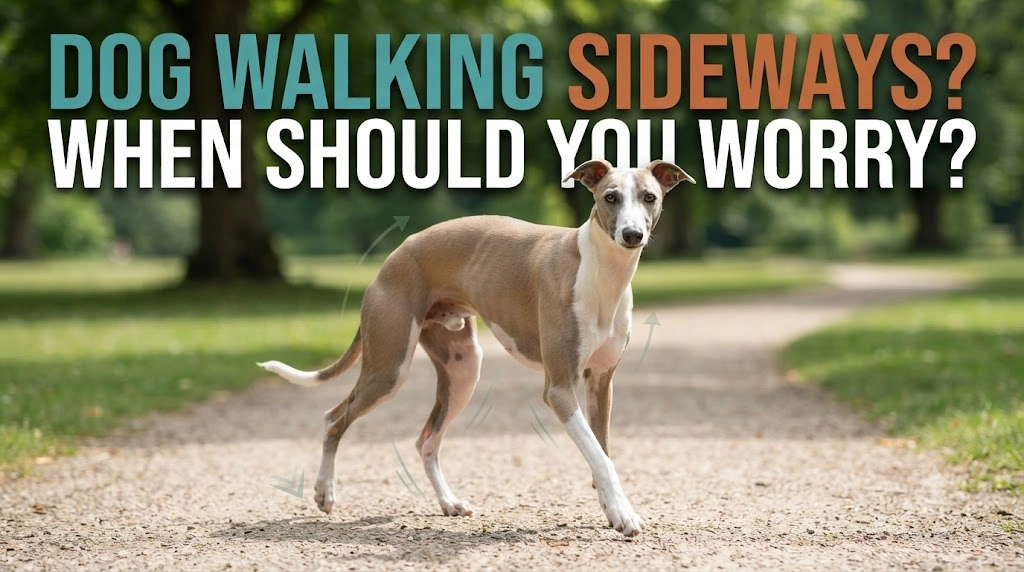
Some dogs naturally move with the hindquarters slightly offset from the front, especially at certain speeds. This is sometimes called crabbing or sidewinding. A lifelong mild pattern in a comfortable dog can be harmless. A sudden sideways gait, however, can reflect pain, weakness, balance problems, injury, or neurologic disease.
Quick Answer
If your dog has always moved slightly sideways and shows no pain or weakness, the pattern may simply be individual conformation or gait. If the change is sudden, record a short video and look for limping, head tilt, falling, weakness, toe dragging, or pain. Seek veterinary assessment promptly when any of these appear.
What Harmless Crabbing Can Look Like
Some dogs have a body shape where the hind feet would otherwise strike the front feet at a trot, so the body travels at a slight angle. The gait is usually consistent, comfortable, and symmetrical.
When Pain Changes the Gait
Hip, knee, back, paw, or muscle pain can cause a dog to shift weight and move crookedly. Watch for shortened steps, reluctance to jump, stiffness, or licking one limb.
Balance and Vestibular Problems
A dog with vestibular dysfunction may lean, fall, circle, or walk sideways, often with head tilt or abnormal eye movements. Sudden severe imbalance requires prompt veterinary evaluation.
Neurologic Weakness
Toe dragging, knuckling, crossing limbs, wobbling, or delayed paw placement can indicate neurologic disease. These signs are different from a smooth lifelong crab gait.
What to Observe
| Pattern | Interpretation |
|---|---|
| Lifelong mild sideways trot | May be conformation-related |
| Sudden new crooked gait | Needs evaluation |
| Sideways walking with head tilt | Vestibular or neurologic concern |
| Sideways gait with limping | Pain or orthopedic issue |
| Sideways gait with falling | Urgent balance or neurologic concern |
Record Movement From Multiple Angles
Take short natural videos from the side, behind, and front if safe. Do not repeatedly force the dog to run. Videos can help a veterinarian see whether the dog is truly sidewinding or compensating for another abnormality.
Check the Paws and Nails
A sore paw, torn nail, or foreign object can alter the entire body position. Briefly inspect the feet if your dog tolerates it.
Senior Dogs
Older dogs may develop arthritis, weakness, or neurologic disease gradually. A new sideways gait in a senior dog should not automatically be attributed to aging.
When to Seek Urgent Care
Seek urgent care for sudden inability to stand, repeated falling, severe weakness, collapse, major trauma, or rapidly worsening neurologic signs.
Bottom Line
A slight lifelong sideways gait can be harmless, but a new crooked gait deserves attention. Pain, balance problems, and neurologic weakness can all change body alignment. Videos and veterinary examination are more useful than trying to diagnose the pattern by appearance alone.
Why Speed Changes the Appearance of Gait
A dog may crab slightly at a trot but look straight at a walk. This can reflect normal body mechanics. A truly abnormal gait is more likely to appear with pain, weakness, stumbling, or asymmetry. Record several natural speeds without forcing the dog to sprint.
What If the Body Is Crooked but the Dog Is Comfortable?
If the pattern has been present for years, the dog is active, and there is no lameness or weakness, the gait may be an individual variation. Mention it at routine veterinary visits, especially if it changes over time.
Why Sudden Sideways Walking After Waking Is Different
A dog that suddenly wakes and cannot walk straight may have a balance or neurologic problem. Head tilt, nausea, falling, abnormal eye movements, or confusion increases urgency. This is different from a smooth lifelong sidewinding trot.
Why a Crooked Gait Can Be a Compensation
Dogs shift their body to reduce load on a painful limb. A sore hip, knee, paw, or back can therefore make the entire dog appear crooked even when only one structure is injured. This is why looking at the whole gait is more useful than focusing on body angle alone.
Vestibular Signs Often Come With Nausea
Dogs that suddenly lose balance may drool, refuse food, vomit, or seem frightened. These signs can accompany dizziness. Keep the dog in a safe low-stimulation area and seek veterinary guidance rather than repeatedly walking the dog to test balance.
What If the Gait Changes Only When Tired?
Weakness can become more obvious after exercise. If the dog walks straight at first but becomes increasingly crooked, drags toes, or stumbles later in the walk, record the pattern and tell the veterinarian. Do not keep extending exercise to see how far the dog can go.
Why Paw Placement Matters
Dogs with neurologic deficits may place the top of the paw on the ground, scuff nails, or cross limbs. These signs are more concerning than a smooth sideways body position with normal paw placement.
When a Video Is Most Useful
Record a normal walk from behind, the side, and in front on a non-slip surface. Ten to twenty seconds from each angle is enough. Avoid stairs or running if the dog looks painful or unstable.
How to Separate Sidewinding From True Imbalance
A dog that sidewinds naturally usually keeps the head level, places each paw accurately, and maintains a smooth rhythm without stumbling. A dog with balance trouble may lean, drift, fall, cross the feet, or correct direction repeatedly. Watching the head and paws helps distinguish a body-angle preference from a neurologic or vestibular problem.
Why One-Sided Pain Can Rotate the Body
When a hip, knee, paw, or muscle hurts, the dog may rotate the pelvis or trunk to unload that side. This compensation can make the whole body look crooked even if the spine itself is not the primary problem. Look for limping, shortened steps, licking one limb, or reluctance to turn in one direction.
What If the Dog Is Walking Sideways After an Injury?
After a fall, collision, or rough play, a new crooked gait should be treated as possible pain until proven otherwise. Limit activity and arrange veterinary assessment. Do not repeatedly manipulate the hips or spine to find the painful spot.
Why Senior Dogs Need Prompt Context
Older dogs can develop vestibular disease, arthritis, spinal disease, and weakness. A sudden change should not be attributed to age alone. If the dog is also falling, tilting the head, vomiting, dragging toes, or struggling to stand, seek prompt veterinary care.