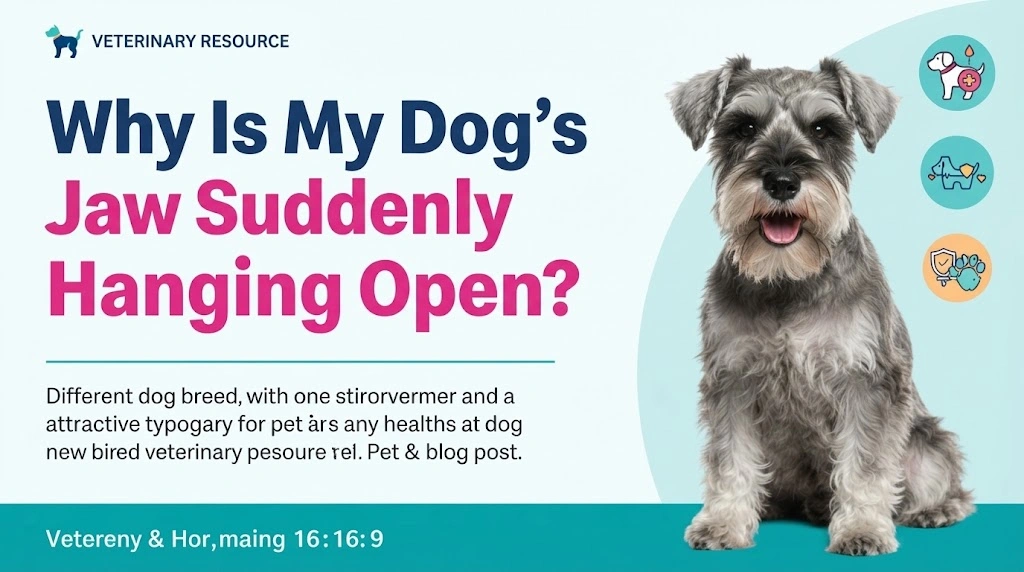
A jaw that suddenly hangs open or cannot close normally may reflect trauma, jaw-joint problems, oral pain, nerve dysfunction, or another urgent condition. A single sign rarely identifies one diagnosis, so the safest approach is to look at the whole pattern: when it started, how often it happens, what triggers it, and whether your dog is otherwise acting normally.
Quick Answer
A jaw that suddenly hangs open or cannot close normally may reflect trauma, jaw-joint problems, oral pain, nerve dysfunction, or another urgent condition. The important clues are whether the change is new, persistent or worsening, whether it affects normal function, and whether pain or other symptoms are present. Seek veterinary care promptly for severe pain, breathing difficulty, collapse, major trauma, rapid deterioration, or another loss of basic function.
Possible Causes
Dental or oral pain
Broken teeth, periodontal disease, ulcers, wounds, or inflammation can change chewing, saliva handling, and jaw movement. The timing, severity, and accompanying signs help determine how much weight to give this possibility.
Foreign material or trauma
Plant material, bone fragments, sticks, string, or trauma may irritate the mouth or throat. Deep inspection should be left to a veterinarian if the dog is painful. The timing, severity, and accompanying signs help determine how much weight to give this possibility.
Neuromuscular or structural problems
Jaw-joint disease, nerve dysfunction, swelling, or other structural problems can interfere with normal mouth movement. The timing, severity, and accompanying signs help determine how much weight to give this possibility.
Bottom Line
A jaw that suddenly hangs open or cannot close normally may reflect trauma, jaw-joint problems, oral pain, nerve dysfunction, or another urgent condition. The most useful next step is not to guess a diagnosis from one symptom, but to document the pattern and judge whether normal function is changing. If the sign is persistent, painful, progressive, or accompanied by other abnormalities, veterinary evaluation is the safest course.