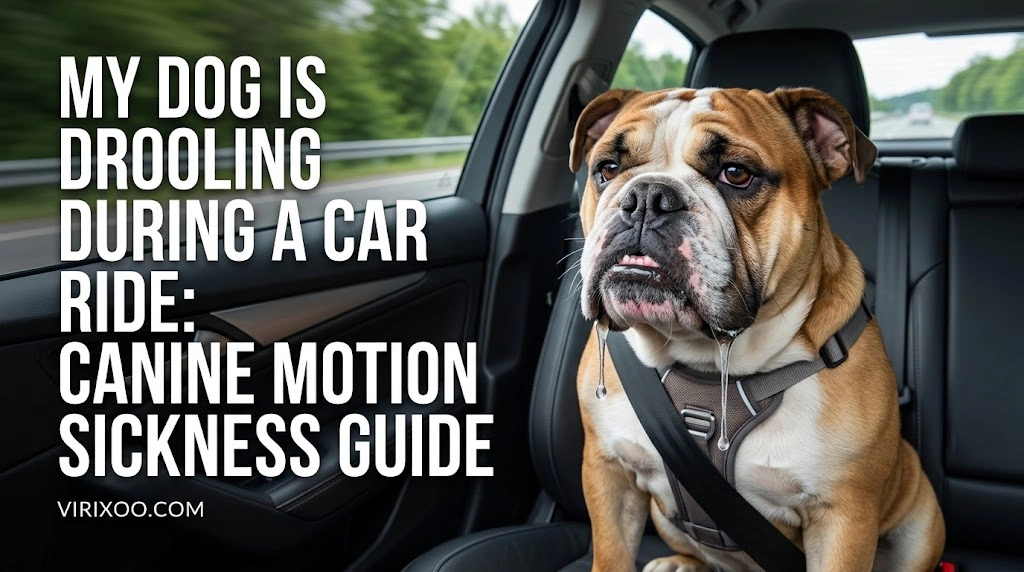
Car-only drooling commonly accompanies motion sickness, nausea, stress, or anticipation and is especially informative when it starts soon after travel begins. A single sign rarely identifies one diagnosis, so the safest approach is to look at the whole pattern: when it started, how often it happens, what triggers it, and whether your dog is otherwise acting normally.
Quick Answer
If this is new, compare it with your dog's usual baseline. Watch appetite, drinking, urination, stool, breathing, sleep, walking, play, and social behavior. Mild, brief changes that fully resolve can often be observed, while persistent, painful, progressive, or function-limiting changes deserve veterinary assessment. Breathing difficulty, collapse, severe weakness, major trauma, seizures, or rapidly worsening distress are emergency signs.
Why This Specific Pattern Matters
The search dog drools during car rides describes a specific situation rather than a broad diagnosis. That specificity is useful. Record the exact body part involved, the time of day, relation to food, water, exercise, sleep, travel, or toileting, and whether the behavior can be interrupted normally. Those details often help a veterinarian separate a harmless variation from pain, inflammation, neurologic dysfunction, gastrointestinal disease, or a learned behavior.
Possible Causes
Motion sickness
Movement can trigger nausea, drooling, lip licking, restlessness, and sometimes vomiting. The timing, severity, and accompanying signs help determine how much weight to give this possibility.
Travel anxiety
Dogs that anticipate an unpleasant ride may begin drooling before or soon after entering the vehicle. The timing, severity, and accompanying signs help determine how much weight to give this possibility.
Heat or other illness
A hot car environment or unrelated nausea can worsen drooling and should not be attributed automatically to behavior. The timing, severity, and accompanying signs help determine how much weight to give this possibility.
What You Can Check Safely at Home
- Observe before handling. Watch your dog move and behave naturally. Repeatedly provoking a painful movement can worsen discomfort.
- Check the timeline. Write down when the sign began, how long each episode lasts, and whether it is becoming more frequent.
- Look for associated changes. Appetite loss, vomiting, diarrhea, coughing, limping, swelling, unusual urine or stool, confusion, or reduced activity can change the urgency.
- Take a short video. Intermittent signs may disappear in the clinic. A spontaneous video can give the veterinarian useful information.
- Keep routine stable. Unless a veterinarian advises otherwise, avoid sudden diet changes, strenuous exercise, or unnecessary supplements while you are trying to understand a new symptom.
What Not to Do
- Do not give ibuprofen, acetaminophen, naproxen, aspirin, human stomach medicines, sedatives, antibiotics, or leftover veterinary drugs unless a veterinarian specifically directs their use for this dog.
- Do not force food, water, exercise, stretching, or repeated handling when swallowing, breathing, walking, or pain appears abnormal.
- Do not assume a behavior is stubbornness when it appeared suddenly; pain and illness can change behavior before other signs become obvious.
- Do not delay emergency care while trying home remedies if your dog is deteriorating.
When to Call a Veterinarian
Arrange veterinary advice when the pattern is new and repeatedly returns, lasts longer than expected, interferes with eating, drinking, sleeping, walking, urinating, or defecating, or is accompanied by obvious pain. Earlier assessment is also sensible for puppies, senior dogs, dogs with chronic disease, and dogs taking medications because their margin for deterioration may be smaller.
Seek urgent or emergency care for trouble breathing, blue/gray or very pale gums, collapse, inability to stand, repeated seizures, severe uncontrolled pain, major trauma, a rapidly enlarging abdomen with repeated unproductive retching, inability to urinate, or suspected toxin exposure. Eye problems that involve sudden vision loss, a very painful eye, marked cloudiness, or inability to close the eye also deserve prompt attention.
A Practical Triage Guide
| What you see | Reasonable next step |
|---|---|
| One brief episode, obvious harmless trigger, complete return to normal | Observe and record if it happens again |
| New sign that repeats, persists, or slowly worsens | Contact your veterinarian for an appointment |
| Pain, appetite loss, vomiting, diarrhea, swelling, limping, urinary change, or reduced function | Prompt veterinary assessment |
| Breathing difficulty, collapse, seizure, paralysis, severe trauma, or rapidly worsening distress | Emergency veterinary care |
What to Record Before the Appointment
Useful notes include the first day you noticed the problem, frequency and duration, exact triggers, recent diet or medication changes, travel, injuries, grooming, new household products, and changes in exercise. Record whether your dog can eat, drink, swallow, urinate, defecate, walk, climb, sleep, and interact normally. If the sign involves urine, stool, vomit, a skin lesion, gait, cough, or unusual movement, a clear photo or video may help the clinical history.
What a Veterinarian May Check
The examination depends on the symptom rather than on the article title alone. A veterinarian may assess temperature, hydration, gums, mouth and teeth, eyes, ears, skin, abdomen, heart and lungs, paws, joints, spine, gait, reflexes, and neurologic function. Testing is selected from the examination and history and may include blood work, urinalysis, fecal testing, radiographs, ultrasound, eye tests, dental imaging, cytology, cultures, or other targeted diagnostics. Not every dog needs every test.
How to Reduce Future Risk
Routine veterinary care, appropriate parasite prevention, dental care, weight management, safe exercise, gradual diet changes, and keeping medications and toxins out of reach reduce many preventable problems. For behavior-related patterns, use non-slip surfaces, predictable routines, reward-based handling, and gradual exposure rather than punishment. Prevention cannot eliminate every illness, but it can make changes easier to recognize early.
Bottom Line
Car-only drooling commonly accompanies motion sickness, nausea, stress, or anticipation and is especially informative when it starts soon after travel begins. The most useful next step is not to guess a diagnosis from one symptom, but to document the pattern and judge whether normal function is changing. If the sign is persistent, painful, progressive, or accompanied by other abnormalities, veterinary evaluation is the safest course.