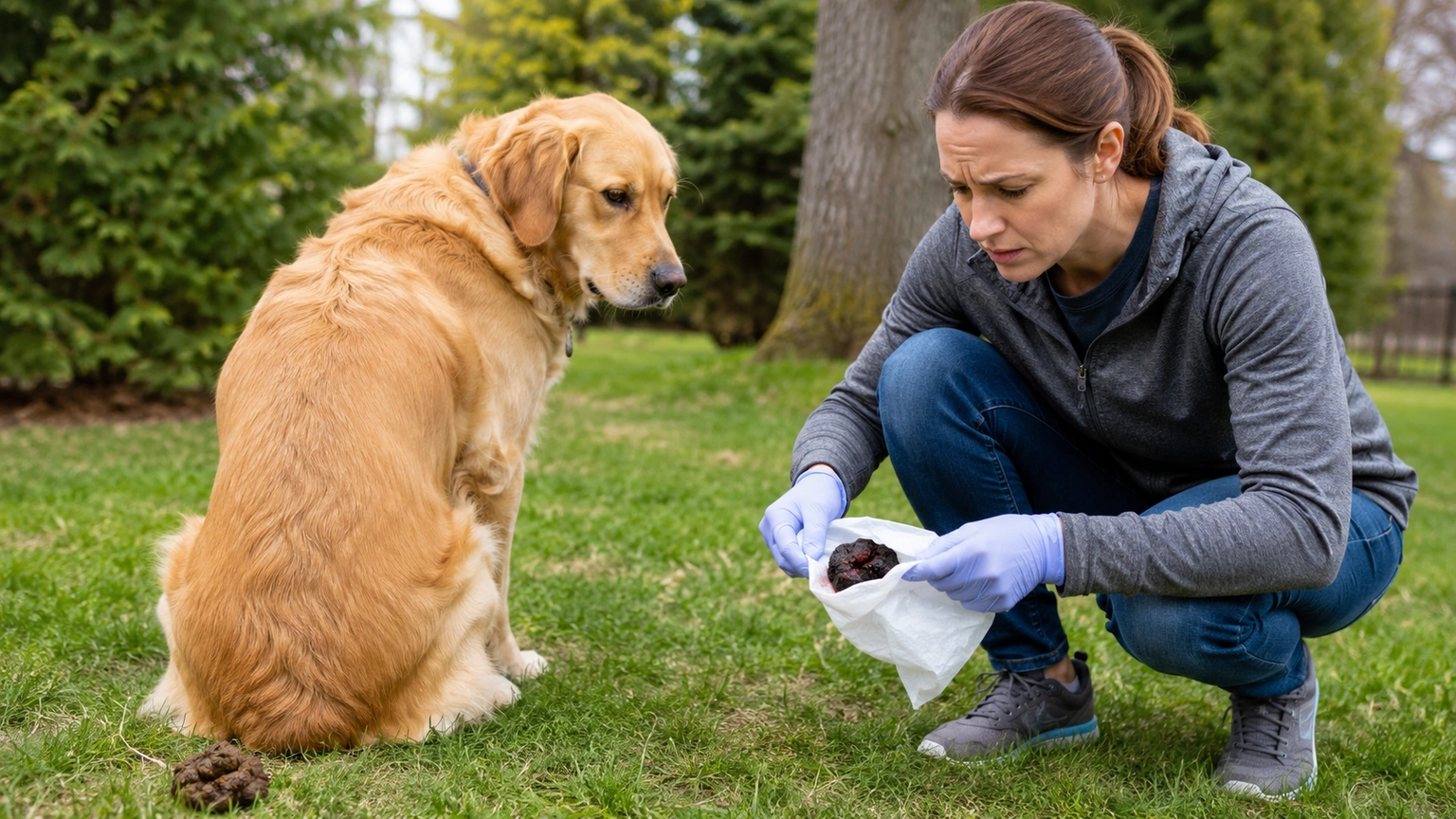
Blood in a dog’s stool is a sign, not a diagnosis. It can appear as bright red streaks, red mucus, bloody diarrhea, dark red material, or black tarry stool. Some causes are relatively minor, while others can become serious quickly. The color, amount, frequency, and your dog’s overall condition determine how urgently veterinary care is needed.
Quick Answer
Call your veterinarian when you see blood in your dog’s stool, even if your dog appears comfortable, because the causes range from lower-bowel irritation and parasites to infection, ulcers, clotting problems, toxins, and other disease. Seek urgent care for large amounts of blood, black tarry stool, repeated bloody diarrhea, vomiting plus bloody stool, pale gums, weakness, collapse, severe abdominal pain, or a puppy with significant gastrointestinal signs.
Bright Red Blood vs. Black Tarry Stool
The appearance of blood can provide a clue about where bleeding may be occurring, but it cannot identify the exact cause.
Hematochezia: Bright Red Blood
Hematochezia refers to fresh-looking red blood in the stool. It often originates from the lower gastrointestinal tract, such as the colon, rectum, or anus. It may appear as streaks on formed stool, blood mixed with mucus, or red watery diarrhea. Lower-bowel irritation, colitis, parasites, dietary problems, rectal injury, and other conditions can cause this pattern.
Melena: Black, Tarry Stool
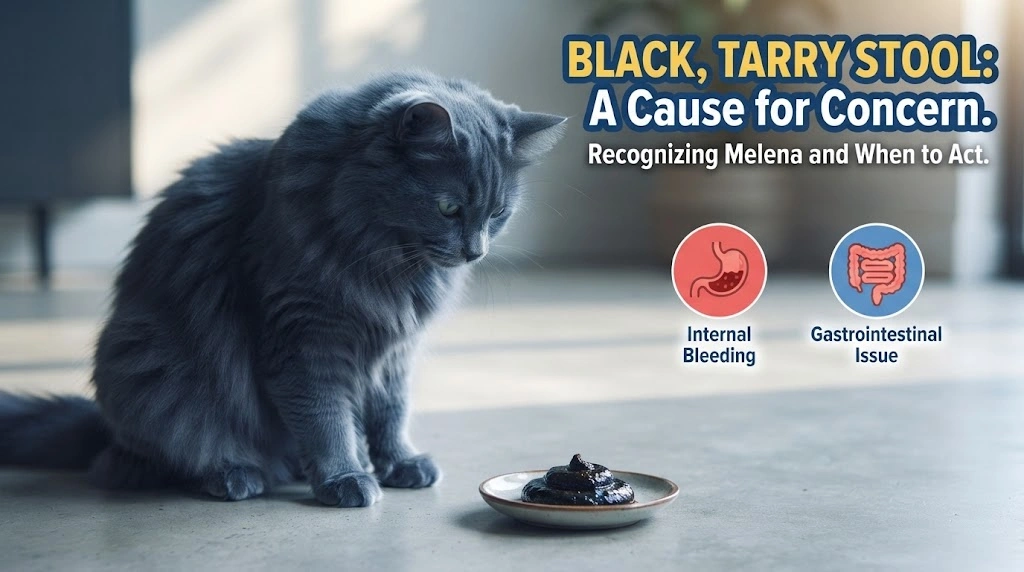
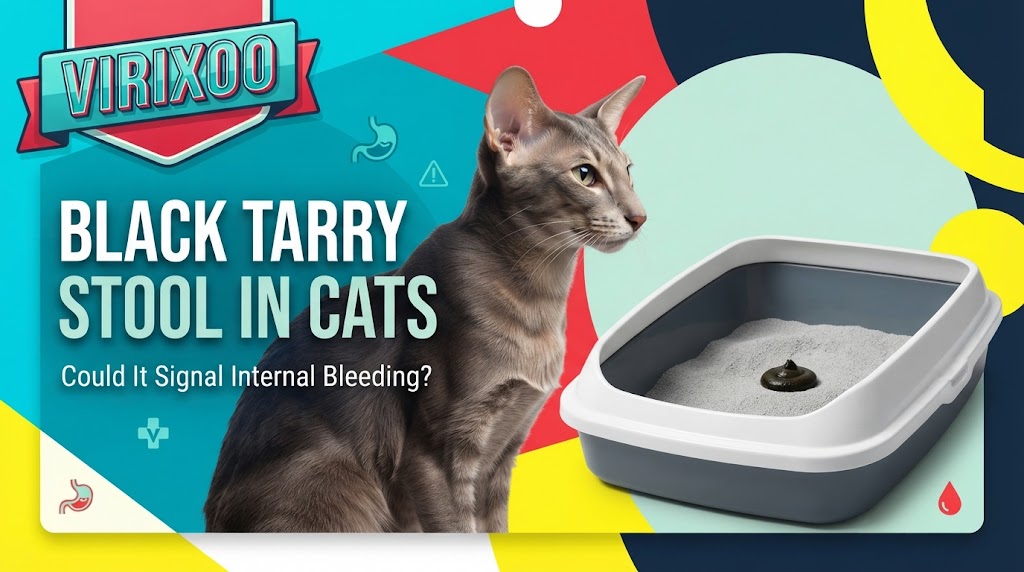
Melena is dark, often black and sticky or tar-like stool caused by digested blood. It can indicate bleeding higher in the gastrointestinal tract, such as the stomach or small intestine, although swallowed blood and other situations can sometimes complicate interpretation. Black tarry stool is more concerning than simply dark-brown stool and deserves prompt veterinary discussion.
How Much Blood Matters?
A tiny streak on one bowel movement is different from repeated bloody diarrhea or passing mostly blood. Amount alone does not determine seriousness, but larger or repeated blood loss increases concern for dehydration, anemia, shock, or significant gastrointestinal disease. Take a photo and, if your clinic asks for one, collect a fresh stool sample in a clean container.
Common Reasons a Dog May Poop Blood
1. Colitis or Lower-Bowel Irritation
Inflammation of the colon can cause frequent small bowel movements, straining, mucus, urgency, and bright red blood. Stress, sudden diet change, dietary indiscretion, infection, parasites, and inflammatory disease can all contribute. “Stress colitis” should not be assumed without considering other causes.
2. Dietary Indiscretion
Eating garbage, spoiled food, bones, rich table scraps, or unfamiliar food can irritate the gastrointestinal tract. A history of scavenging is useful, but blood plus vomiting, abdominal pain, or reduced appetite may indicate more than simple dietary upset.
3. Intestinal Parasites
Hookworms, whipworms, Giardia, and other parasites can contribute to diarrhea and blood depending on the dog and infection. Puppies are particularly vulnerable to dehydration and blood loss. Fecal testing may be needed even when parasites are not visible.
4. Infection
Bacterial or viral gastrointestinal disease can produce bloody diarrhea, vomiting, feverish behavior, or lethargy. Puppies and incompletely vaccinated dogs with severe gastrointestinal signs require especially prompt assessment because infections such as parvovirus can deteriorate rapidly.
5. Acute Hemorrhagic Diarrhea Syndrome
Some dogs develop sudden, profuse bloody diarrhea that can cause rapid fluid loss. The dog may initially appear brighter than expected despite significant gastrointestinal fluid loss. Repeated watery blood or “raspberry jam” stool is not a wait-and-see problem and should be assessed promptly.
6. Foreign Material or Intestinal Injury
Bones, sticks, fabric, toys, rocks, or other swallowed objects can irritate or obstruct the gastrointestinal tract. Bloody stool with repeated vomiting, abdominal pain, appetite loss, or inability to keep water down raises concern for a foreign body or other serious abdominal problem.
7. Ulcers or Upper Gastrointestinal Bleeding
Stomach or small-intestinal bleeding can produce melena. Ulcers may be associated with severe illness, certain medications, toxins, or other disease. Do not give human pain relievers such as ibuprofen, naproxen, or aspirin without veterinary direction; some can cause dangerous gastrointestinal and kidney problems in dogs.
8. Clotting Problems or Toxins
Rodenticide exposure, severe liver disease, platelet disorders, and other clotting problems can cause bleeding in more than one location. Bruising, nosebleeds, pale gums, weakness, or blood in urine alongside bloody stool increases urgency.
9. Masses, Polyps, or Chronic Gastrointestinal Disease
Repeated blood in the stool, weight loss, appetite change, or a long history of bowel changes may require investigation for chronic inflammation, polyps, masses, or other disease. Persistent bleeding should not be repeatedly treated at home without a diagnosis.
What to Record Before Calling the Vet
| Observation | Why It Helps |
|---|---|
| Bright red vs. black/tarry | Suggests whether bleeding may be lower or higher in the GI tract |
| Formed stool vs. watery diarrhea | Helps assess severity and fluid loss |
| Number of episodes | Shows whether bleeding is isolated or continuing |
| Vomiting | Raises dehydration and obstruction concerns |
| Appetite and energy | Helps judge systemic illness |
| Possible toxin or foreign-object access | Can make the situation urgent |
What You Can Do Safely at Home
Keep your dog quiet, prevent access to garbage and unfamiliar food, and make fresh water available if your dog can drink without vomiting. Do not give human anti-diarrheal drugs, pain relievers, antibiotics, or leftover medications. If your dog is repeatedly vomiting, weak, painful, or passing large amounts of blood, do not delay care while trying dietary home remedies.
Should You Bring a Stool Sample?
If your veterinary clinic requests one, collect a fresh sample in a clean sealed container and ask how they want it stored. A photo of the stool can also be valuable, especially when color or consistency changes before the appointment. Do not put yourself at risk trying to collect a sample from a dog that is painful, aggressive, or unstable.
When to Call Your Veterinarian the Same Day
Same-day advice is appropriate for visible blood that repeats, bloody diarrhea, blood with mucus and frequent straining, blood plus appetite loss, or any blood in a puppy, senior dog, or dog with chronic disease. Even a dog acting relatively normal can worsen, so recurring blood should be evaluated.
Emergency Warning Signs
- Large amounts of blood or passing mostly blood.
- Black tarry stool.
- Repeated vomiting plus bloody diarrhea.
- Pale or white gums.
- Collapse, severe weakness, or inability to stand.
- Severe abdominal pain or a swollen abdomen.
- Known or suspected rodenticide or other toxin exposure.
- Suspected foreign-object ingestion with vomiting or pain.
- Severe signs in a young or incompletely vaccinated puppy.
Related Virixoo Guides
For loose stool without visible blood, read Why Does My Dog Have Diarrhea?. If vomiting is also present, see Why Is My Dog Vomiting?. For loss of appetite, use Why Is My Dog Not Eating?. For unusual low energy, see Why Is My Dog Lethargic?.
Trusted References
PetMD’s veterinarian-reviewed guide to blood in dog stool explains hematochezia, melena, and warning signs. The American Kennel Club also provides an overview of blood in dog poop and when veterinary care is needed.
FAQ
My dog has a small amount of blood in the stool but is acting normal. Is it still important?
Yes. A small amount can come from lower-bowel irritation, but the cause cannot be identified from appearance alone. Call your veterinarian for advice, especially if the blood repeats, diarrhea develops, or your dog has any other symptoms.
What does black dog poop mean?
Some foods and medications can darken stool, but true black tarry stool can represent digested blood called melena. If the stool is unusually black, sticky, or tar-like, contact a veterinarian promptly.
Can stress cause blood in dog stool?
Stress can contribute to colitis in some dogs, which may produce mucus and bright red blood, but infection, parasites, dietary problems, and other diseases can look similar. Do not assume stress is the cause when blood is present.
Should I give a bland diet immediately?
Feeding advice depends on the dog’s age, medical history, severity, and whether vomiting is present. When blood is visible, call your veterinarian before relying on a generic home diet plan.
Bottom line: Blood in stool is information worth acting on. Bright red blood often comes from the lower bowel, while black tarry stool can reflect digested blood from higher in the gastrointestinal tract. Judge urgency by amount, repetition, vomiting, gum color, pain, energy, and your dog’s overall condition.