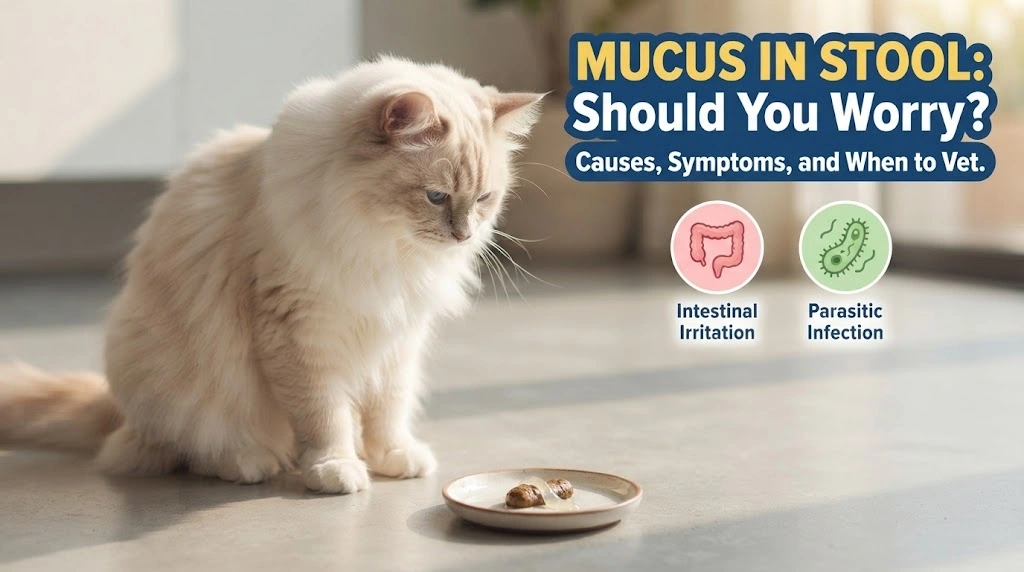
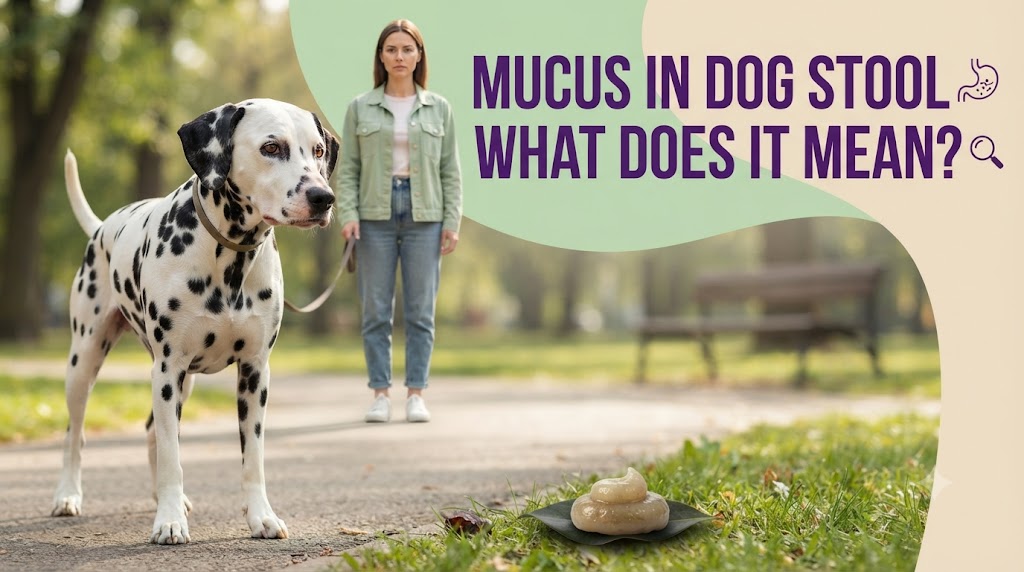
A small amount of clear or jelly-like mucus on a dog’s stool can appear when the large intestine is irritated, but repeated mucus—especially with blood, diarrhea, pain, vomiting, or lethargy—deserves more attention. Mucus is produced naturally by the intestinal lining. Seeing more of it tells you the colon may be reacting to something; it does not identify the cause by itself.
Quick answer
If an otherwise healthy adult dog passes one stool with a small amount of mucus and continues eating, drinking, and acting normally, careful monitoring may be reasonable. Record what the stool looks like and avoid sudden diet experiments. Contact a veterinarian if mucus keeps returning, diarrhea persists, the dog strains repeatedly, appetite drops, or blood is present. Seek urgent care for severe weakness, collapse, repeated vomiting, black tar-like stool, a painful swollen abdomen, or heavy bleeding.
What mucus in stool actually means
The colon normally uses mucus to lubricate stool and protect its surface. When the colon becomes irritated, more mucus may become visible. Owners often describe it as clear slime, a shiny coating, strings, or jelly around the feces. That appearance commonly accompanies large-bowel irritation, but many different problems can produce it.
The most useful information is the full pattern: stool frequency, consistency, color, straining, urgency, blood, appetite, vomiting, recent diet changes, garbage access, parasite prevention, medications, travel, and stress.
Common situations that can cause more mucus
Sudden diet change or dietary indiscretion
A rapid switch in food, rich treats, table scraps, garbage, or unusual material eaten outdoors can irritate the gastrointestinal tract. Some dogs improve quickly once the trigger passes, while others develop persistent diarrhea or vomiting and need treatment.
Stress-related large-bowel upset
Boarding, travel, visitors, schedule changes, or other stressful events can coincide with frequent small stools, urgency, straining, and mucus in some dogs. Stress may contribute, but it should not be used to dismiss significant bleeding, pain, or persistent illness.
Parasites and infectious causes
Intestinal parasites and infectious organisms can contribute to diarrhea and mucus. The best testing and prevention plan depends on age, environment, region, exposure, and previous treatment. Not seeing worms does not rule out parasites.
Chronic intestinal inflammation
Repeated mucus can occur with chronic intestinal disease. When episodes return over weeks or months, the veterinarian may need a broader history and diagnostic workup rather than another short-term diet change.
Does the color matter?
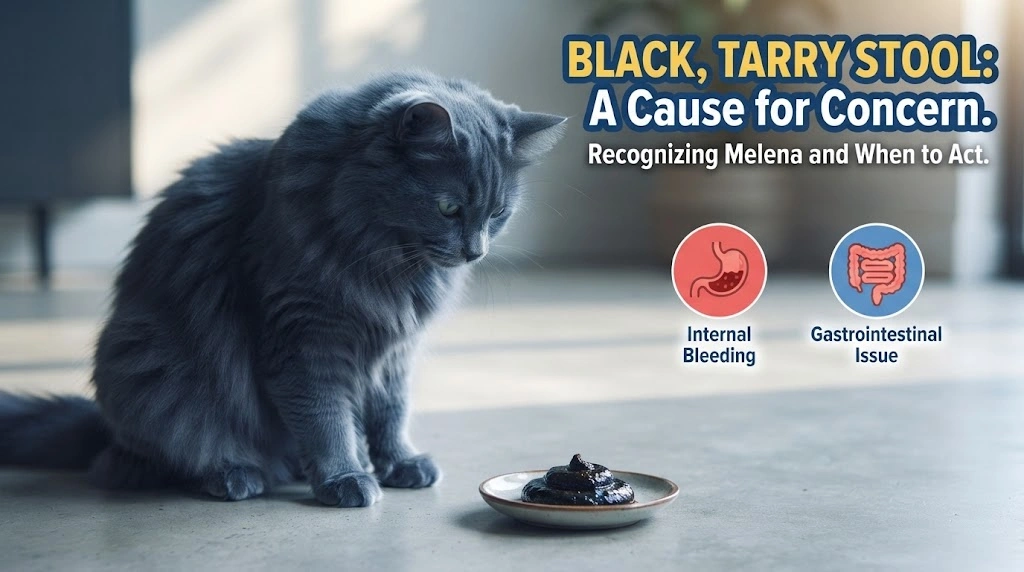
Clear or whitish mucus is common with colon irritation. Bright red streaks may reflect fresh blood from the lower intestinal tract or rectum, especially when a dog strains. Black, sticky, tar-like stool is different and can indicate digested blood from higher in the gastrointestinal tract.
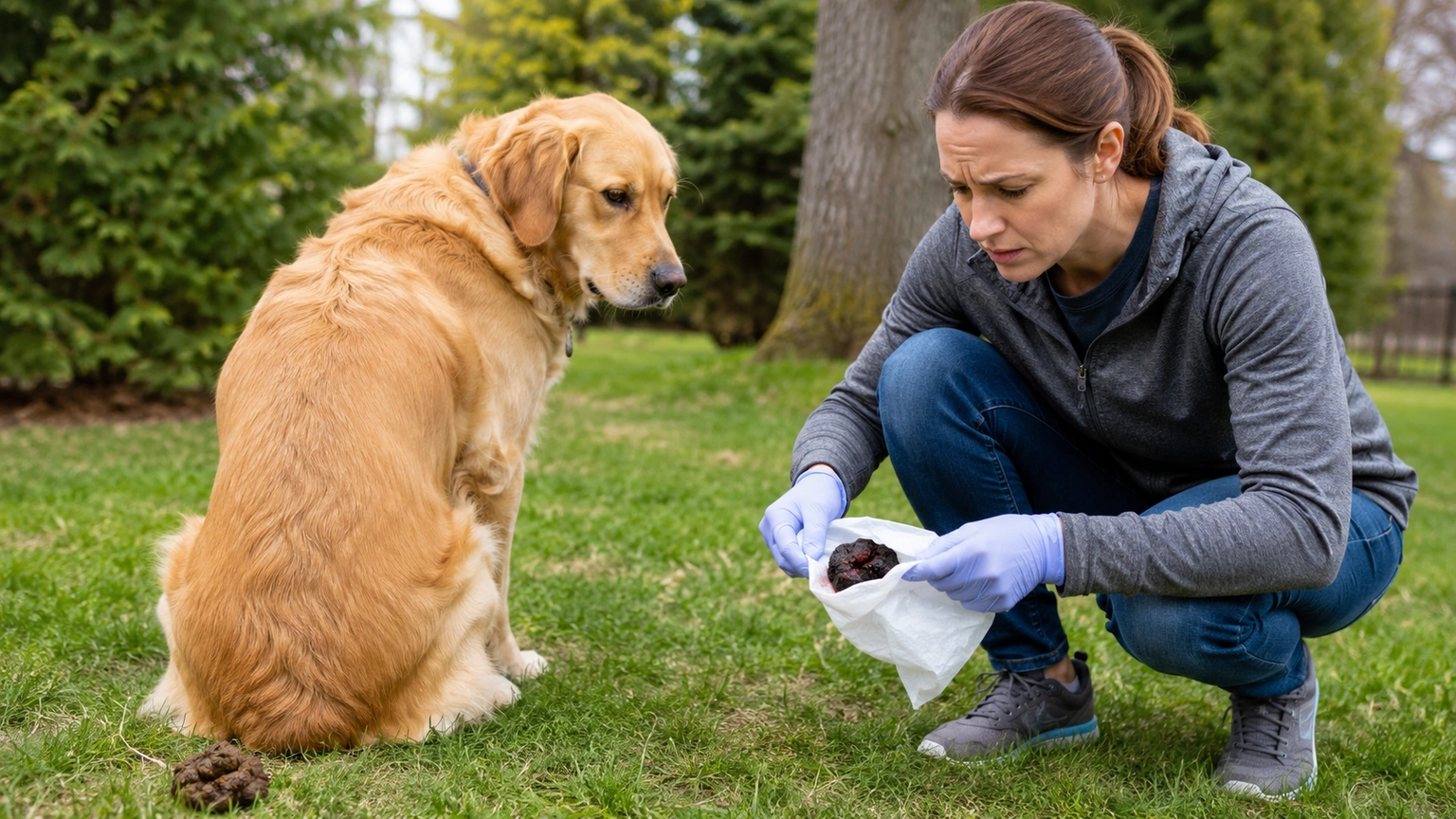
Food, supplements, and medications can also alter stool color. If the appearance is unusual, take a clear photo in natural light before cleaning it up.
Straining can be confusing
A dog with large-bowel diarrhea may squat repeatedly and pass only small amounts of stool, mucus, or fresh blood. Owners sometimes mistake this for constipation because the dog keeps trying. If you are unsure whether the dog is trying to pass stool or urine, watch closely. Inability to urinate is an emergency.
What to check at home
| Observation | Why it matters |
|---|---|
| Number of bowel movements | Frequent small stools often suggest large-bowel irritation |
| Stool consistency | Helps distinguish isolated mucus from active diarrhea |
| Blood color | Fresh red streaks differ from black tar-like stool |
| Vomiting | Raises concern about broader gastrointestinal illness |
| Appetite and energy | A sick or lethargic dog needs earlier evaluation |
Should you change food immediately?
Avoid cycling through several diets in a few days. Rapid changes can make stool harder to interpret and may worsen gastrointestinal upset. If your dog eats a veterinarian-prescribed diet, do not discontinue it without advice. There is no single home diet that is right for every dog with mucus in stool.
Should you give medicine or probiotics?
Do not give human anti-diarrheal medication, leftover antibiotics, pain relievers, or other drugs without veterinary direction. Some are unsafe for dogs, some interact with medications, and some hide important signs. Veterinary probiotics may be useful in certain situations, but product choice should fit the individual dog.
When a stool sample helps
If your veterinarian asks for a fecal sample, collect a fresh portion in a clean, sealed container and follow the clinic’s storage instructions. A sample can help with parasite testing and other evaluation, but not every cause of mucus is identified by a single test. Tell the veterinarian which deworming products were used and when.
Puppies need a lower threshold for help
Young puppies can dehydrate quickly when diarrhea is frequent, and they may be more vulnerable to infection and parasites. A puppy with repeated diarrhea, vomiting, weakness, poor appetite, or blood in stool should be assessed promptly rather than managed with repeated home remedies.
Why recurrence matters
One isolated episode after a clear dietary mistake is different from mucus returning every few weeks. Recurrent large-bowel signs can point to an unresolved trigger, parasites, diet sensitivity, chronic inflammation, or another problem. Keep a simple calendar showing dates, foods, treats, stressful events, medications, and stool changes. Patterns that are impossible to remember later may become obvious when written down.
What about fresh red blood?
A small bright-red streak can occur when an irritated colon or rectum bleeds during straining, but the amount and the dog’s overall condition matter. Repeated bloody diarrhea, large amounts of blood, weakness, vomiting, or dehydration warrants prompt care. Do not assume red blood is harmless simply because it looks fresh.
What about black stool?
Black, sticky, tar-like stool can be associated with digested blood and is more concerning than ordinary dark-brown feces. Certain foods and medications can darken stool, but if you are uncertain and the dog is ill, contact a veterinarian. A photograph and medication list can help.
Hydration is part of the decision
Diarrhea increases fluid loss. Make sure fresh water remains available and watch for reduced drinking, sticky gums, weakness, and decreased urination. Do not force large amounts of water into a nauseated dog. If your dog refuses water, repeatedly vomits it back up, or becomes weak, veterinary care is more appropriate than trying multiple home rehydration products.
When to call the veterinarian
Call if mucus appears repeatedly, diarrhea persists, the dog strains often, fresh blood keeps appearing, appetite decreases, weight loss develops, or episodes recur. Seek urgent care for severe weakness, collapse, repeated vomiting, a painful or rapidly enlarging abdomen, large amounts of blood, black tar-like stool, or signs of dehydration.
Bottom line
Mucus is a sign that the intestinal lining, especially the colon, may be irritated; it is not a diagnosis. One mild episode in a comfortable adult dog may resolve, but recurrence, blood, vomiting, appetite loss, pain, or weakness deserves veterinary attention. A clear stool history and a fresh fecal sample, when requested, are more useful than repeatedly changing foods or giving unprescribed medication.
A practical stool diary
For several days, record stool frequency, consistency, mucus amount, blood color, appetite, vomiting, and any new food or treat. If signs improve, the diary confirms the episode was short-lived. If they recur, the same record can reveal patterns tied to diet changes, stress, medications, or other exposures.
Do not intentionally reintroduce a suspected trigger just to test the theory.
How to decide whether to monitor or call
Use your dog’s normal baseline as the reference. A mild, familiar pattern in a comfortable dog is very different from a new or rapidly changing problem. With mucus in dog stool, contact a veterinary professional sooner when pain, weakness, bleeding, vomiting, breathing changes, appetite loss, or rapid progression appears. Online guidance can organize what you observe, but it cannot replace an examination when your dog is becoming unwell.
When you do call, give a simple timeline: when the change began, whether it is getting better or worse, what other symptoms are present, and what medications or recent exposures may be relevant. Clear information helps the veterinary team triage the situation efficiently.
Why stool frequency changes the interpretation
Large-bowel irritation often produces frequent attempts to defecate, smaller volumes, urgency, mucus, and sometimes bright-red blood. A dog passing one normal-sized formed stool with a thin mucus coating has a different pattern from a dog squatting repeatedly overnight and passing only small amounts. Count bowel movements for a day or two and note whether the dog can rest comfortably between them.
Frequent straining can irritate the rectum and make fresh blood more visible. Even so, repeated bloody stool should not simply be blamed on straining. The veterinarian needs the full pattern, especially if appetite, hydration, or energy changes.
How to avoid making the gut harder to assess
When owners see mucus, it is tempting to change food, add supplements, give pumpkin, start a probiotic, and use medication all on the same day. If the dog then improves or worsens, no one knows which change mattered. Unless your veterinarian has already given a plan for this specific dog, keep interventions simple and seek guidance when signs persist.
What a veterinarian may investigate
Depending on the dog’s age and history, the veterinarian may consider fecal testing, hydration status, diet history, abdominal examination, blood work, or other tests. Recurrent episodes may require a more structured dietary or gastrointestinal workup. The goal is to identify a pattern rather than repeatedly treating each episode as an isolated event.
How to Tell Whether the Gut Is Settling
Improvement means more than seeing less mucus. Stool frequency should move back toward normal, urgency and straining should decrease, appetite should remain steady, and the dog should stay hydrated and comfortable. If the stool looks slightly better but the dog becomes lethargic, vomits, or stops eating, the overall situation is not improving.
Keep foods and treats consistent during observation unless your veterinarian recommends a change. This prevents new dietary variables from confusing the pattern and makes recurrent episodes easier to recognize.