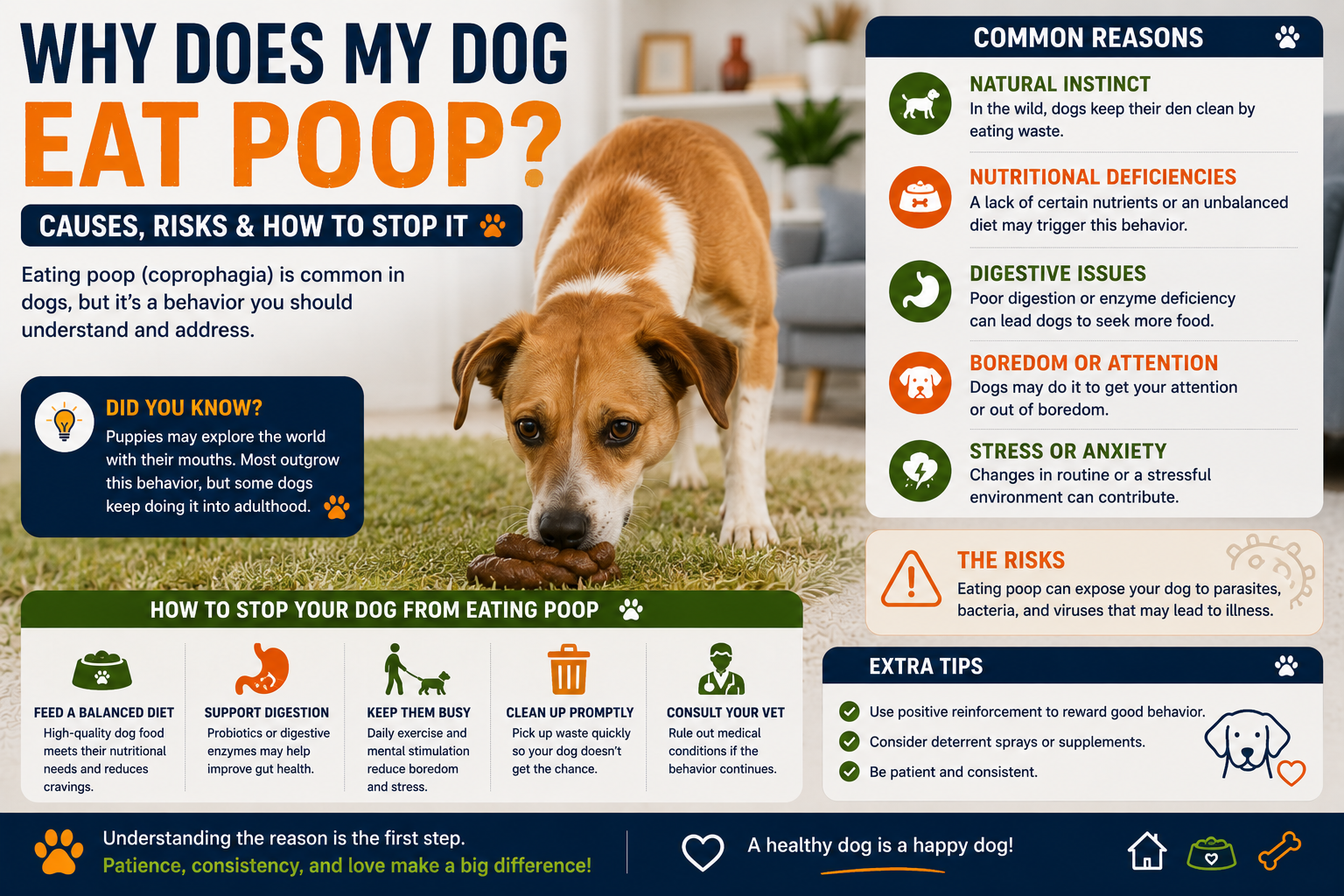
Eating stool, called coprophagia, is unpleasant for owners but not rare in dogs. Puppies may investigate feces as part of exploration, and some adult dogs develop the habit because stool is readily available or the behavior has been reinforced. In other cases, unusually strong hunger or digestive problems can contribute, so a sudden change deserves attention.
Quick Answer
The most effective first step is management: remove stool promptly, supervise outdoor toilet breaks, use a leash when necessary, and reward your dog for turning away and returning to you. Avoid punishment, because it can teach a dog to consume feces faster or hide the behavior. If coprophagia begins suddenly, is extreme, or occurs with weight loss, diarrhea, increased appetite, or other health changes, speak with your veterinarian.
Why Dogs May Eat Stool
Puppy Exploration
Young dogs investigate the environment with their mouths. Some puppies sample many non-food objects, including feces. Consistent cleanup and redirection can prevent repetition from turning into a stronger habit.
Easy Access and Repetition
Behaviors that are repeatedly practiced can become habits. A yard where stool remains available gives a dog frequent opportunities to rehearse coprophagia.
Attention and Owner Reactions
A dramatic chase can accidentally turn stool-stealing into a game. If the dog grabs feces and people immediately run toward it, the behavior may gain extra value through attention and excitement.
Hunger or Medical Problems
Increased appetite can occur with inadequate calorie intake, certain medications, parasites, digestive disease, and some metabolic or hormonal disorders. Coprophagia alone does not diagnose a medical condition, but a new behavior combined with weight loss or abnormal stool should be investigated.
A Practical Prevention Plan
- Pick up feces promptly. Prevention works best when the dog never reaches the stool.
- Supervise toilet breaks. Use a leash if the dog immediately turns toward feces after defecating.
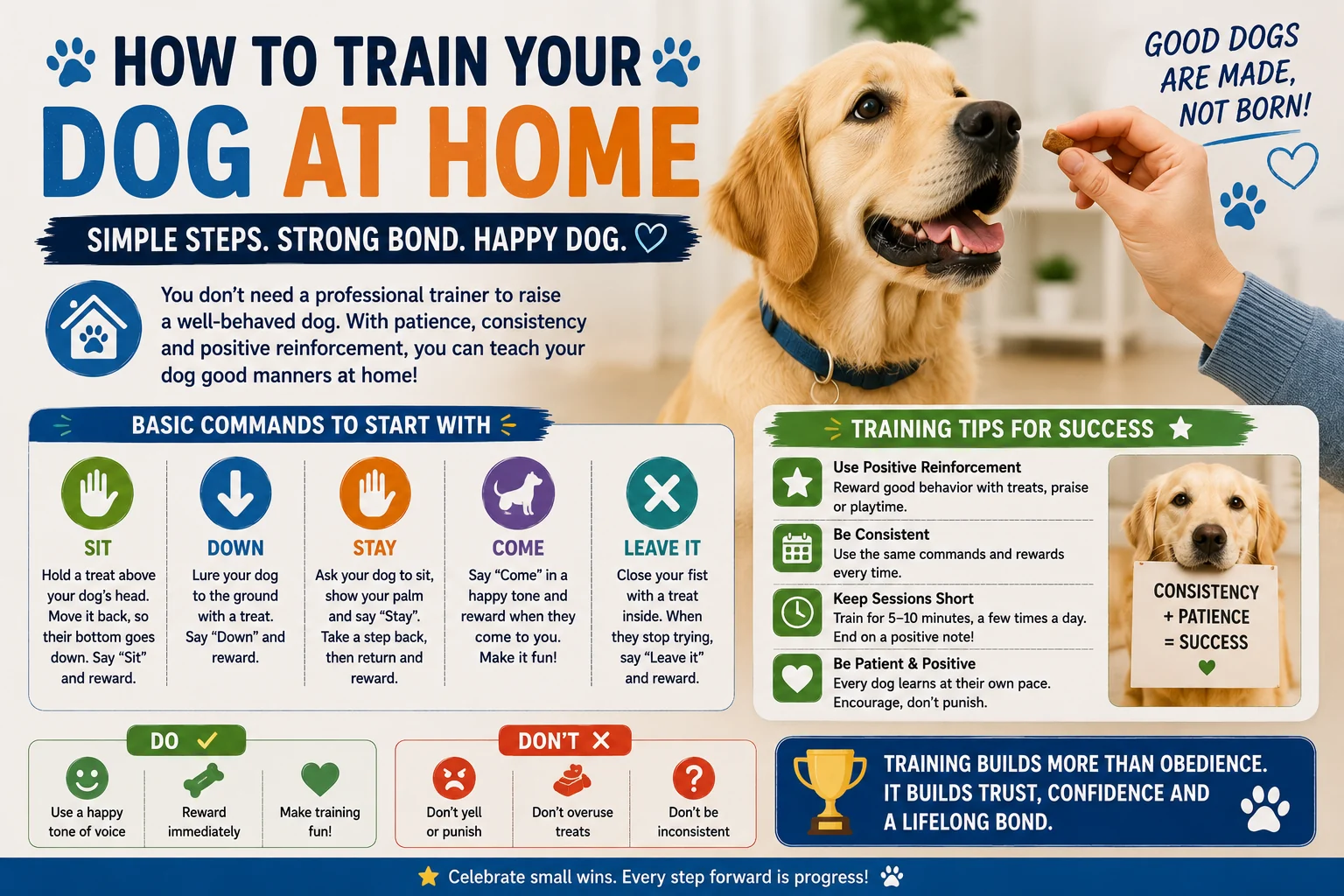
- Teach a reliable “leave it.” Begin with low-value objects indoors and reward generously for disengaging.
- Call the dog away after toileting. Offer a high-value reward at a distance from the stool.
- Provide appropriate enrichment. Sniffing, food puzzles, training, chewing, and exercise can reduce opportunities for repetitive scavenging.
Why Punishment Usually Backfires
Scolding near stool can make the dog anxious about eliminating in front of you or encourage rapid swallowing before you can intervene. Prevention and reinforcement of an incompatible behavior are more useful than punishment after the dog has already reached the stool.
What About Stool-Deterrent Supplements?
Products marketed to make feces taste unpleasant have inconsistent results and do not replace cleanup and training. Before adding supplements, discuss them with your veterinarian, especially if your dog has a medical condition or takes medication.
Health and Hygiene Considerations
Eating feces can expose dogs to parasites or infectious organisms, particularly when the stool comes from other animals. Maintain regular veterinary preventive care, clean up promptly, and do not allow dogs to raid cat litter boxes or areas contaminated by wildlife feces.
When to Ask a Veterinarian
Arrange veterinary advice if the behavior starts suddenly in an adult dog, becomes excessive, or is accompanied by weight loss, increased hunger, vomiting, chronic diarrhea, poor coat condition, increased thirst, or other health changes. Your veterinarian may review diet, parasite prevention, medication, stool quality, and overall health.
Related Virixoo Guides
If stool quality is abnormal, read Why Does My Dog Have Diarrhea?. If your dog seems unusually hungry while losing weight, see Why Is My Dog Losing Weight?.
Frequently Asked Questions
Will my puppy grow out of eating poop?
Some puppies stop as they mature, but relying on age alone allows the habit to be rehearsed. Prompt cleanup and training are still worthwhile.
Does eating poop mean my dog's diet is deficient?
Not necessarily. Many dogs with nutritionally complete diets still show coprophagia. A veterinarian can assess the diet and investigate medical concerns when other signs are present.
Can pineapple or other foods stop coprophagia?
Home remedies are unreliable and can add unnecessary calories or digestive upset. Management and training are more predictable strategies.
Bottom line: Prevent access first, reward your dog for moving away from stool, avoid punishment, and investigate sudden or excessive coprophagia when it occurs with other health changes.