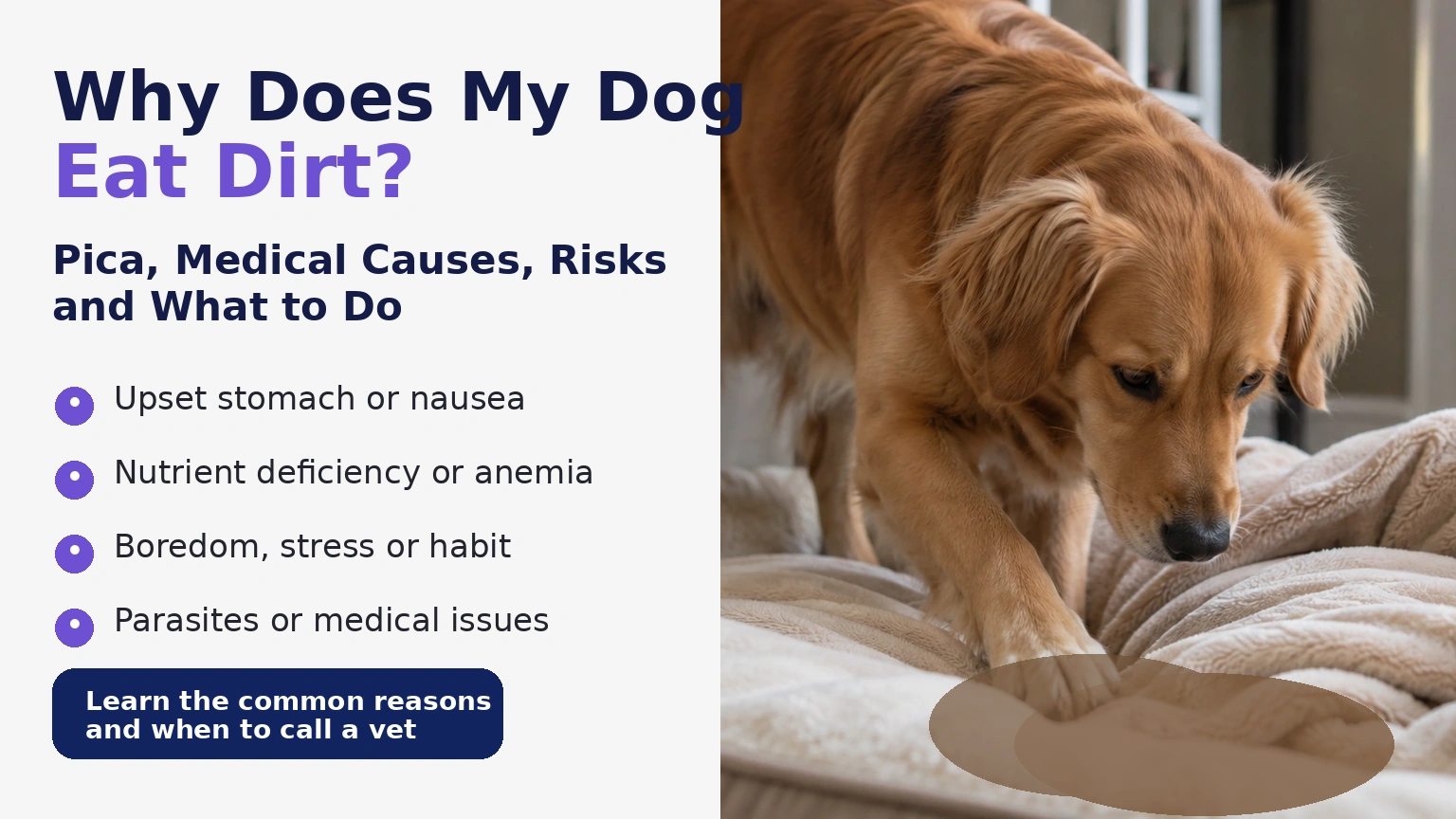
Dogs sometimes taste soil out of curiosity, but repeated dirt eating deserves attention. Deliberately consuming non-food material is called pica, and eating soil specifically is sometimes called geophagia. The behavior can be driven by exploration, boredom, hunger, stress, learned habits, gastrointestinal discomfort, nutritional problems, anemia, or other medical conditions.
Quick Answer
If your dog takes an occasional small mouthful of clean soil but is otherwise normal, prevent access and watch for recurrence. Repeated, intense, or sudden dirt eating—especially with vomiting, diarrhea, weight loss, pale gums, abnormal appetite, lethargy, or swallowing rocks—should be discussed with a veterinarian. Soil can contain parasites, fertilizer, pesticides, sharp material, or stones that can cause toxicity, dental injury, or intestinal obstruction.
Is Eating Dirt the Same as Pica?
Pica describes repeated ingestion of non-food objects or materials. Dogs with pica may eat dirt, rocks, fabric, plastic, paper, wood, or other items. A dog that briefly mouths something and spits it out is different from a dog that intentionally swallows non-food material. The pattern matters because repeated ingestion can create both medical risk and a self-reinforcing habit.
Why Dogs May Eat Dirt
1. Curiosity and Exploration
Puppies and young dogs investigate with their mouths. A puppy may sample soil while digging or exploring. Curiosity alone is less concerning when the behavior is brief and easily redirected, but repeated swallowing should still be prevented because soil can contain hazardous material.
2. Hunger or Feeding Routine
A dog that is underfed, has unusually high calorie needs, or is intensely hungry may seek non-food material. This does not mean that every dog eating dirt has a nutritional deficiency. Review the amount fed, calorie density, treats, body condition, and feeding schedule with your veterinarian rather than automatically adding supplements.
3. Boredom and Lack of Enrichment
Dogs left for long periods in a yard may dig and eat soil simply because the behavior is available and stimulating. Appropriate exercise, sniffing walks, training, food puzzles, safe chewing opportunities, and social interaction can reduce boredom-driven repetition.
4. Stress or Anxiety
Some dogs ingest non-food items during stress. Separation-related distress, environmental change, conflict, or repetitive compulsive patterns may contribute. Behavioral explanations should be considered after obvious medical concerns have been reviewed, especially when the behavior starts suddenly in an adult dog.
5. Gastrointestinal Discomfort
Nausea, gastritis, intestinal disease, or other digestive problems can alter eating behavior. Dirt eating with vomiting, diarrhea, appetite changes, lip licking, abdominal discomfort, or weight loss deserves medical assessment. For vomiting, see Why Is My Dog Vomiting?.
6. Anemia
Severe anemia has been associated with pica in some dogs. Pale gums, weakness, rapid breathing, exercise intolerance, or collapse are important warning signs. Anemia is not diagnosed by dirt eating alone; blood testing is required to determine whether red blood cells are low and why.
7. Nutritional or Absorption Problems
Dogs with an unbalanced diet, chronic gastrointestinal disease, pancreatic problems, or other conditions affecting nutrient absorption may develop unusual eating behavior. Do not assume that adding iron, calcium, vitamins, or minerals is safe. Excess supplementation can also cause harm and may interfere with a proper diagnosis.
8. Medication-Related Hunger
Some medications can increase appetite, which may make scavenging or pica more likely. If a new behavior appears after a medication change, contact the prescribing veterinarian rather than stopping the medication on your own.
Why Eating Dirt Can Be Dangerous
Intestinal Obstruction
Soil often contains stones, mulch, sticks, plastic, or other debris. Swallowed foreign material can lodge in the stomach or intestines. Repeated vomiting, abdominal pain, inability to keep food or water down, reduced appetite, or marked lethargy after swallowing foreign material requires prompt veterinary care.
Toxins and Chemicals
Garden soil and lawns may contain fertilizer, pesticides, herbicides, slug bait, rodenticide, or other chemicals. If your dog eats soil from a recently treated area, identify the product if possible and contact a veterinarian or animal poison service promptly.
Parasites and Infectious Material
Contaminated soil can expose dogs to parasite eggs, larvae, or fecal material from other animals. Routine veterinary preventive care and prompt stool cleanup reduce risk, but they do not make deliberate soil eating safe.
Dental Injury and Choking
Rocks mixed with dirt can crack teeth, lodge in the mouth, or cause choking. A dog that repeatedly seeks rocks deserves immediate management because the potential consequences are more serious than simple soil ingestion.
Questions to Ask About the Pattern
| Question | Why It Matters |
|---|---|
| Did the behavior start suddenly? | New pica in an adult dog raises medical concern |
| Is the dog swallowing rocks too? | Obstruction and dental risk increase sharply |
| Is appetite unusually high? | Can point toward hunger, medication effects, or disease |
| Are gums pale or energy low? | Anemia or systemic illness needs evaluation |
| Is there vomiting or diarrhea? | Gastrointestinal disease becomes more important |
| Does it happen mainly when alone? | Stress, boredom, or separation-related behavior may contribute |
What to Do the Moment Your Dog Tries to Eat Dirt
Use calm prevention rather than a chase. Move the dog away with the leash, cue a practiced “leave it,” and reward disengagement. If the dog guards objects or becomes defensive around scavenged material, do not reach into the mouth and create a bite risk. A reward-based trainer can help teach safe trading and leave-it skills.
How to Reduce Dirt Eating
- Supervise outdoor time. Unsupervised access allows the behavior to be rehearsed.
- Use a leash in high-risk areas. Distance is easier than trying to remove soil after it is already in the mouth.
- Teach “leave it” and “drop.” Practice first with safe, low-value objects indoors.
- Increase enrichment. Sniffing, training, food puzzles, and appropriate chewing can compete with scavenging.
- Review diet and body condition. Ask your veterinarian whether calories, meal timing, and diet quality are appropriate.
- Investigate persistent pica medically. Behavior modification works better when medical drivers are addressed.
Should I Use a Basket Muzzle?
A properly fitted basket muzzle can be a useful safety tool for some dogs that repeatedly ingest dangerous objects outdoors because it allows panting and, in many designs, drinking and receiving treats. It must be introduced gradually and positively. A muzzle does not replace medical evaluation or training and should never be used to punish the dog.
When to Call the Veterinarian
Arrange an examination if dirt eating is frequent, intense, new in an adult dog, or associated with weight loss, poor coat quality, diarrhea, vomiting, appetite change, pale gums, lethargy, or increased thirst. Your veterinarian may recommend a physical exam, bloodwork, urinalysis, fecal testing, or other tests based on the full pattern.
When It Is an Emergency
Seek urgent care after ingestion of a known toxin, large stones, sharp material, or a substantial amount of dirt followed by repeated vomiting, abdominal pain, collapse, severe weakness, inability to pass stool, or inability to keep water down. Do not induce vomiting unless a veterinarian or poison professional specifically instructs you to do so.
Related Virixoo Guides
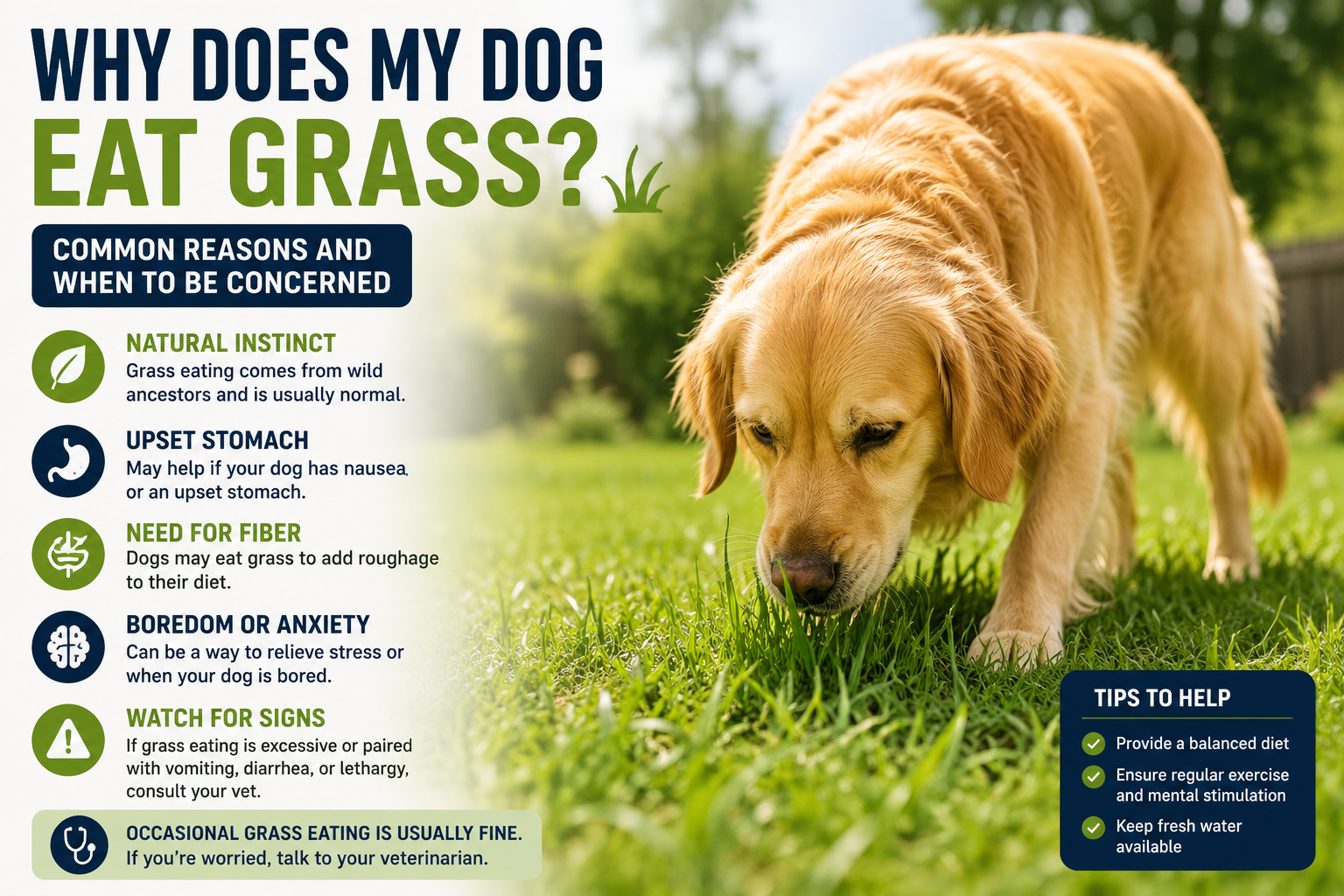
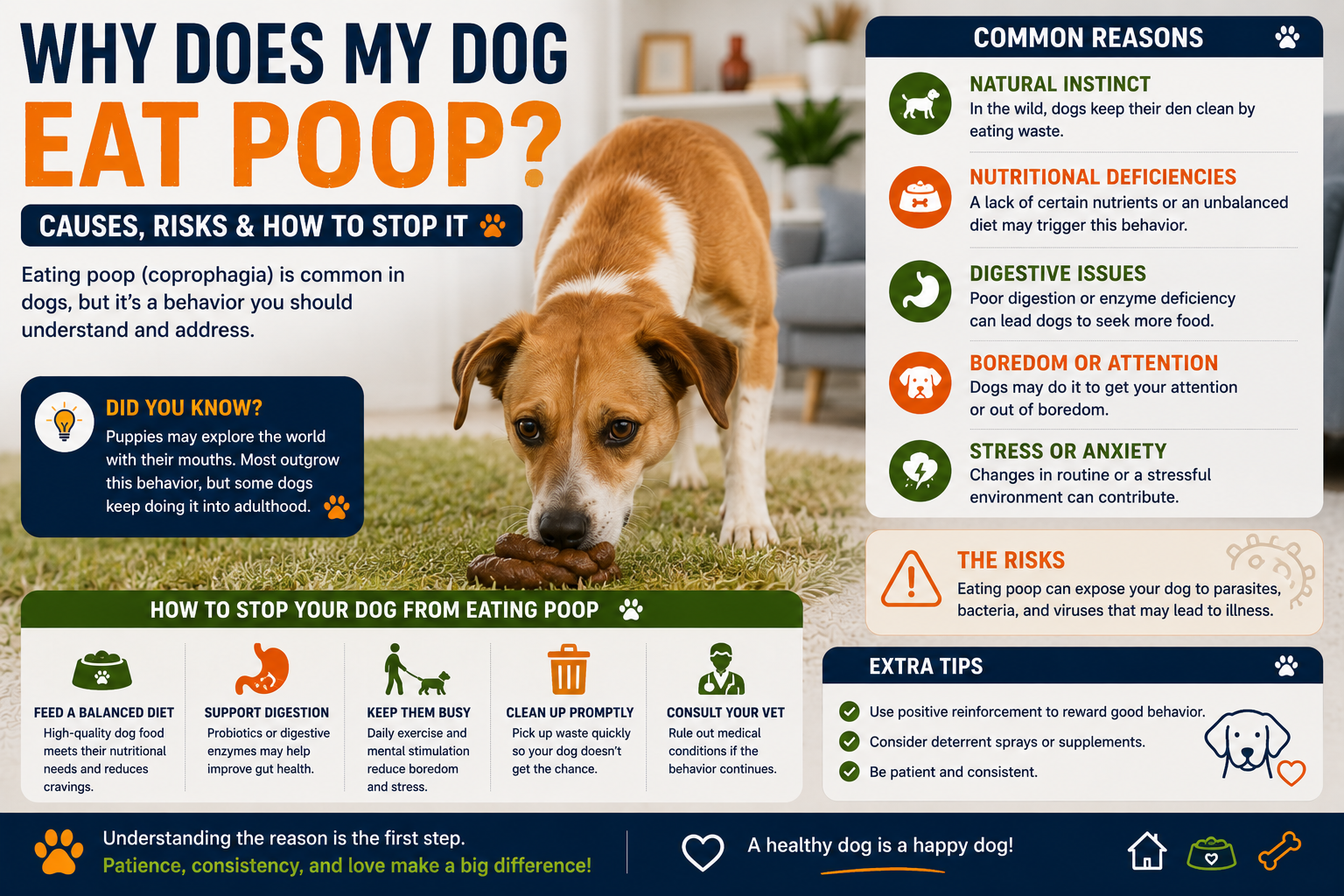
If your dog eats other unusual material, review Why Does My Dog Eat Grass? and Why Does My Dog Eat Poop?. If the behavior occurs with weight loss, see Why Is My Dog Losing Weight?. For separation-related behavior, see How to Help a Dog With Separation Anxiety.
Trusted References
PetMD’s veterinarian-authored guide to dogs eating dirt reviews pica, medical causes, and ingestion risks. The American Kennel Club also explains medical and behavioral reasons dogs may eat soil.
FAQ
Does eating dirt mean my dog is missing a vitamin?
Not necessarily. Nutritional problems are only one possibility. Boredom, stress, gastrointestinal disease, anemia, hunger, and learned behavior can also contribute. Do not add supplements without veterinary guidance.
Why is my dog eating dirt and grass?
Dogs may eat both materials for different reasons, including exploration, hunger, behavior, or gastrointestinal discomfort. Persistent or sudden pica deserves evaluation, especially when other symptoms are present.
Can dirt cause a blockage?
Yes. Large amounts of soil, rocks, mulch, or other debris can contribute to gastrointestinal obstruction or impaction. Repeated vomiting, abdominal pain, or inability to keep water down after ingestion requires prompt veterinary care.
Bottom line: Prevent access first, then determine why the behavior is happening. Repeated dirt eating is worth investigating because the risk comes both from the underlying cause and from what may be hidden in the soil.