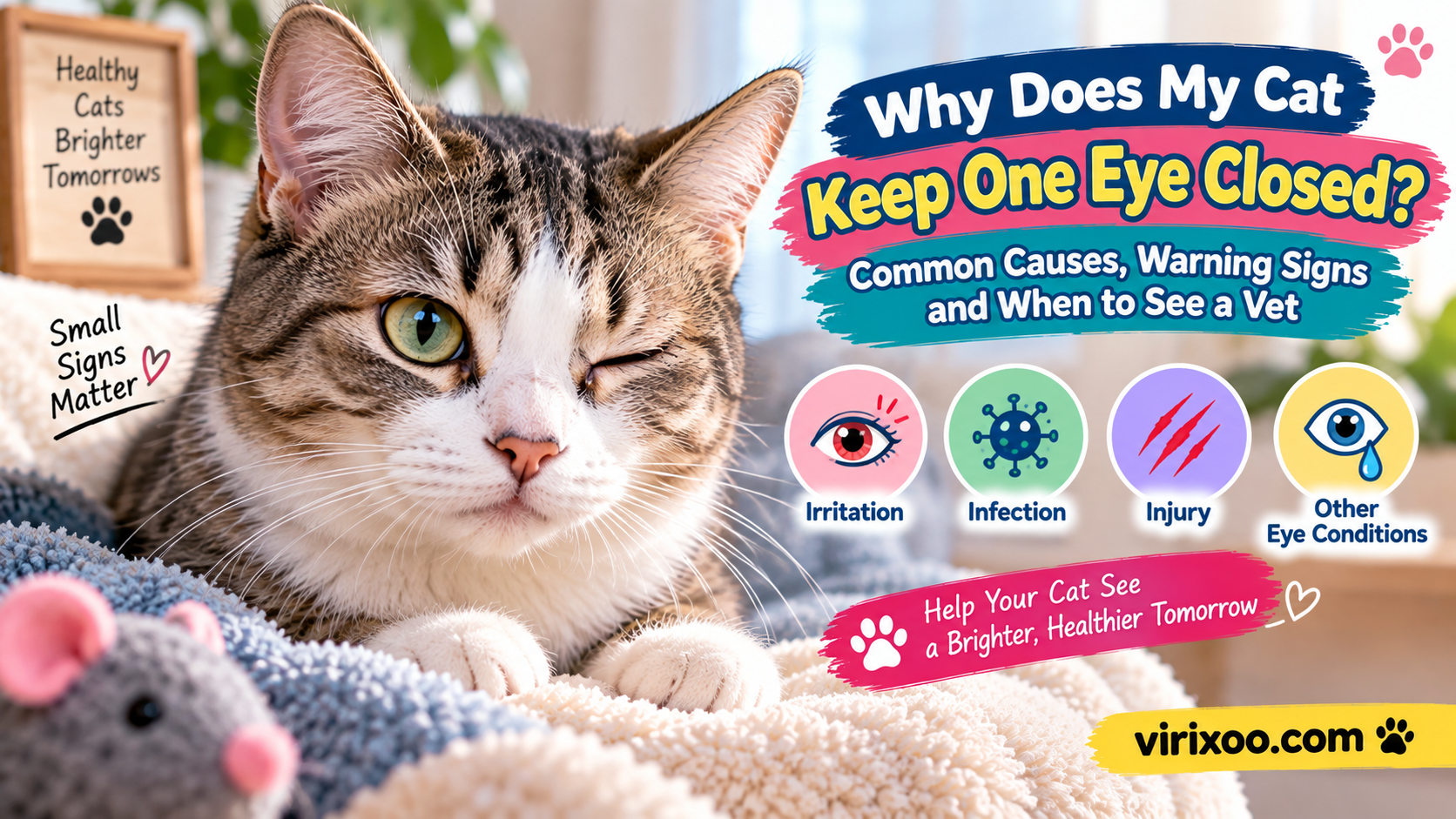
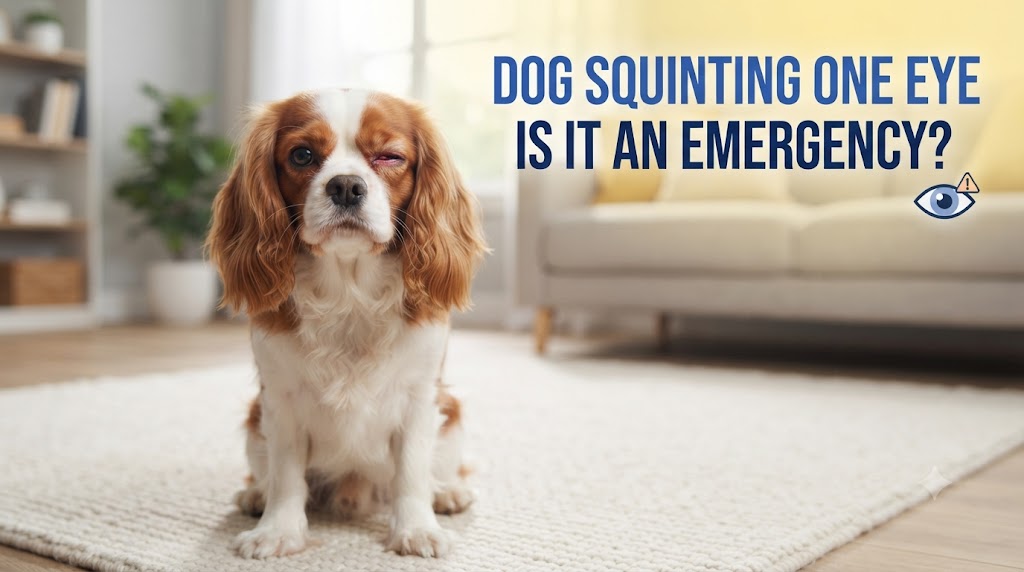
A dog squinting one eye is often protecting an eye that feels painful or irritated. Causes range from surface debris and small scratches to corneal ulcers, eyelid problems, inflammation, glaucoma, and trauma. Because eye conditions can worsen quickly and different problems can look similar at home, persistent one-sided squinting deserves prompt veterinary attention.
Quick answer
If your dog suddenly holds one eye partly or fully closed, prevent rubbing and arrange a veterinary examination, especially if there is redness, cloudiness, discharge, swelling, or visible injury. Do not use leftover eye drops or human medication. Seek urgent care for a bulging eye, severe trauma, chemical exposure, sudden vision loss, marked cloudiness, or intense pain.
Why squinting matters
Squinting is a protective response. Closing the eyelids reduces light and movement over a painful surface. Dogs may also blink rapidly, tear, rub the face, avoid bright light, or keep the head turned away. A dog can still eat and behave fairly normally while an eye problem is developing, so normal appetite does not rule out significant eye pain.
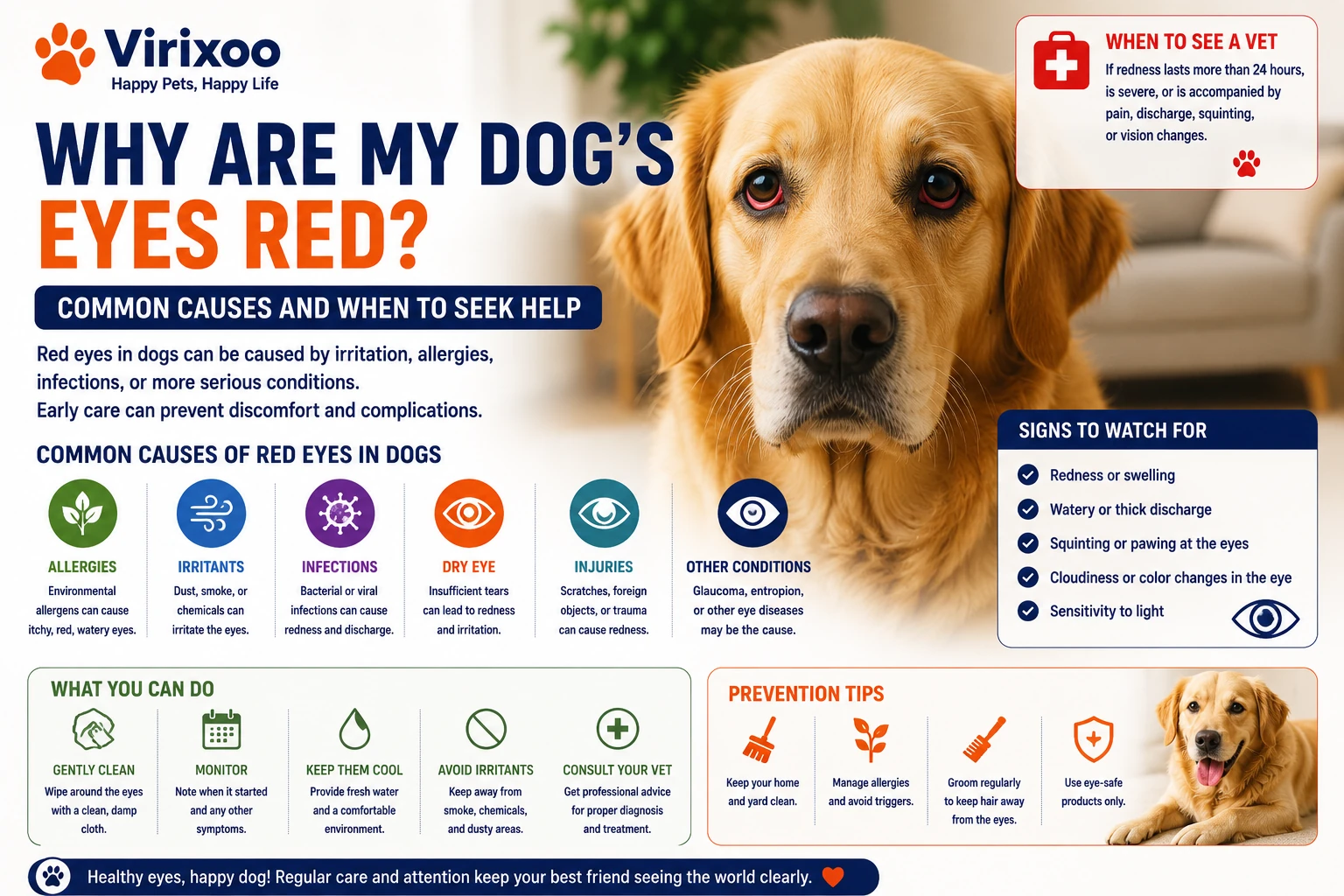
Common causes
Surface irritation or foreign material
Dust, plant material, hair, or other debris can irritate the eye. Some material washes out with tears, while grass awns or particles may become trapped under an eyelid. Do not dig beneath the eyelids with tweezers or cotton swabs.
Corneal scratch or ulcer
The cornea is the clear front surface of the eye. A scratch can be extremely painful and may not be visible without veterinary staining and magnification. Untreated ulcers can deepen or become infected.
Eyelid or eyelash problems
An eyelid that rolls inward, abnormal eyelashes, swelling, or a lid mass can rub against the eye. These conditions may cause chronic tearing, redness, or recurring discomfort.
Inflammation inside the eye
Inflammation within the eye can cause pain, redness, light sensitivity, and changes in pupil appearance. It requires veterinary diagnosis because treatment differs from simple surface irritation.
Glaucoma
Increased pressure inside the eye can be very painful and can threaten vision. The eye may become red, cloudy, enlarged, or intensely painful. Measuring eye pressure requires veterinary equipment.
What you can check without touching the eye
Look from a short distance in good light. Compare the two eyes for openness, redness, cloudiness, pupil size, discharge, swelling, and position. Notice whether the third eyelid is more visible on one side. Watch whether your dog bumps into objects or hesitates in familiar spaces.
Do not pry the eyelids open if the dog resists. Pain can make even a normally tolerant dog snap.
Discharge can add context
Clear tearing commonly accompanies irritation, while thicker yellow or green discharge may occur with infection or inflammation. Blood is more concerning for injury or severe disease. Discharge type alone cannot identify the cause, and a seriously painful eye may produce very little discharge.
Why leftover eye drops are risky
Eye medications are not interchangeable. Some drops containing corticosteroids can be harmful when a corneal ulcer is present. Antibiotic drops may be inappropriate for noninfectious conditions, and old bottles can become contaminated. Do not use human redness-relief products or medication previously prescribed for another eye problem unless a veterinarian specifically directs it.
If something splashed into the eye
Chemical exposure is different from routine squinting. If a cleaner or irritant enters the eye, immediate flushing may be advised while you contact a veterinarian or poison resource. The correct response depends on the substance. Bring the product label or a photo of it if this can be done safely.
Prevent rubbing on the way to the vet
Pawing and rubbing can worsen a corneal injury. If your dog already has a properly fitted Elizabethan collar and tolerates it, it may help prevent self-trauma during transport. Do not improvise a tight device that interferes with breathing, vision, or movement.
Signs that increase urgency
| Eye sign | Why it matters |
|---|---|
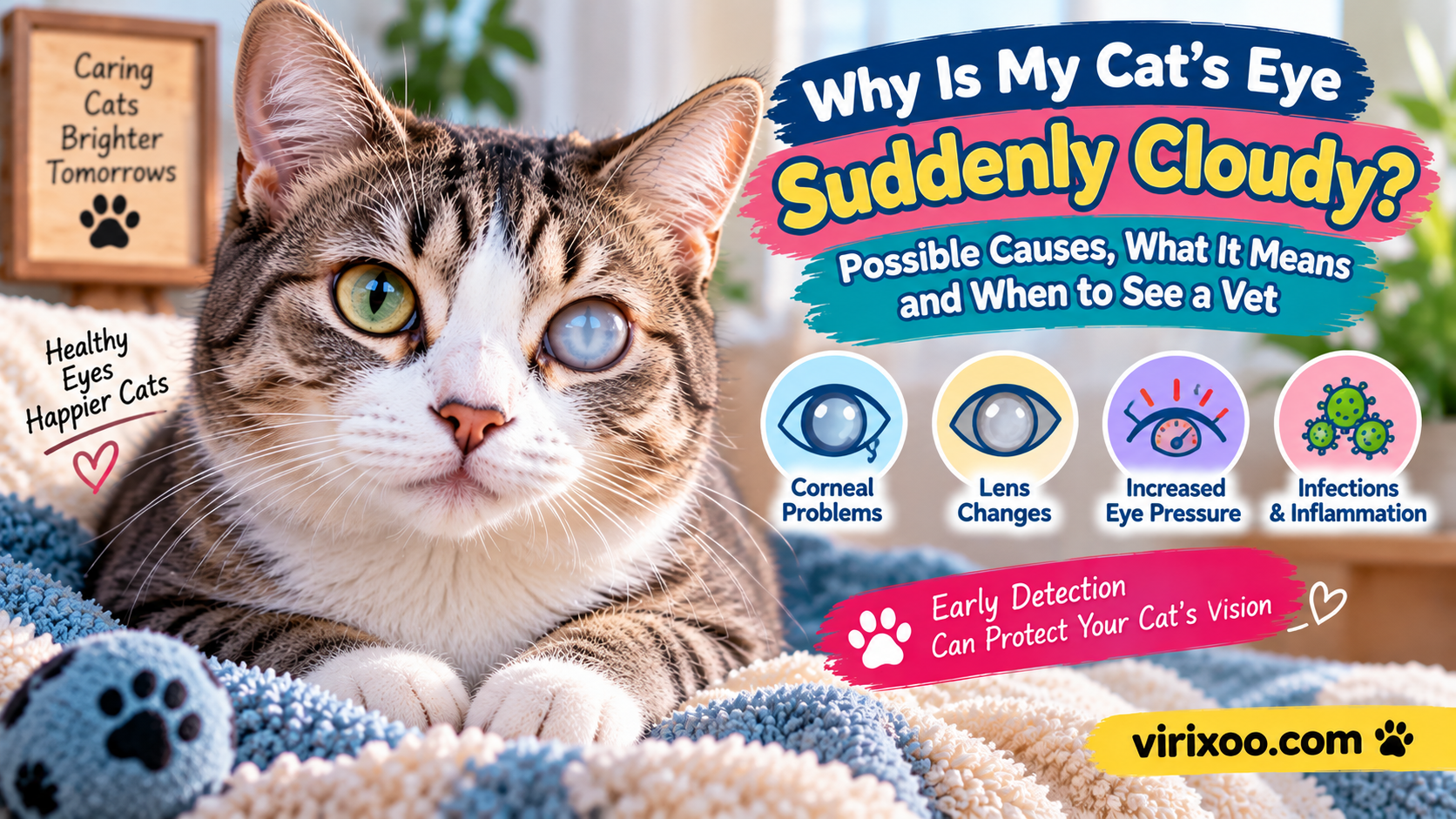
| Cloudy or blue-looking cornea | Can occur with corneal injury, swelling, or pressure problems |
| Unequal pupils | May indicate significant eye or neurologic disease |
| Bulging or enlarged eye | Requires urgent assessment |
| Visible cut, puncture, or bleeding | Trauma can threaten vision |
| Sudden inability to see | Time-sensitive causes are possible |
Why eye problems can change quickly
The cornea must remain clear and healthy for vision. A small defect can deepen if infection, rubbing, or an eyelid abnormality continues. Pressure disorders can also damage vision quickly. This is why a painful eye should not be managed for several days with trial-and-error drops.
What if the dog was running through brush?
Outdoor activity through tall grass, shrubs, sand, or debris raises the possibility of a surface scratch or foreign material. Even if nothing is visible, material can hide beneath an eyelid. Tell the veterinarian exactly where the dog was and whether squinting began immediately afterward.
What if the squinting comes and goes?
Intermittent squinting still matters, especially if it recurs in the same eye. An eyelid abnormality, dry-eye problem, hair contact, or early surface injury may irritate the eye only at certain times. Record a short video when the eye is visibly affected.
What the veterinarian may do
The examination may include close inspection of the eyelids and eye surface, a fluorescein stain to look for corneal damage, tear testing, and measurement of eye pressure. These tests matter because an ulcer, dry-eye problem, inflammation, and glaucoma can all cause squinting but require different treatment.
What not to do
- Do not use leftover prescription eye drops.
- Do not use human redness-relief drops.
- Do not put essential oils or homemade mixtures near the eye.
- Do not remove embedded objects with tweezers.
- Do not let the dog repeatedly rub the face.
When to contact a veterinarian
Persistent squinting, tearing, redness, or discharge should be assessed promptly, ideally the same day when pain is obvious. Seek emergency care for a protruding or displaced eye, severe trauma, chemical burns, sudden blindness, a rapidly enlarging eye, significant bleeding, or severe pain.
Bottom line
A dog that suddenly squints one eye is telling you the eye may hurt. Protect it from rubbing, avoid unprescribed drops, and arrange prompt veterinary evaluation. Minor irritation, corneal ulcers, inflammation, pressure problems, and trauma can look deceptively similar at home, and some can threaten vision if treatment is delayed.
Transporting a dog with a painful eye
Keep the dog away from brush, wind, and opportunities to rub the face during transport. Dim light may be more comfortable if the eye is light-sensitive. If an Elizabethan collar is already available and properly fitted, it can prevent scratching. Do not delay departure while repeatedly cleaning the eye or trying to obtain a perfect photograph.
How to decide whether to monitor or call
Use your dog’s normal baseline as the reference. A mild, familiar pattern in a comfortable dog is very different from a new or rapidly changing problem. With dog squinting one eye, contact a veterinary professional sooner when pain, weakness, bleeding, vomiting, breathing changes, appetite loss, or rapid progression appears. Online guidance can organize what you observe, but it cannot replace an examination when your dog is becoming unwell.
When you do call, give a simple timeline: when the change began, whether it is getting better or worse, what other symptoms are present, and what medications or recent exposures may be relevant. Clear information helps the veterinary team triage the situation efficiently.
Why one-sided squinting is different from mild tearing
A dog can have watery eyes from wind, dust, or general irritation, but holding one eye shut suggests that side may be painful. Painful eye disease is time-sensitive because the clear corneal surface and internal pressure can change quickly. Do not wait for pus or dramatic swelling before taking persistent squinting seriously.
If both eyes are mildly watery after a dusty walk and the dog keeps them open comfortably, the situation may be less urgent. If one eye is tightly closed, the dog rubs it, or the cornea looks cloudy, prompt examination is the safer choice.
Transporting a dog with a painful eye
Keep the dog away from brush, wind, and opportunities to rub the face during transport. Dim light may be more comfortable when the eye is light-sensitive. If an Elizabethan collar is already available and properly fitted, it can prevent scratching. Do not delay departure while trying to clean the eye repeatedly or obtain a perfect photograph.
Why breed and face shape can matter
Dogs with prominent eyes or short muzzles may be more exposed to surface injury, while dogs with facial hair can develop irritation from hairs contacting the eye. Breed does not diagnose the problem, but it can influence risk. Persistent squinting still requires examination regardless of breed.
What recovery should look like
Once the correct treatment is started, comfort should generally improve according to the veterinarian’s expectations. If squinting becomes worse, discharge increases, the eye becomes cloudier, or the dog continues to rub despite treatment, contact the clinic rather than adding another medication on your own.
Before you decide to wait until tomorrow
Ask whether the eye is staying open comfortably, whether the cornea looks clear, and whether the dog is rubbing or avoiding light. Persistent pain is the key concern. Eye problems can progress faster than many skin or ear problems, so a painful eye is not a good place for prolonged home experimentation. When in doubt, call a veterinary clinic and describe the onset, appearance, and whether vision seems affected.
Why a Painful Eye Should Not Be Watched for Days
Eye problems deserve a lower threshold for veterinary care than many minor skin irritations. Corneal damage, inflammation, and pressure problems can progress quickly and may threaten vision. Even if the eye looks almost normal, pain can be present, and a tiny corneal defect may be invisible without fluorescein stain.
Once treatment begins, contact the clinic if squinting worsens, discharge increases, the cornea becomes cloudier, or vision seems reduced. Do not add an old eye medication on your own.