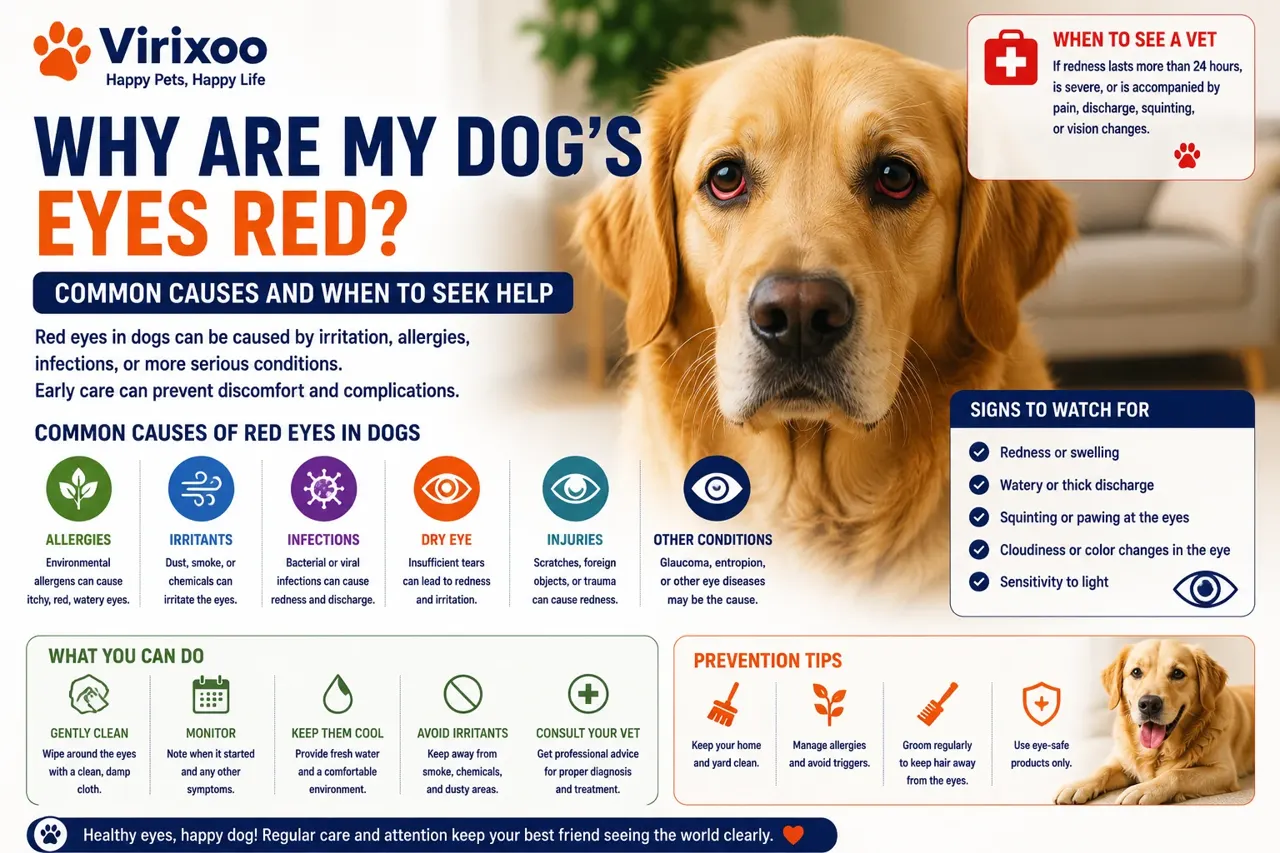
Red eyes in dogs can come from irritation, conjunctivitis, dry eye, injury, glaucoma, uveitis, or other eye disease[cite: 19].
Quick Answer
Red eyes can follow mild irritation, allergy, dry eye, injury, inflammation inside the eye, or abnormal eye pressure[cite: 19]. Because painful eye disease can worsen quickly, sudden redness with squinting, cloudiness, a changed pupil, marked discharge, trauma, or vision loss needs prompt veterinary assessment[cite: 19].
What to Look For
Compare both eyes in the same light[cite: 19]. Note redness, squinting, discharge, cloudiness, pupil size, rubbing, trauma, and any apparent vision change[cite: 19]. Prevent rubbing and do not use unprescribed eye drops[cite: 19].
Common Causes
1. Minor irritation
Dust, wind, shampoo, or another irritant can redden the surface tissues[cite: 19]. Mild irritation should improve after the exposure ends; persistent pain or redness needs a closer look[cite: 19].
2. Conjunctivitis
Inflammation of the conjunctiva can cause redness and discharge, but the underlying trigger may be infectious, allergic, irritant, or secondary to another eye problem[cite: 19].
3. Dry eye
Inadequate tear production can leave the eye red, uncomfortable, and coated with thick discharge[cite: 19]. Tear production must be measured to confirm it[cite: 19].
4. Corneal injury
A scratch or ulcer can cause marked pain, squinting, tearing, and redness[cite: 19]. Corneal damage can progress quickly and should not be treated with leftover eye medication[cite: 19].
5. Glaucoma or uveitis
Abnormal pressure or inflammation inside the eye can cause redness, pain, cloudiness, pupil changes, and vision loss[cite: 19]. These are time-sensitive veterinary problems[cite: 19].
What You Can Do Safely
Compare both eyes in the same light[cite: 19]. Note redness, squinting, discharge, cloudiness, pupil size, rubbing, trauma, and any apparent vision change[cite: 19]. Prevent rubbing and do not use unprescribed eye drops[cite: 19].
When to Contact a Veterinarian
Seek prompt or urgent care for severe eye pain, persistent squinting, cloudiness, a changed pupil, an enlarged-looking eye, trauma, sudden vision loss, or rapidly worsening redness[cite: 19]. Eye emergencies can threaten vision even when the dog otherwise seems well[cite: 19].
What to Tell Your Veterinarian
Share when the problem began, how it has changed, whether it affects one area or several, and any photos that document progression[cite: 19]. Include recent medications, parasite prevention, grooming, diet changes, swimming, travel, outdoor exposure, and other new symptoms[cite: 19].
Related Virixoo Guides
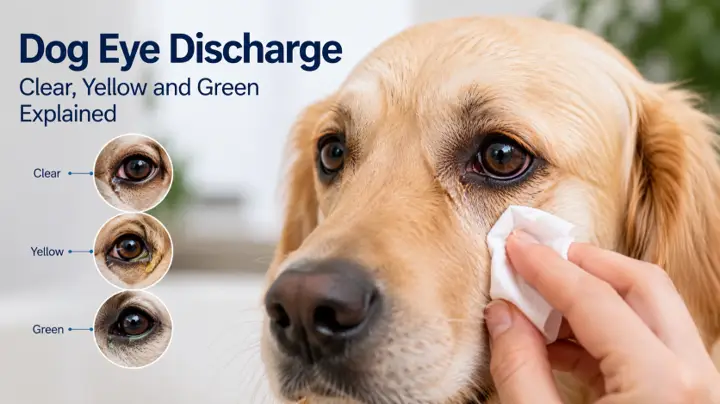
Why Does My Dog Have Eye Discharge? Clear, Yellow and Green Discharge Explained[cite: 19]. Does My Dog Have Allergies? Signs, Common Triggers and What to Do[cite: 19].
Bottom Line
Red eyes in dogs can come from irritation, conjunctivitis, dry eye, injury, glaucoma, uveitis, or other eye disease[cite: 19]. The pattern and accompanying signs matter more than appearance alone, and persistent or worsening problems deserve professional assessment[cite: 19].