
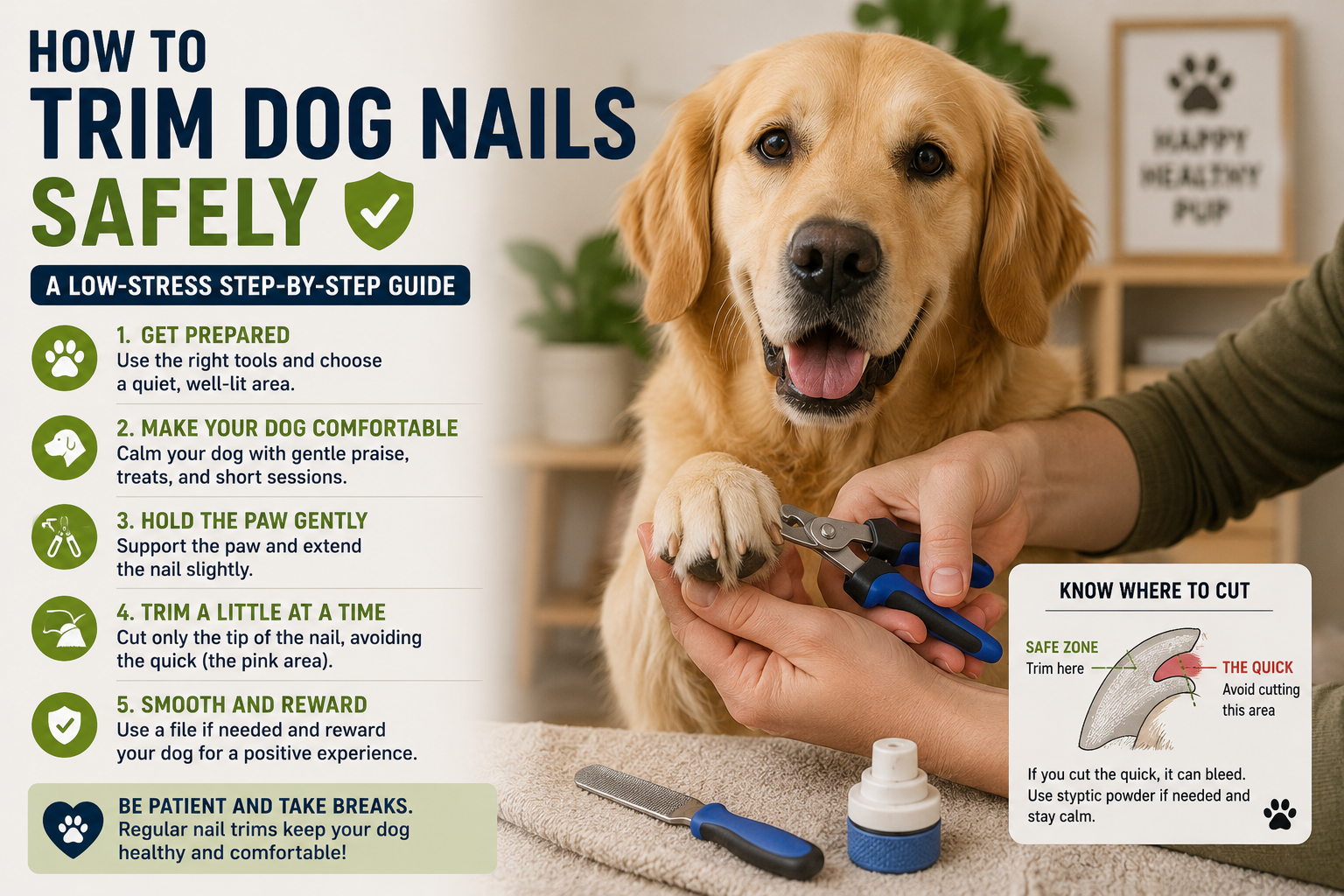
Regular nail care supports comfortable movement, but nail trimming should never become a wrestling match. The safest approach combines appropriate tools, tiny cuts, good lighting, and gradual handling practice. Dogs that panic or have painful feet may be safer with a groomer or veterinary team.
Why Nail Length Matters
Overgrown nails can contact the ground, alter traction, snag or split, and make normal paw placement uncomfortable. Dewclaws deserve special attention because they may not wear down naturally.
Choose the Right Tools
Use sharp clippers sized for your dog or a pet nail grinder if your dog tolerates the sound and vibration. Keep styptic powder or another veterinarian-recommended product nearby in case the quick is accidentally nicked. Good lighting is essential.
Understand the Quick
The quick contains blood vessels and nerves. In clear nails it may be visible as a pink center, while dark nails require more conservative trimming. Take very small amounts rather than trying to reach the ideal length in one cut.
Step-by-Step Low-Stress Training
- Reward your dog for calmly allowing a paw touch.
- Progress to briefly holding one toe.
- Show the clippers and reward calm behavior.
- Touch the tool to a nail without cutting.
- Trim only the tip of one nail and reward.
- End the session before the dog becomes overwhelmed.
If You Cut the Quick
Stay calm. Apply styptic powder with gentle pressure according to product directions. Minor nail bleeding often stops with pressure, but persistent or heavy bleeding needs veterinary advice. Do not continue trimming while the dog is frightened or the nail is painful.
What About Black Nails?
Dark nails make the quick harder to see, so remove tiny slivers and reassess after each cut. If you are uncertain, ask a groomer or veterinary professional to demonstrate on your dog before attempting more at home.
When to Stop and Get Help
Professional help is appropriate when a dog growls, snaps, panics, cannot safely be restrained without force, has severely overgrown or curled nails, has an injured nail, or experiences pain when the paw is handled. Behavior professionals and veterinary teams can help develop cooperative-care plans for fearful dogs.
Related Virixoo Guides
If your dog is licking or protecting a paw, read Why Does My Dog Lick His Paws?. If a painful nail has caused limping, see Why Is My Dog Limping?.
Sources & References
The Merck Veterinary Manual's routine-care guidance includes grooming and regular health maintenance as important parts of keeping dogs healthy.
FAQ
How often should dog nails be trimmed?
There is no single schedule. Nail growth, surfaces walked on, activity, and anatomy vary. Check regularly and trim before nails become excessively long.
Can walking on pavement replace nail trims?
Hard surfaces may wear some nails, but wear is uneven and often does not adequately shorten dewclaws.
Should I force my dog to finish all nails at once?
No. Short successful sessions are safer and can improve future cooperation. One or two nails per session is acceptable while training.
Bottom line: Nail trimming should be precise and low stress. Use sharp tools, make tiny cuts, respect the quick, and seek professional help rather than forcing a fearful or painful dog.