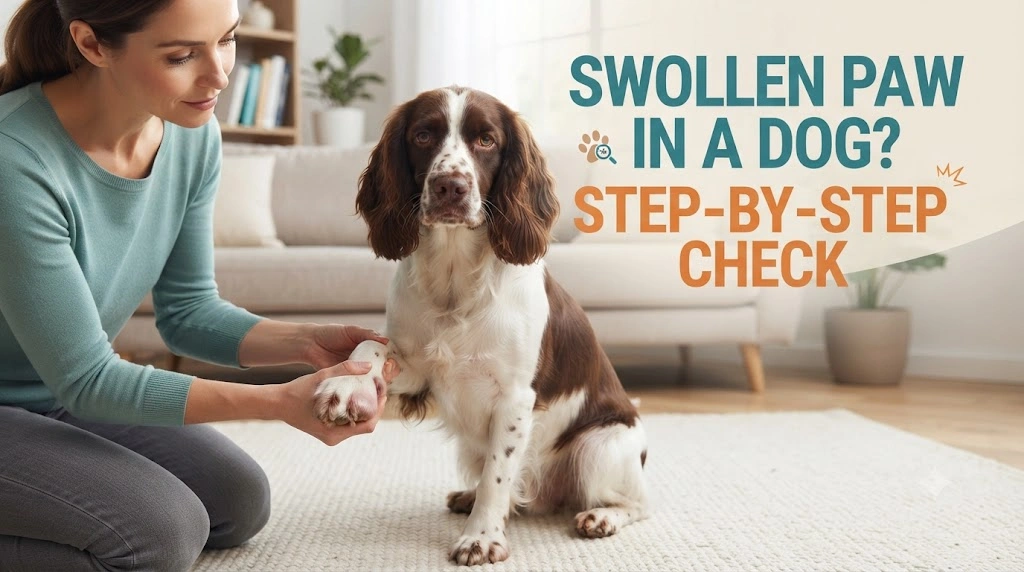
A swollen paw can result from a sting, cut, torn nail, foreign object, infection, sprain, bite, or other injury. The best first step is to determine whether swelling affects one toe, one paw, or the entire lower limb. Mild swelling after a small irritation may improve with rest, but rapidly increasing swelling, severe pain, inability to bear weight, bleeding, or signs of an allergic reaction require faster care.
Quick answer
Keep your dog calm and inspect the paw only if it can be done safely. Compare it with the opposite paw, look for a broken nail, visible wound, obvious foreign material, or swelling between the toes, and prevent licking. Do not dig deeply for hidden objects or give human pain relievers. Contact a veterinarian for significant swelling, limping, discharge, or persistent pain. Facial swelling, breathing difficulty, collapse, or widespread hives after a sting is an emergency.
Start by locating the swelling
“Swollen paw” can describe several different patterns. One toe may be enlarged, the webbing may be inflamed, a pad may be injured, or the whole foot and lower leg may be puffy. Compare both front or both rear paws while the dog is standing naturally. Location helps narrow the possibilities and gives your veterinarian better information.
Common causes
Stings and insect bites
A sting can cause sudden localized swelling and licking. Some dogs develop only a painful bump; others can have a serious allergic reaction. If swelling spreads to the face, the dog develops hives, vomits repeatedly, collapses, or has trouble breathing, seek emergency care.
Foreign material
Plant material, thorns, small stones, or other objects can lodge between toes or pads. Loose surface debris may be easy to remove, but deeply embedded or barbed material should be handled by a veterinarian. Digging with tweezers can push material deeper.
Torn or broken nail
A damaged nail can bleed heavily and make the entire toe look swollen. The sensitive tissue inside the nail can be extremely painful. If the nail is hanging, split near the base, or bleeding repeatedly, veterinary treatment may be needed.
Cuts, punctures, and bites
Small punctures can close over while infection develops underneath. A paw that becomes hotter, more painful, increasingly swollen, or starts draining material needs veterinary assessment.
Sprain or fracture
Not every swollen foot is a skin problem. A jump, fall, rough play, or other trauma can damage bones, joints, tendons, or ligaments. Inability to bear weight, obvious deformity, or severe pain raises concern for a more serious injury.
How to inspect the paw safely
Use good light and keep the examination brief. If your dog tolerates handling, look at the top and bottom of the foot, between each toe, around the nails, and over the pads. Check for redness, heat, cuts, punctures, discharge, a swollen nail bed, or an obvious superficial object.
Stop if the dog pulls away, growls, cries, or tries to bite. Pain changes behavior, and forcing the examination can injure both you and your dog.
Licking can make swelling worse
Persistent licking adds moisture and friction and may introduce bacteria to damaged skin. A properly fitted protective collar can help prevent self-trauma while you arrange care. Avoid tight homemade bandages or coverings that trap moisture, restrict circulation, or hide increasing swelling.
Should you apply ice?
For a fresh minor soft-tissue injury, a cool compress wrapped in cloth may be comfortable for short periods if the dog tolerates it, but it should not replace an examination when swelling is substantial or pain is significant. Never apply ice directly to skin for prolonged periods.
Why human pain medicine is dangerous
Do not give ibuprofen, naproxen, acetaminophen, aspirin, or other human medication unless a veterinarian specifically directs it for your dog. Some can cause serious gastrointestinal, kidney, liver, or blood problems.
Patterns that help
| Pattern | What to consider |
|---|---|
| Sudden swelling after outdoor activity | Sting, thorn, puncture, or trauma |
| One painful nail or toe | Nail injury, toe trauma, or local infection |
| Redness and discharge between toes | Inflammation or infection |
| Whole foot swollen with severe limping | More significant injury or inflammation |
| Swollen paw plus facial swelling | Possible severe allergic reaction |
Why recurrent swelling between the toes matters
Repeated redness and swelling between the toes may reflect more than one simple injury. Allergic skin disease, repeated licking, foreign material, bacterial or yeast overgrowth, and other conditions can create a cycle of inflammation. A dog that repeatedly develops the same swollen area needs the underlying trigger investigated.
Check the nails carefully
A nail can split lengthwise, crack near the base, or break after catching on carpet or rough ground. Dewclaws are easy to miss because they sit higher on the leg. Look for blood, a crooked nail, a loose fragment, or sudden sensitivity. Do not pull off a partially attached nail at home.
What if swelling begins after a walk?
Outdoor exposure raises the possibility of thorns, sharp stones, hot surfaces, stings, or small cuts. Think about where the dog walked: dry brush, gravel, beaches, salted sidewalks, or treated lawns each create different risks. Rinse off obvious surface dirt with plain clean water if needed, but do not apply harsh disinfectants unless directed.
When swelling extends up the leg
Swelling that progresses from the paw into the lower limb is more concerning than a small stable bump. Infection, trauma, circulation problems, or a severe inflammatory reaction may be involved. Photos taken from the same angle can help show progression, but veterinary advice should not be delayed if swelling is spreading.
When limping changes the urgency
A dog that bears weight normally despite mild localized swelling is different from a dog that refuses to touch the foot to the ground. Severe non-weight-bearing lameness, obvious deformity, or intense pain after trauma raises concern for fracture, dislocation, or significant soft-tissue injury. Limit unnecessary walking and arrange assessment.
When to call the veterinarian
Arrange care if swelling is moderate or severe, keeps increasing, or occurs with limping, discharge, odor, a broken nail, puncture, bite, or recurrent episodes. Seek urgent care for uncontrolled bleeding, obvious deformity, severe pain, rapidly spreading swelling, facial swelling, collapse, or breathing difficulty.
Bottom line
A swollen paw is a location clue, not a diagnosis. Check gently for obvious surface problems, prevent licking, avoid unsafe medication and tight bandages, and judge urgency by pain, weight-bearing, progression, and other symptoms. Rapid swelling with facial changes or breathing difficulty is an emergency; persistent localized swelling deserves veterinary evaluation even if the dog remains cheerful.
Why photographs help with swelling
Take one photo of both paws from the same angle and, if safe, another close photo of the swollen area. Repeat only if the swelling changes. This can show progression more clearly than memory. Photographs are especially useful when the swelling is intermittent, but they should not delay care if the dog is in significant pain or cannot bear weight.
How to decide whether to monitor or call
Use your dog’s normal baseline as the reference. A mild, familiar pattern in a comfortable dog is very different from a new or rapidly changing problem. With swollen paw in a dog, contact a veterinary professional sooner when pain, weakness, bleeding, vomiting, breathing changes, appetite loss, or rapid progression appears. Online guidance can organize what you observe, but it cannot replace an examination when your dog is becoming unwell.
When you do call, give a simple timeline: when the change began, whether it is getting better or worse, what other symptoms are present, and what medications or recent exposures may be relevant. Clear information helps the veterinary team triage the situation efficiently.
Why paw swelling can look worse after licking
Saliva and repeated chewing can make a small irritation become red, moist, and swollen. Once the skin barrier is damaged, secondary infection becomes more likely. Preventing self-trauma is useful even before the final cause is known. A properly fitted protective collar is generally safer than wrapping the paw tightly or applying bitter products to injured skin.
What photographs can show
Take one photo of both paws from the same angle and, if safe, another close photo of the swollen area. Repeat only if the swelling changes. This can show progression more clearly than memory. Photographs are especially useful when swelling is intermittent, but they should not delay care if the dog is in significant pain or cannot bear weight.
Why recurrent swelling deserves a workup
A paw that swells repeatedly in the same place may have an underlying foreign body, nail problem, chronic skin inflammation, allergy-related licking, or another cause that has not been resolved. Repeated short courses of home care may temporarily reduce signs without addressing the trigger. Bring a timeline and photos to the veterinarian.
What the veterinarian may check
The examination may include the nails, pads, spaces between the toes, joints, and the rest of the limb. Depending on findings, the veterinarian may recommend imaging, skin or discharge samples, or removal of foreign material. Severe trauma or spreading infection may require more urgent treatment.
Before you decide to monitor the paw
Consider whether swelling is stable or expanding, whether the dog can bear weight, and whether there is heat, discharge, a broken nail, puncture, or obvious pain. Mild stable swelling in a comfortable dog is different from a paw that doubles in size or becomes unusable. If the cause is uncertain and the dog is getting worse, veterinary assessment is more useful than repeated soaking, wrapping, or home medication.
How to Keep the Paw Clean Without Over-Treating It
If the paw is dirty after an outdoor walk, gently rinse obvious surface dirt with clean water and dry the area. Avoid repeated soaking in strong solutions, essential oils, or harsh disinfectants. Damaged skin can become more irritated from aggressive cleaning, and a hidden foreign object or nail injury will not be solved by repeated soaking.
Keep walks short and controlled until the cause is understood, especially if the dog is limping. A dog that refuses to bear weight should not be repeatedly encouraged to walk just to test the leg.