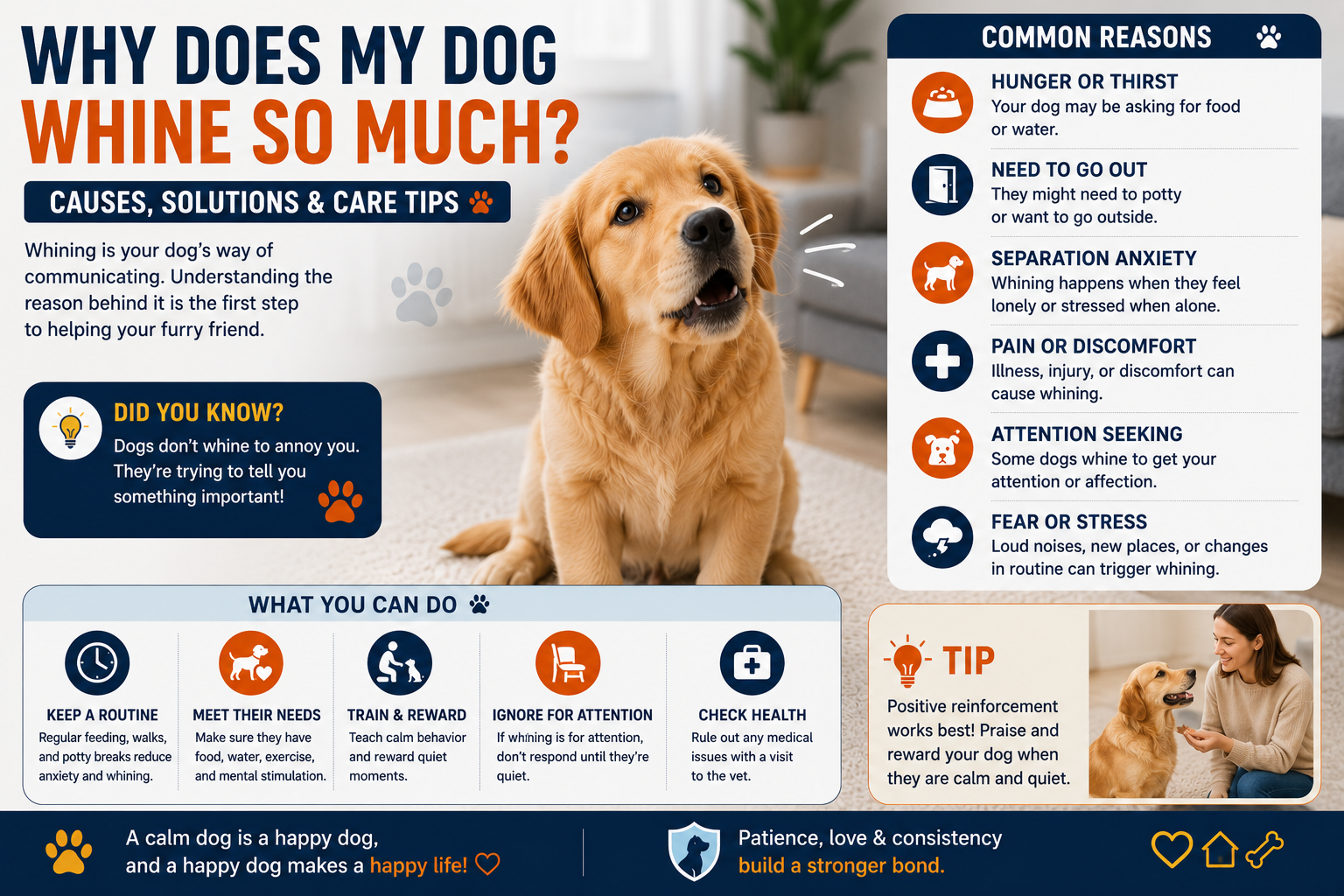
Whining is communication. Dogs may whine because they need something, feel excited, are frustrated, are worried, want social contact, or are uncomfortable. The most useful question is not simply how to stop the sound, but what happens immediately before it and what changes after the dog whines.
Quick Answer
First rule out basic needs such as a toilet break, water, comfortable temperature, and an appropriate amount of activity and rest. Then look for a pattern. Whining around departures may relate to separation distress, whining during movement may signal pain, and whining that reliably earns attention may have been reinforced. Sudden unexplained whining, especially with panting, limping, appetite loss, vomiting, or difficulty settling, deserves veterinary attention.
Common Reasons Dogs Whine
1. Asking for Something
Dogs quickly learn which behaviors make people respond. A dog may whine at the door to go outside, beside an empty water bowl, before a walk, or when a toy is out of reach. Meeting legitimate needs is different from automatically rewarding every demand.
2. Excitement
Some dogs vocalize before walks, when visitors arrive, or when they expect play. Teaching calm alternative behaviors such as standing quietly, sitting, or settling on a mat can help reduce excitement whining over time.
3. Stress or Fear
Whining can occur during thunderstorms, travel, unfamiliar environments, veterinary visits, or social situations that make a dog uncomfortable. Other stress signs may include panting, pacing, trembling, hiding, lip licking, or an inability to settle.
4. Separation-Related Distress
A dog that begins whining soon after the owner leaves may be experiencing separation-related distress, particularly if the behavior occurs with pacing, barking, drooling, destruction near exits, or house soiling. Punishment after returning home does not address the underlying emotion.
5. Pain or Physical Discomfort
Dogs in pain may whine when getting up, being touched, jumping, climbing stairs, urinating, defecating, or trying to settle. Sudden vocalization in a normally quiet dog is especially important to take seriously.
How to Identify the Trigger
Keep a short log for several days. Record the time, what happened just before the whining, where your dog was, who was present, and what response followed. Patterns often become obvious once they are written down.
| Pattern | What to Consider |
|---|---|
| Whines at the door | Toilet need or learned request |
| Whines when left alone | Separation-related distress |
| Whines while standing up or walking | Pain or mobility problem |
| Whines before walks or meals | Excitement or learned anticipation |
| Whines at night with restlessness | Needs, pain, anxiety, or age-related changes |
What to Do When Whining Is Learned Attention-Seeking
Make sure the dog's needs have been met first. Then reinforce a quieter alternative instead of repeatedly talking to, touching, or scolding the dog during whining. Reward calm pauses, settling, or an appropriate cue. Consistency across family members matters because occasional reinforcement can make the behavior persistent.
Do Not Punish Fear or Pain
Scolding a frightened or painful dog can increase distress and may suppress warning signals without solving the underlying problem. When the cause is emotional or medical, treatment should address that cause.
When to Contact a Veterinarian
Seek veterinary advice for sudden or persistent unexplained whining, especially when it occurs with limping, trembling, panting at rest, abdominal discomfort, appetite loss, vomiting, diarrhea, urinary difficulty, or major behavior change. Severe pain, collapse, difficulty breathing, or inability to urinate requires prompt care.
Related Virixoo Guides
If whining occurs when your dog is alone, read How to Help a Dog With Separation Anxiety. If the dog also appears painful when walking, see Why Is My Dog Limping?.
Frequently Asked Questions
Should I ignore all whining?
No. Ignoring a dog that needs to toilet, is frightened, or is in pain is inappropriate. Determine the reason first, then decide how to respond.
Why does my dog whine at night?
Night whining can reflect toilet needs, discomfort, anxiety, changes in routine, or age-related problems. A new nighttime pattern, particularly in an older dog, deserves veterinary discussion.
Can exercise stop whining?
Appropriate physical and mental activity may reduce boredom or excess arousal, but exercise does not treat pain, fear, or separation anxiety.
Bottom line: Treat whining as information. Identify the trigger, meet legitimate needs, reinforce calm alternatives when the behavior is learned, and investigate sudden or unexplained vocalization for pain or illness.