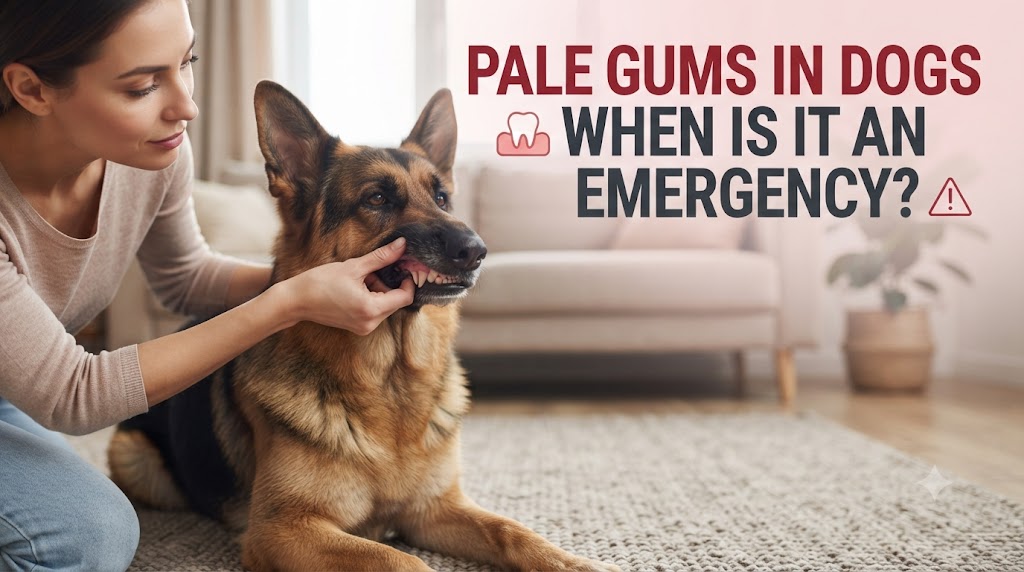
Pale, white, gray, or unusually light gums can be an important warning sign because gum color reflects circulation, oxygen delivery, and red blood cell status. Lighting and natural pigmentation can make assessment imperfect, but a sudden change toward very pale gums—especially with weakness, collapse, rapid breathing, abdominal swelling, or bleeding—should be treated seriously.
Quick answer
If your dog’s gums are suddenly much paler than their normal color, check an unpigmented area in good natural light and look at the whole dog. Pale gums combined with weakness, collapse, breathing difficulty, a distended abdomen, active bleeding, or severe lethargy require urgent veterinary care. Do not wait for the color to return if the dog appears unwell.
What normal gums look like
Many healthy dogs have pink gums, but normal color varies. Some dogs have black or mottled pigmentation that makes comparison difficult. The most useful reference is your dog’s own normal appearance. When your dog is healthy, notice the color of an unpigmented gum area so you have a baseline.
Phone cameras and indoor lighting can distort color. A flash can wash out pink tissue, while warm light can make pale gums look more colorful. If the dog is weak or ill, do not waste time trying to obtain a perfect photo.
Why gums can become pale
Blood loss
External bleeding may be obvious, but internal bleeding is not always visible. Trauma, abdominal problems, gastrointestinal bleeding, clotting disorders, or other conditions can reduce circulating blood. A dog with internal bleeding may appear weak, breathe faster, develop a swollen abdomen, or collapse.
Anemia
Anemia means there are too few red blood cells or too little oxygen-carrying capacity. Causes include blood loss, destruction of red blood cells, chronic disease, and reduced production. Gum color cannot tell you which form is present. Diagnosis generally requires examination and blood testing.
Poor circulation or shock
When circulation is severely compromised, gums may look pale or gray and the dog may be cold, weak, mentally dull, or collapsed. Shock is an emergency.
Other abnormal colors
Blue or gray gums can indicate inadequate oxygen. Yellow gums can occur with jaundice. Both require veterinary evaluation. Color changes should always be interpreted alongside breathing, energy, pulse quality, and other symptoms.
The capillary refill check has limits
Veterinary professionals sometimes assess capillary refill by pressing an unpigmented gum area and observing how quickly color returns. At home, lighting, pressure, pigmentation, temperature, and technique can make this unreliable. A normal-looking refill does not rule out serious disease, and an abnormal-looking result should not delay care.
If your dog is painful, distressed, struggling to breathe, or may bite, do not force a mouth examination.
Look at the whole dog
| Finding with pale gums | Why it raises concern |
|---|---|
| Weakness or collapse | May indicate blood loss, anemia, or poor circulation |
| Fast or difficult breathing | Can reflect poor oxygen delivery or another emergency |
| Swollen or painful abdomen | Can occur with serious abdominal disease or internal bleeding |
| Black tar-like stool | May indicate digested blood |
| Visible bleeding | Can reduce circulating blood volume |
What if only one part looks pale?
Patchy natural pigmentation can create uneven color. Local dental disease or scarring may also alter appearance. Compare the area with the opposite side and with previous photos if available. A localized pale spot in a comfortable dog is different from the entire visible gum line becoming suddenly washed out.
Why you cannot diagnose anemia from a photo
Phone cameras automatically adjust exposure and white balance. A pale-looking image is not enough to diagnose anemia, and a pink-looking image is not enough to rule it out. Veterinary diagnosis relies on the clinical picture and blood testing.
Hidden blood loss can occur
A dog can lose blood into the abdomen, chest, gastrointestinal tract, or another internal location without obvious blood on the floor. This is one reason sudden pallor plus weakness needs urgent assessment even if you cannot find an injury. Do not press repeatedly on a painful abdomen or try to “test” for internal bleeding at home.
Why black stool matters
Black, sticky, tar-like stool can be associated with digested blood from the gastrointestinal tract. If pale gums and black stool occur together, contact a veterinarian promptly. Bring a photo and complete medication list if possible.
Medication and toxin history matters
Tell the veterinarian about prescription drugs, over-the-counter products, supplements, rodent-control products, recent surgery, trauma, and anything the dog may have swallowed. Do not induce vomiting or give home antidotes unless a veterinary professional or animal poison service instructs you to do so.
What to do while seeking care
Keep a weak dog quiet and minimize unnecessary walking. If there is visible external bleeding, follow veterinary first-aid guidance and apply gentle direct pressure with clean material when appropriate, but do not delay transport for severe bleeding. Keep the dog comfortably warm without overheating and call the clinic on the way if possible.
What not to do
- Do not give iron supplements unless anemia is diagnosed and the veterinarian recommends them.
- Do not give human pain relievers such as ibuprofen or naproxen.
- Do not rely on gum color alone to decide a weak dog is safe.
- Do not force a painful or frightened dog to let you inspect the mouth.
- Do not wait overnight for sudden pale gums with collapse or breathing changes.
What the veterinarian may evaluate
The veterinary team may assess heart rate, breathing, pulse quality, temperature, gum color, abdominal findings, and evidence of bleeding. Blood tests can evaluate red blood cell levels and other changes. Imaging, clotting tests, additional laboratory tests, or emergency stabilization may be needed depending on the history.
Learn your dog’s baseline
When your dog is healthy and relaxed, take a mental note of normal gum color and pigmentation. One unedited photo in natural light can also be useful. This is especially helpful in dogs with partly pigmented gums because you will know which pink area is easiest to compare later.
Bottom line
Pale gums are a potentially important sign, not a diagnosis. The safest interpretation comes from comparing them with your dog’s normal color and evaluating the whole dog. Sudden pallor with weakness, collapse, breathing difficulty, bleeding, or abdominal enlargement is an emergency. A veterinary examination and blood testing are far more reliable than waiting for gum color to change at home.
A safe baseline check
When your dog is healthy, note the normal gum color in natural light and remember which unpigmented area is easiest to see. This simple baseline is more useful than comparing your dog with photos online. If a future color change is accompanied by weakness, abnormal breathing, bleeding, or collapse, treat the dog’s condition—not the photograph—as the priority.
How to decide whether to monitor or call
Use your dog’s normal baseline as the reference. A mild, familiar pattern in a comfortable dog is very different from a new or rapidly changing problem. With pale gums in dogs, contact a veterinary professional sooner when pain, weakness, bleeding, vomiting, breathing changes, appetite loss, or rapid progression appears. Online guidance can organize what you observe, but it cannot replace an examination when your dog is becoming unwell.
When you do call, give a simple timeline: when the change began, whether it is getting better or worse, what other symptoms are present, and what medications or recent exposures may be relevant. Clear information helps the veterinary team triage the situation efficiently.
Why gum moisture and gum color are different clues
Owners sometimes combine dry gums and pale gums into one observation, but they describe different parts of the clinical picture. Gum moisture can contribute to a hydration assessment, while color gives information about circulation, oxygenation, and red blood cell status. A dog can have pale moist gums or pink tacky gums. Neither finding should be interpreted alone when the dog is visibly unwell.
What if the dog seems normal despite pale gums?
If you notice lighter gums but your dog is acting completely normal, recheck in natural light and compare with a known baseline. Some dogs naturally have very pale pink areas. If the color is truly new or remains unusually light, contact your veterinarian even without dramatic symptoms. Early anemia or other conditions do not always cause collapse at the beginning.
Why breathing rate matters
A dog with reduced oxygen-carrying capacity may breathe faster even while resting because the body is trying to deliver more oxygen to tissues. Count only when the dog is calm and not panting from heat or exercise. If pale gums occur with persistent rapid or difficult breathing, weakness, or exercise intolerance, seek veterinary advice promptly.
Questions that help the veterinarian
Mention any recent trauma, surgery, dark stool, vomiting, visible bleeding, tick exposure, new medication, toxin risk, or sudden decline in stamina. These details can help the veterinary team decide how urgently blood tests, imaging, or stabilization may be needed.
Before you decide to monitor at home
Recheck the gums in natural light and compare them with your dog’s normal baseline, but also ask whether breathing, energy, balance, appetite, and abdominal shape are normal. A color check should take seconds, not become a reason to delay care. If your dog seems weak, cannot stand normally, breathes unusually, or has any sign of internal or external bleeding, treat those symptoms as the priority and seek veterinary help promptly.
Why Sudden Pallor Matters
A dog whose gums have always been light pink may be normal, while a dog whose gums suddenly change from healthy pink to washed-out pale can be seriously ill. The speed of change and the dog’s overall condition matter more than matching the gums to an online color chart. Weakness, rapid breathing, abdominal enlargement, black stool, bleeding, or collapse should push the situation toward urgent care.
If the gums look a little pinker later but weakness or abnormal breathing continues, do not assume the danger has passed. Gum color can fluctuate with circulation, stress, temperature, and lighting.