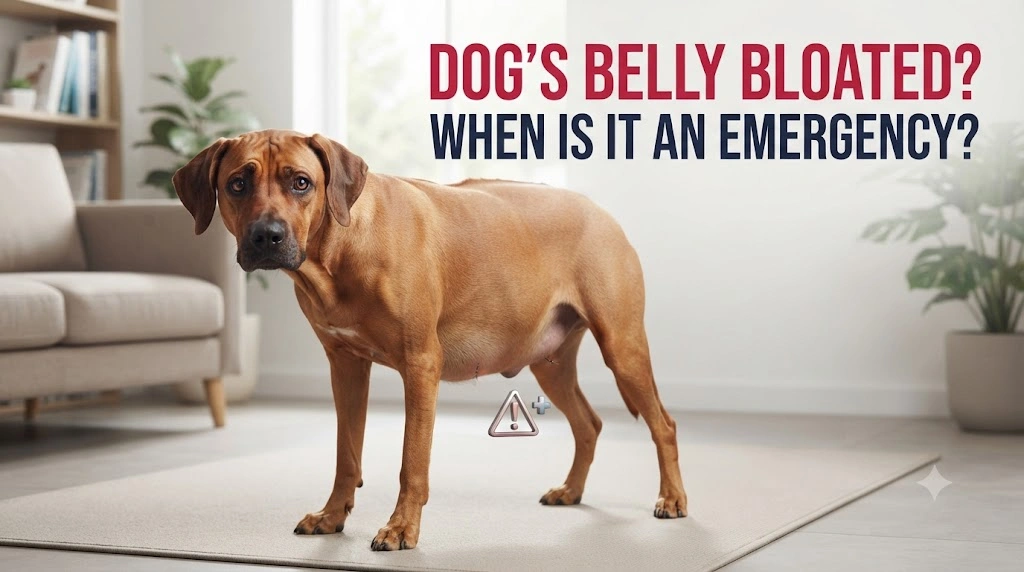
A visibly enlarged abdomen can be caused by food, gas, pregnancy, fluid, obesity, organ enlargement, or a serious emergency. What matters most is how quickly the belly changed and how the dog feels. A rapidly expanding abdomen with repeated unproductive retching, restlessness, pain, weakness, or collapse should be treated as an emergency.
Quick Answer
If your dog's abdomen suddenly becomes larger and the dog is restless, repeatedly trying to vomit without producing anything, drooling, weak, painful, or unable to settle, seek emergency veterinary care immediately. Do not wait to see whether gas passes. A slowly enlarged abdomen in a comfortable dog is less likely to be an immediate crisis but still deserves veterinary evaluation if new or unexplained.
Why the Speed of Change Matters
A belly that becomes noticeably larger over minutes or hours is very different from gradual weight gain over months. Rapid distension suggests gas, bleeding, fluid, or other acute changes. Slow enlargement can still be important but usually allows more time for evaluation if the dog is stable.
Gastric Dilatation-Volvulus
One of the most dangerous causes of sudden abdominal enlargement is gastric dilatation-volvulus, often called GDV or bloat. The stomach fills with gas and can twist. Signs can include repeated unproductive retching, drooling, restlessness, abdominal enlargement, weakness, and collapse. This condition requires emergency treatment.
Do Not Rely on Belly Firmness Alone
Some dogs with serious abdominal disease may not have a rock-hard belly, and body shape can make distension difficult to judge. Use the whole clinical picture: retching, breathing, pain, behavior, gum color, and weakness are critical clues.
Other Causes of an Enlarged Abdomen
Gas, overeating, constipation, fluid accumulation, pregnancy, obesity, organ enlargement, and internal bleeding can all change abdominal size. Because several conditions look similar externally, a physical examination and imaging may be needed.
Red-Flag Patterns
| Finding | Concern |
|---|---|
| Repeated unproductive retching | Possible GDV or obstruction |
| Rapid abdominal enlargement | Acute gas, fluid, or bleeding |
| Weakness or collapse | Circulatory compromise |
| Pale gums | Possible shock or blood loss |
| Severe restlessness | Can reflect abdominal pain |
| Difficulty breathing | Large abdominal pressure or systemic emergency |
What You Can Observe Without Pressing
Look at the dog from the side and above. Note whether the abdomen is symmetrical, whether the dog can lie down comfortably, and whether retching or drooling is present. Do not repeatedly press or squeeze a painful abdomen.
After a Large Meal
A dog may look fuller after eating, but dramatic distension or discomfort after a meal should not be dismissed. If the dog becomes restless, retches, or deteriorates, seek emergency care.
Could It Be Constipation?
Constipation can cause straining and abdominal discomfort, but owners can confuse repeated attempts to defecate with urinary straining or other problems. Inability to urinate is an emergency. If your dog repeatedly strains with little output, veterinary assessment is safer than assuming constipation.
What Not to Do
- Do not give gas remedies or human medication without veterinary direction.
- Do not induce vomiting.
- Do not wait for a suspected GDV to resolve on its own.
- Do not force food or large amounts of water into a distressed dog.
- Do not press hard on a painful abdomen.
When to Seek Emergency Care
Rapid abdominal enlargement, repeated unproductive retching, collapse, pale gums, severe weakness, breathing difficulty, or intense pain should be treated as an emergency.
When a Routine Appointment May Be Appropriate
Gradual abdominal enlargement without acute distress still deserves evaluation if unexplained. Your veterinarian may assess body condition, pregnancy status, organ size, fluid accumulation, and other causes.
What the Veterinarian May Do
Evaluation can include abdominal examination, X-rays, ultrasound, blood tests, and emergency stabilization depending on the dog's condition. With GDV, time matters, so emergency treatment should not be delayed for home monitoring.
Bottom Line
A bloated belly becomes most concerning when the change is rapid and the dog is painful, retching, weak, or unable to settle. Do not rely on belly firmness alone. If the dog shows classic emergency signs, seek veterinary care immediately rather than waiting for gas or stool to pass.
Why Restlessness Is Such an Important Clue
Dogs with serious abdominal discomfort may repeatedly stand, lie down, stretch, pace, and look at the abdomen. This inability to settle can appear before collapse. If restlessness is paired with retching or rapid distension, treat it as an emergency rather than waiting for a more dramatic sign.
Can Obesity Make Bloating Harder to Recognize?
Yes. In overweight dogs, abdominal shape may be difficult to judge. Focus on sudden change, behavior, retching, breathing, and pain rather than visual size alone. Owners who know their dog's usual outline are more likely to notice a true acute change.
Why a Photo Can Help but Should Not Delay Care
A quick side-view photo can document progression, but do not spend time measuring the abdomen or repeatedly photographing a distressed dog. If emergency signs are present, transport matters more than documentation.
Why GDV Can Become Critical So Fast
When the stomach twists, blood flow can be compromised and pressure can affect surrounding organs and circulation. A dog may deteriorate rapidly from restlessness to weakness and shock. This is why suspected GDV is treated as a time-sensitive emergency and why home observation is unsafe once classic signs appear.
Why Passing Gas Does Not Always Reassure
Owners sometimes wait for belching or passing gas as proof that the stomach is not twisted. Unfortunately, the absence or presence of gas passage is not reliable enough to rule out an emergency. If the dog is retching, painful, and distended, seek veterinary care regardless of whether some gas or stool is passed.
What About a Puppy With a Round Belly?
Puppies can have a rounded abdomen after meals or with parasites, but persistent enlargement, poor growth, diarrhea, vomiting, or discomfort deserves veterinary assessment. Do not assume every round puppy belly is normal, particularly when the puppy is lethargic or not thriving.
Why Internal Bleeding Can Mimic Bloat
Blood accumulating in the abdomen can make the belly enlarge and may cause pale gums, weakness, rapid breathing, or collapse. This is one reason the appearance of the abdomen alone cannot identify the problem. Dogs with trauma or sudden unexplained weakness need prompt assessment even if they are not retching.
What to Tell the Emergency Clinic
When calling, say whether the abdomen enlarged suddenly, whether the dog is retching, whether any vomit is produced, how the gums look, and whether the dog can stand. Mention recent meals, trauma, known medical conditions, and current medications. Calling ahead can help the team prepare for an unstable patient.
Why a Dog Can Still Walk During a Serious Abdominal Problem
Some dogs remain mobile during the early stages of a serious abdominal emergency. They may pace, repeatedly reposition, or follow the owner while looking uncomfortable. The ability to walk does not rule out GDV, internal bleeding, obstruction, or another urgent condition. Behavior, retching, gum color, abdominal change, and overall stability are more important than whether the dog can still stand.
Why Home Measurements Are Not Reliable Enough
Owners sometimes measure abdominal circumference to decide whether a dog is getting worse. Body position, breathing, food, and gas can change the measurement. A rapidly distressed dog should not be repeatedly measured. If the abdomen is visibly enlarging and the dog is painful or retching, seek veterinary care rather than waiting for a numerical threshold.