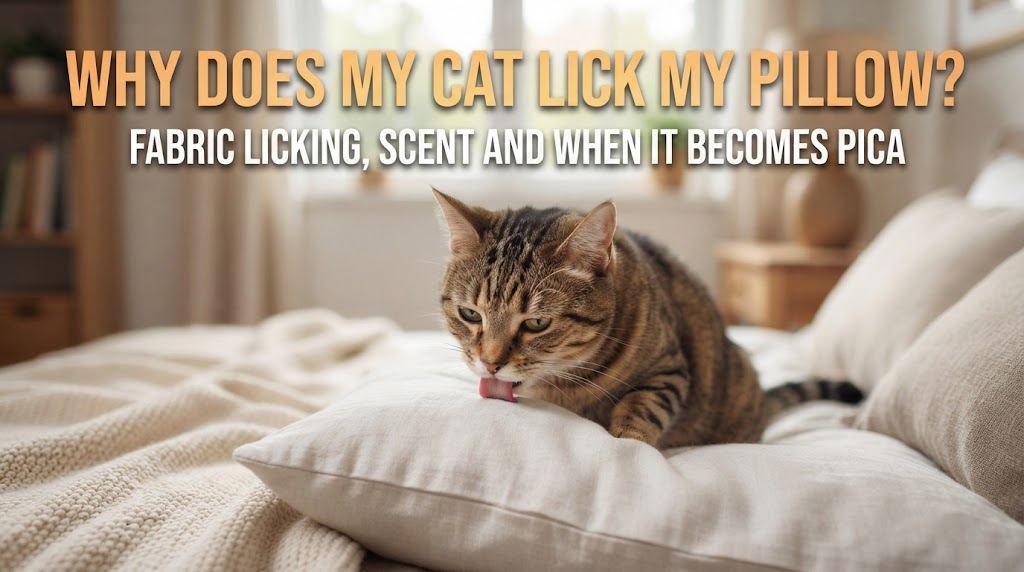
A few licks on a pillow can look strange, but the behavior is not automatically a problem. Pillows carry strong human scent, absorb skin oils and hair products, and have textures that some cats investigate with the mouth and tongue.
Quick Answer
Your cat may lick a pillow because of familiar scent, taste, texture, a grooming-like routine, or simple exploration. Brief licking without chewing or swallowing is usually less concerning than repetitive fabric sucking or eating. The moment fibers are being swallowed, the issue becomes a safety concern rather than just a quirky habit.
First Separate Licking From Chewing and Swallowing
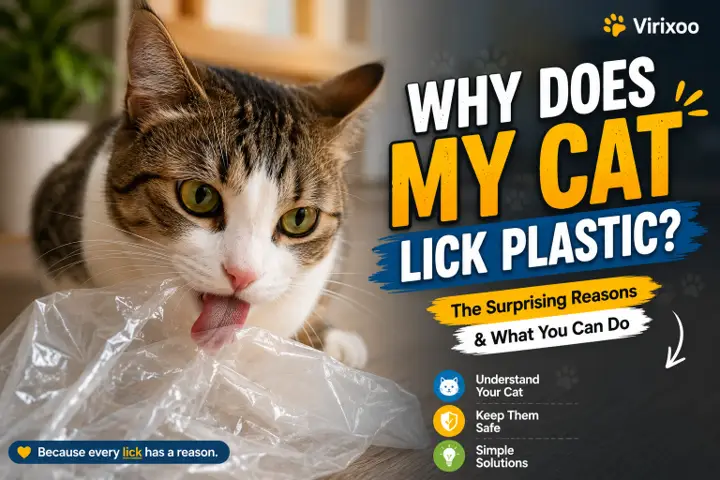
Watch what the cat actually does. A cat that gives the pillowcase a few licks and settles down is showing a very different pattern from a cat that grabs fabric with the teeth, suckles it for long periods, pulls threads loose, or swallows pieces.
| Behavior | More likely meaning | Level of concern |
|---|---|---|
| Brief licking, then resting | Scent, taste, texture or routine | Usually low if the cat is otherwise normal |
| Licking plus kneading | Comfort-related routine may be involved | Usually monitor |
| Sucking or chewing fabric repeatedly | Fabric-focused oral behavior | Needs management and closer observation |
| Swallowing threads or pieces | Foreign-body risk | Veterinary concern |
Your Pillow Is Rich in Familiar Scent
Pillows collect scent from hair, skin and the products used around the head. Cats rely heavily on scent when evaluating their environment, so a pillow can be more interesting than a neutral cushion. The cat may sniff, rub, lick, knead, or settle on it without any single behavior proving a specific emotion.
Texture Can Become Part of the Habit
Some cats repeatedly mouth soft materials such as wool, fleece, blankets, sweaters, socks or bedding. Cornell notes that fabric chewing and sucking can occur as comfort-seeking, play or investigation, and that some cats continue the behavior into adulthood. The safety issue is ingestion: swallowed fabric can cause a gastrointestinal obstruction.
Check What Is on the Pillowcase
Hair products, facial creams, medicated skin products, essential oils, topical pain relievers and other substances can transfer to bedding. If a cat is licking a pillow, keep potentially unsafe products away from the fabric and wash the pillowcase when contamination is possible. Do not encourage licking of bedding treated with fragranced sprays or cleaners.
When Repetition Suggests More Than Curiosity
Pay more attention if the licking becomes difficult to interrupt, spreads to many fabric items, is accompanied by chewing, or appears during a broader behavior change. Repetitive oral behavior can be influenced by stress, under-stimulation, learned routine, or medical issues. It is better to describe the exact pattern to a veterinarian than to label it as anxiety or pica without evaluation.
Safe Ways to Manage the Habit
- Remove frayed pillows or loose threads.
- Use tightly woven, washable covers.
- Do not leave string, yarn, ribbon or damaged fabric within reach.
- Provide daily interactive play and appropriate foraging opportunities.
- Redirect calmly to a safe toy rather than punishing the cat.
- Track whether the behavior happens at a particular time or after a specific event.
When to Call a Veterinarian
Seek veterinary advice if your cat is swallowing fabric, repeatedly vomiting, refusing food, becoming lethargic, showing abdominal pain, straining to pass stool, or developing a sudden intense fabric-eating habit. A swallowed thread can be especially dangerous; do not pull a string that is protruding from the mouth or anus because it may be anchored internally.
Related Virixoo Guides
If your cat licks people rather than fabric, read why cats lick their owners. If the behavior is mainly about resting on fabric, compare it with why cats sit on clothes.
Bottom Line
A cat licking your pillow may simply be investigating scent, taste or texture. The behavior becomes more important when it progresses from licking to persistent sucking, chewing or swallowing. Keep unsafe residues and loose fibers away, provide appropriate enrichment, and seek veterinary advice if fabric is being ingested or the behavior changes suddenly.