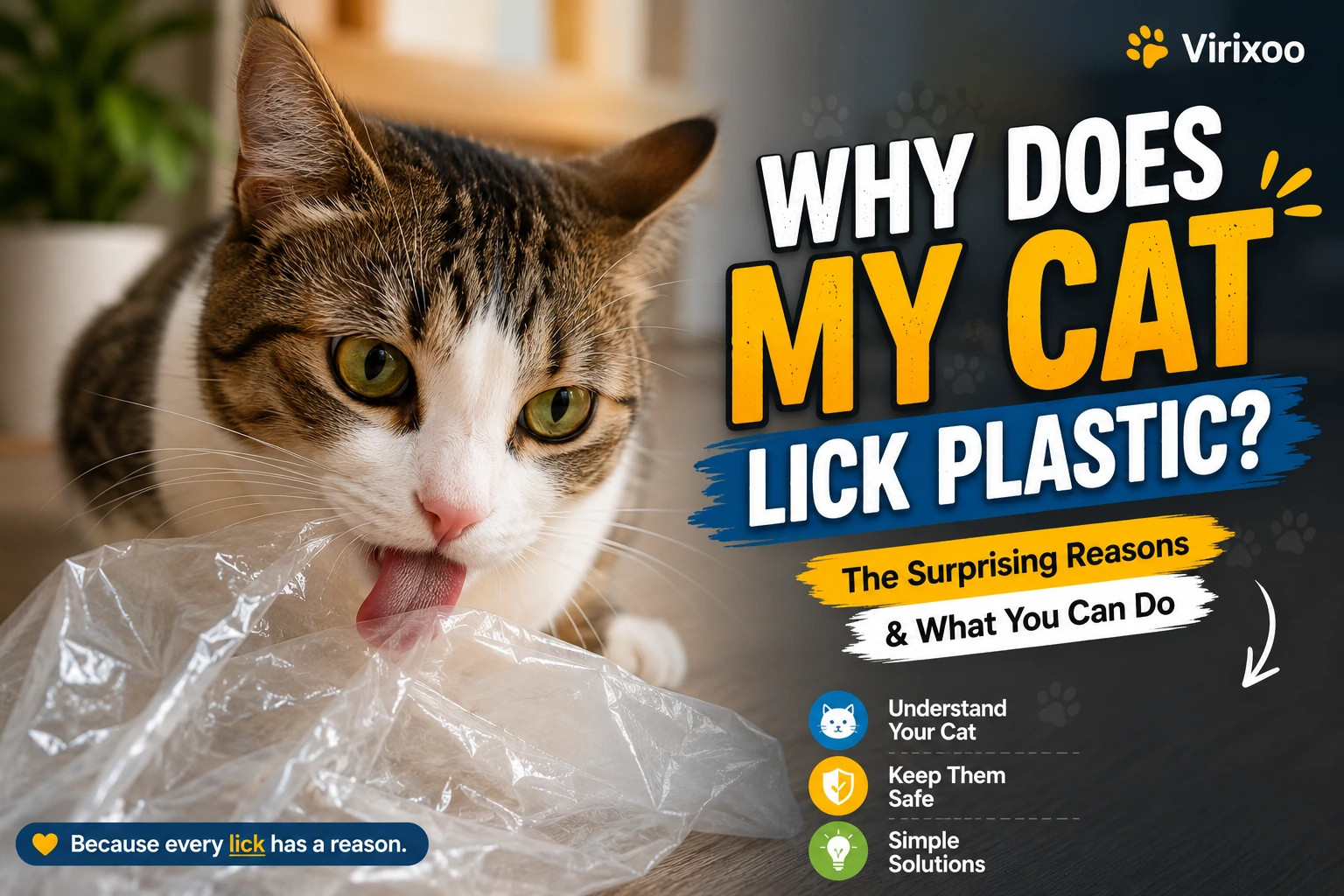
Some cats are strongly attracted to plastic bags, packaging, shower curtains, tape, or crinkly wrappers. The behavior may begin with smell, texture, sound, or curiosity, but licking can progress to chewing. Because swallowed plastic can be dangerous, the safest approach is to remove access rather than assume the habit is harmless.
Quick Answer
Cats may lick plastic because it carries food odors, has an interesting texture, makes a stimulating sound, or has become a learned habit. If your cat only sniffs or briefly licks a bag, remove it and offer a safe alternative. If your cat repeatedly chews or swallows non-food items, contact a veterinarian because persistent pica-like behavior can have behavioral or medical contributors.
Why Plastic Can Be Interesting to Cats
Food Residue and Smell
Packaging that held meat, bread, dairy products, or other foods can retain attractive odors. Even a bag that looks clean may still smell interesting to a cat.
Texture
Thin plastic changes shape under the tongue and teeth. Some cats seem to enjoy the smooth or crinkly sensation.
Sound
Crinkling can make plastic act like an interactive object. Movement and noise may resemble the unpredictable stimulation cats enjoy during play.
Attention and Routine
If plastic licking always causes immediate attention, the behavior can become part of a learned social routine.
When Licking Becomes Chewing
Chewing is more concerning than brief licking because pieces can be swallowed. Plastic can irritate the digestive tract or contribute to obstruction. Never intentionally provide plastic bags as toys.
How to Make the Home Safer
- Store plastic bags inside closed cabinets.
- Remove food packaging promptly.
- Keep tape, wrappers, foam, string, and rubber bands out of reach.
- Use trash cans with secure lids.
- Offer safe toys designed for cats rather than household packaging.
Persistent Non-Food Eating
Repeatedly eating non-food material is more than ordinary curiosity. Possible contributors can include stress, learned behavior, gastrointestinal discomfort, nutritional issues, or other medical problems. A veterinarian can help determine whether a medical workup or behavior plan is appropriate.
What If Your Cat Swallowed Plastic?
Do not induce vomiting unless a veterinarian specifically instructs you. Contact a veterinary professional for advice, especially if a large piece, sharp material, string-like plastic, or unknown amount may have been swallowed. Watch for vomiting, repeated retching, reduced appetite, abdominal pain, lethargy, constipation, or inability to keep food down.
Frequently Asked Questions
Are plastic grocery bags safe cat toys?
No. Handles can create entanglement risk, and plastic can be chewed and swallowed. Use purpose-made toys instead.
Why does my cat lick plastic but not eat it?
Smell, texture, or sound may be rewarding even without swallowing. It is still better to remove access before the behavior progresses.
Can boredom contribute?
Yes. Cats with limited play and exploration opportunities may investigate household materials more often. Enrichment is helpful, but it does not make unsafe plastic acceptable.
When to Contact a Veterinarian
Seek advice for repeated chewing or swallowing of non-food items, unexplained appetite or weight changes, vomiting, diarrhea, constipation, or any signs that plastic may be stuck in the digestive tract.
Separate Brief Licking From Repeated Non-Food Eating
There is an important difference between a cat that briefly licks a grocery bag because it smells like food and a cat that repeatedly searches for plastic, bites pieces off, or swallows non-food material. The first pattern may be ordinary investigation. The second deserves stronger prevention and, when persistent, veterinary discussion.
Keep a short record of what material attracts your cat. Note whether the plastic contained food, whether the behavior happens at a particular time, whether chewing follows licking, and whether the cat has vomiting, constipation, diarrhea, appetite changes, or weight changes. This information is more useful than trying to diagnose the behavior from one episode.
Plastic Risks Owners Often Underestimate
- Swallowing pieces: fragments can irritate or obstruct the gastrointestinal tract.
- Bag handles: loops can become caught around the neck or body.
- Food contamination: wrappers may contain grease, seasoning, or residues that are not appropriate for cats.
- String-like material: thin strips can behave differently from a small blunt object if swallowed and require prompt professional advice.
- Adhesive and tape: sticky material may attach to fur or be chewed and swallowed.
Reduce Access Without Making the Home Boring
Store shopping bags, food wrappers, packing film, tape, and trash inside closed cabinets or secure bins. Then replace the sensory opportunity with safe alternatives. Crinkly cat toys, cardboard scratchers, food puzzles, supervised wand play, and paper-based enrichment can give your cat things to investigate without leaving dangerous packaging available.
If your cat seeks textures to chew, do not substitute another household material that can also be swallowed. Purpose-made cat toys should still be inspected for damage, and string or wand toys should be stored after supervised play.
What to Do After a Possible Ingestion
If you think your cat swallowed plastic, do not wait for a perfect symptom checklist before asking for veterinary guidance. The risk depends on the size, shape, amount, and type of material, as well as the cat's size and current condition. Do not induce vomiting or give oils, laxatives, or other home remedies unless a veterinarian specifically directs you.
Vomiting, repeated retching, reduced appetite, abdominal discomfort, lethargy, constipation, or inability to keep food down are reasons for prompt assessment. If appetite falls, the Virixoo guide on why a cat may stop eating explains why reduced intake in cats deserves attention.
Could Boredom or Stress Be Part of the Pattern?
Sometimes. A cat with limited play, climbing, scratching, and exploration opportunities may investigate unusual materials more often. Stress can also change repetitive behaviors. But enrichment should not be used to dismiss persistent non-food eating as purely behavioral. If the habit is frequent, escalating, or accompanied by physical changes, medical causes should be considered.
A useful goal is to make safe activities easy and plastic access difficult. Cats that like to investigate objects may also enjoy boxes and other controlled enrichment; see why cats love boxes for safer ideas. If the behavior is part of a broader change in appetite, compare it with increased hunger in cats.
Related Virixoo Guides
Read safe box enrichment for cats. Read what to do when a cat is not eating. Read why a cat may seem constantly hungry. Read why curious cats knock things over.
Final Thoughts
Plastic licking is often driven by sensory interest, but it can become unsafe when chewing or swallowing begins. Remove access, keep food packaging secured, provide safer stimulation, and involve a veterinarian when non-food eating is persistent or increasing.