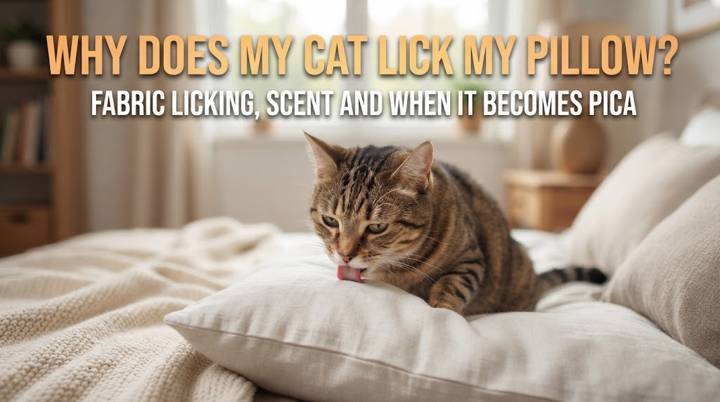
A cat that licks your hair may be extending grooming-like behavior toward you, investigating scent, or repeating an interaction that gets attention. Hair texture can also be interesting to lick or mouth.
Social Grooming Is Only Part of the Story
Gentle occasional hair licking is often harmless, but do not encourage your cat to swallow strands or lick freshly applied hair products. Redirect the behavior if chewing becomes persistent.
Why Cats Groom Human Hair
Social Interaction
Cats sometimes groom familiar companions, and some direct similar behavior toward people.
Scent
Hair carries both natural scent and the smell of products.
Texture
Individual strands can stimulate licking or chewing.
Attention
Hair grooming usually causes an immediate human reaction.
Keep the Habit Safe
- Do not let your cat swallow long strands of hair.
- Prevent licking of medicated or strongly fragranced products.
- Redirect chewing to safe toys.
- Move away calmly if the interaction becomes uncomfortable.
Hair Products Change the Safety Picture
Why does my cat bite my hair after licking it?
Mouthing can be part of the same exploratory or grooming-like sequence, but swallowing strands should be prevented.
Does it mean my cat thinks I am another cat?
There is no need to assume that. Cats can adapt social behaviors to interactions with people.
Why does my cat only lick my hair at night?
Quiet bedtime contact may have become the established routine.
When to Contact a Veterinarian
Seek advice if your cat repeatedly consumes hair or other non-food materials, or develops vomiting, appetite changes, or digestive symptoms.
Products on your hair can change a harmless habit into a safety issue
Hair can carry shampoo, conditioner, styling products, topical medications, dyes, oils, and other residues. Do not assume a product is safe to ingest just because it is safe on human skin or hair. If you have recently applied a medicated or concentrated product, prevent licking until you have followed the product’s safety instructions and, when uncertain, ask a veterinarian about exposure.
Set a boundary before the grooming turns rough
If licking becomes uncomfortable, move your head away calmly and offer another form of contact. Some cats progress from licking to grabbing hair or nibbling, especially when arousal rises. Ending the interaction early is kinder and more effective than waiting until you are annoyed and pushing the cat away suddenly.
Repeated licking of hair is usually social or sensory. The pattern deserves more attention if the cat also starts chewing or swallowing hair, fabric, plastic, or other non-food material, or if the behavior becomes compulsive and difficult to interrupt.
Related Virixoo Guides
Read why cats lick their owners. Read why cats sniff their owner’s face. Read why cats rub against their owner’s legs.
Keep the Social Part, Remove the Product Risk
Hair licking is often social and sensory. Keep it gentle, prevent swallowing, and be cautious with products that are not intended for feline exposure.