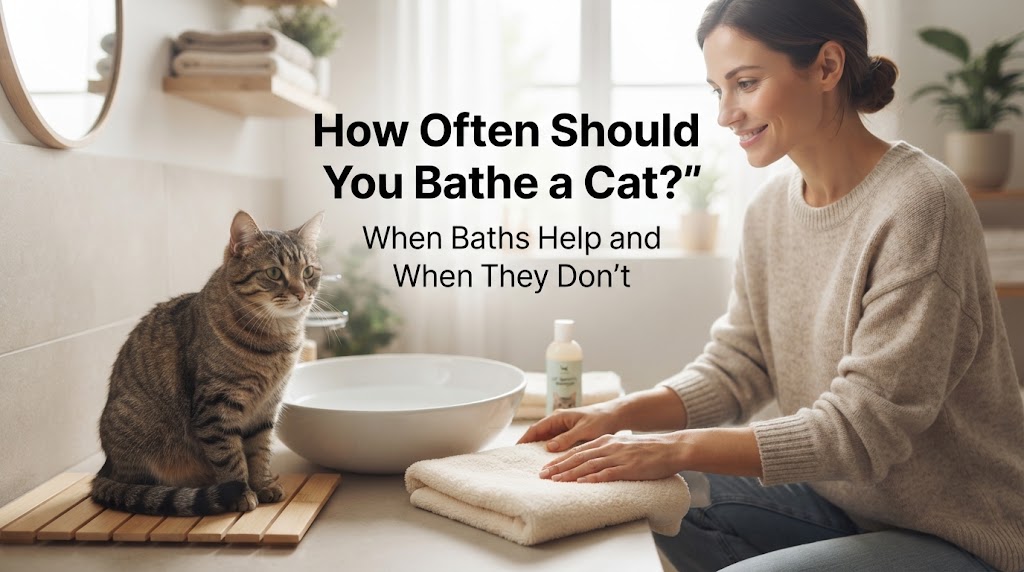
Healthy cats are efficient self-groomers, so most do not need a fixed weekly or monthly bathing schedule. Bathing becomes useful when the coat is contaminated with something that should not be licked, when a veterinarian prescribes a medicated shampoo, when a long-haired or mobility-limited cat cannot keep certain areas clean, or occasionally before grooming out heavy dirt. Unnecessary frequent bathing can dry or irritate skin and can turn routine handling into a major source of stress.
Quick Answer
Do not bathe a healthy clean cat just because a calendar says it is time. Brush regularly and spot-clean small messes when possible. If a full bath is needed, prepare everything first, use lukewarm water, a non-slip surface and a cat-safe shampoo only when appropriate. Keep water away from the eyes and ears, rinse thoroughly and dry the cat in a warm quiet room. If the coat is contaminated with a chemical, essential oil or unknown substance, contact a veterinarian or poison resource before encouraging grooming or applying another product.
When a Cat May Actually Need a Bath
Sticky, oily or unsafe contamination
A cat that gets cooking oil, paint, chemical residue or another substance on the coat may need decontamination, but the correct method depends on the substance. Prevent licking and seek professional advice for potentially toxic exposures.
Veterinary skin treatment
Some dermatologic conditions are treated with prescription shampoos or rinses. Frequency and contact time matter, so follow the veterinarian's directions rather than substituting a general pet shampoo.
Reduced ability to self-groom
Obesity, arthritis, illness and advanced age can make it difficult to reach the back or rear. Regular brushing, sanitary trims and targeted cleaning may be easier than frequent whole-body baths.
Long or dense coats
Long-haired cats can accumulate stool, litter or tangles around the hindquarters. Grooming and trimming may prevent repeated bathing, while severe matting should be addressed professionally.
Show or special coat care
Some cats are bathed for show preparation or breed-specific coat management. That is different from a medical necessity and should still use feline-safe products and low-stress handling.
How to Give a Lower-Stress Cat Bath
Preparation shortens the time the cat must remain wet and handled.
- Brush out loose hair and easy tangles before water is introduced.
- Place a rubber mat or folded towel on the bottom of a sink or tub for traction.
- Prepare cat-safe shampoo, towels and a cup or gentle sprayer before bringing the cat in.
- Use lukewarm water and wet the body gradually, avoiding the face and ear canals.
- Apply only the product recommended for the purpose and rinse until no residue remains.
- Wrap the cat in a warm towel and blot rather than vigorously rub the coat.
- Keep the cat indoors in a warm draft-free room until completely dry.
When Spot Cleaning Is Enough
A full bath is not the only way to clean a cat.
- Use a damp cloth for a small food spot on otherwise healthy fur.
- Brush dried loose debris out when it can be removed without pulling.
- Ask a groomer about sanitary trimming for recurring rear-end soiling.
- Use only wipes specifically considered safe for cats.
- Prevent the cat from licking any substance until you know it is safe.
Bath, Grooming or Vet Visit?
Choose the least stressful option that safely solves the actual problem.
| Situation | Best Starting Point |
|---|---|
| Healthy coat with normal shedding | Brush; no routine bath needed |
| Small harmless dirty patch | Spot clean |
| Large sticky but known safe mess | Gentle bath may help |
| Unknown chemical/toxin on coat | Contact vet/poison resource |
| Red, greasy, painful or infected skin | Veterinary examination |
| Severe mats close to skin | Professional grooming/veterinary help |
Common Mistakes to Avoid
Do not use human shampoo, dog flea shampoo, essential-oil products or strong detergents unless a veterinarian specifically confirms safety. Avoid immersing the head, flooding the ear canals, using very hot water, forcing a panicked cat to continue or using a hot human hair dryer close to the skin.
When a Dirty Coat Points to a Health Problem
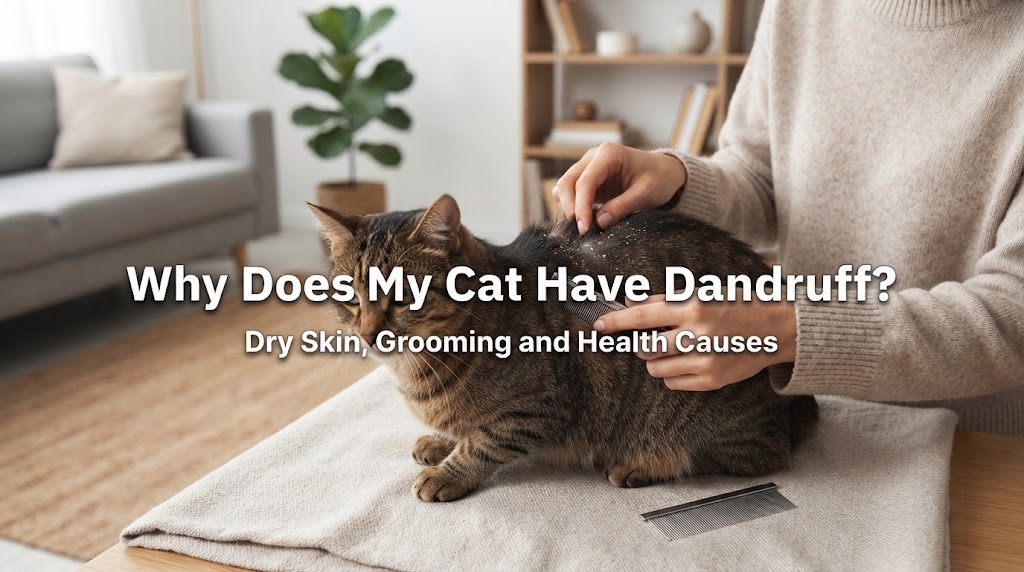
A cat that suddenly stops grooming, develops persistent grease, odor, dandruff, mats or fecal soiling may be dealing with pain, obesity, dental disease, skin disease or systemic illness. Bathing can improve appearance temporarily without addressing the reason grooming changed.
Related Virixoo Guides
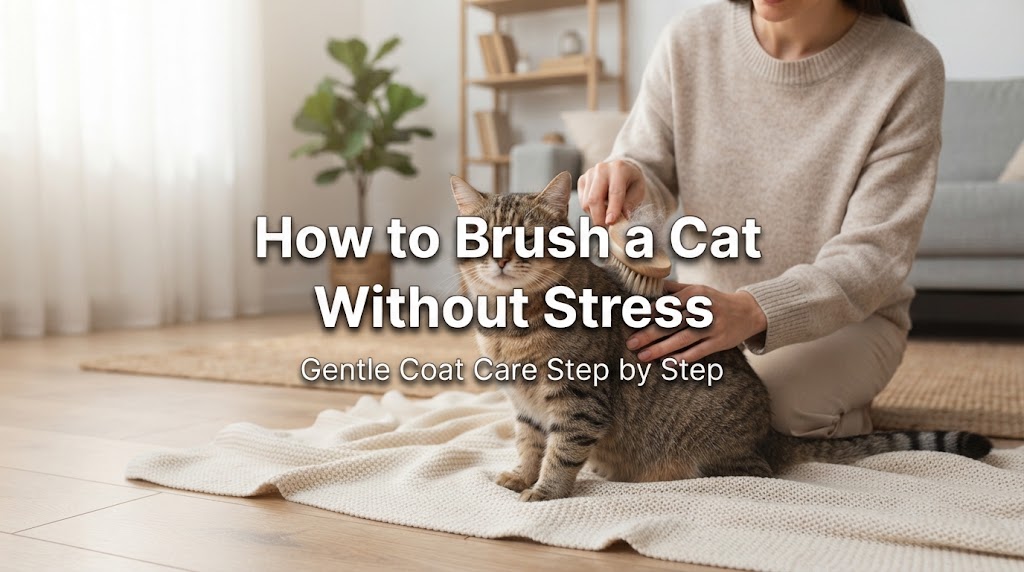
For routine coat care, read How to Brush a Cat Without Stress. For flaky skin, see Why Does My Cat Have Dandruff?.
Drying Is Part of the Bath
A wet cat can become chilled, especially if very young, elderly, thin or ill. Have several absorbent towels ready before the bath and keep the drying room warm. Blot and wrap rather than scrubbing vigorously, which can tangle long hair and increase irritation. Many cats dislike the sound and airflow of hair dryers; if a dryer is ever used, it should be a pet-appropriate low-stress method at a safe temperature and distance. Never confine a damp cat in a cold or drafty space.
Bathing Should Not Replace Skin Diagnosis
Repeated odor, greasy coat, itching or scaling often returns after a bath because the underlying problem remains. If you find yourself bathing more frequently to control the same symptom, stop changing shampoos and seek a veterinary skin assessment. Parasites, infection, allergy, pain and systemic illness can all alter coat condition and need different treatment.
Bottom Line
Most cats do not need scheduled baths. Use bathing for a specific reason, choose the safest method for that reason and investigate a persistent decline in self-grooming rather than simply washing more often.