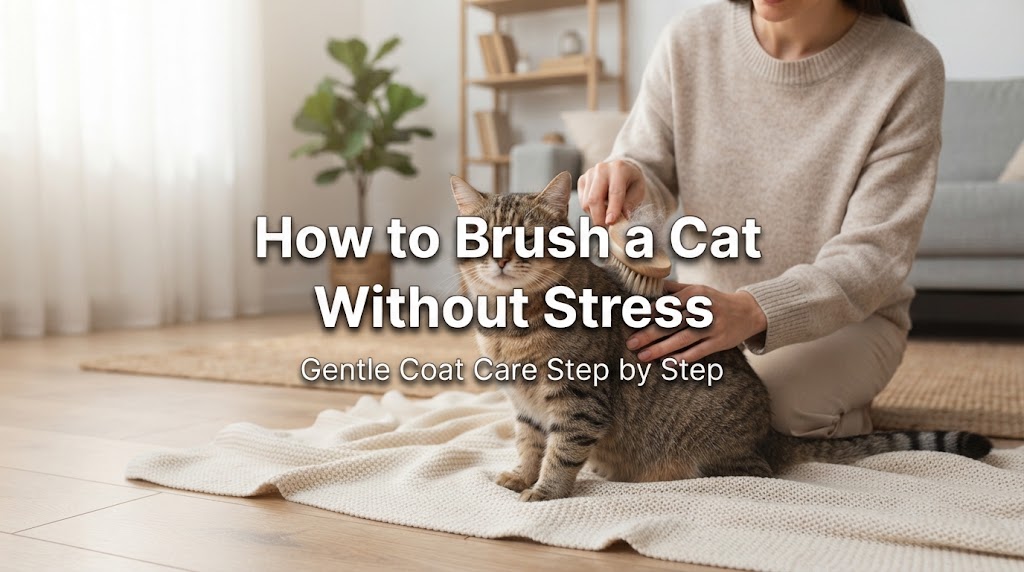
Brushing can remove loose hair, reduce tangles and give you a regular chance to notice skin, coat and body changes. But a cat that is restrained and brushed through discomfort may quickly learn to avoid grooming. The easiest routine begins with seconds of contact in areas the cat already enjoys, a tool suited to the coat and an end point before patience runs out. Long-haired cats may need more frequent coat care than short-haired cats.
Quick Answer
Choose a comfortable grooming tool and let your cat sniff it. Begin with one or two gentle strokes on the shoulders or back, then reward and stop. Add duration slowly over multiple sessions. Brush in the direction the coat naturally lies and be especially gentle around the belly, legs and sensitive areas. Do not pull through a tight mat close to the skin; mats can hide painful skin and may require professional removal.
What Makes Brushing Comfortable
The tool should match the coat
A soft brush may be enough for some short coats, while long or dense coats may need a comb that reaches through layers without scratching the skin. Ask a groomer or veterinarian if you are unsure which tool suits your cat.
Start where touch is already welcome
Many cats tolerate the cheeks, neck, shoulders and back better than the belly, legs or tail. Building a positive history in easy areas makes later handling less confrontational.
Short sessions prevent overload
A thirty-second successful session repeated regularly can accomplish more than a ten-minute battle. Stop at early tension signals such as tail flicking, skin rippling, ears turning back or head turning toward the brush.
Tangles and mats require care
A mat can pull continuously on skin and may sit very close to the body. Scissors are risky because feline skin is thin and can be drawn up into the mat. Tight mats are safer handled by a veterinarian or experienced groomer.
Coat change can reveal health change
New dandruff, greasy coat, bald areas, sores or reduced self-grooming can accompany skin disease, pain, obesity or systemic illness. Grooming should include observation, not just hair removal.
A Low-Stress Brushing Routine
Build comfort before trying to groom the entire cat.
- Choose a quiet time when the cat is relaxed and not actively playing.
- Present the brush and reward investigation without touching the cat.
- Make one gentle stroke over an easy area, reward, and stop.
- Over several sessions, increase to a few strokes while monitoring body language.
- Introduce more sensitive areas separately and for shorter periods.
- Remove loose hair from the tool often so it does not pull.
- Finish while the cat is still calm so the next session starts from a good history.
What to Check While You Groom
Use the routine as a gentle coat and skin inspection.
- New lumps, bumps or painful areas.
- Fleas, flea dirt or other parasites.
- Redness, crusts, sores or moist patches.
- Dandruff or unusual greasiness.
- Hair thinning or bald areas.
- Changes in the cat's willingness to be touched.
Body Language During Brushing
Stop before a warning becomes a bite.
| Signal | Meaning | Action |
|---|---|---|
| Loose posture, purring, leaning in | Comfortable | Continue briefly |
| Tail tip starts flicking | Arousal rising | Pause or finish |
| Skin ripples repeatedly | Sensitivity | Move away/stop |
| Ears flatten, head turns sharply | Contact limit reached | End session |
| Hiss, swat or bite | Too much pressure or pain possible | Stop and reassess |
Common Mistakes to Avoid
Do not pin a cat down for routine brushing, yank through mats, cut mats with household scissors or brush over sores. Avoid assuming resistance is stubbornness; a cat that suddenly objects to touch may be painful.
When Grooming Becomes a Health Issue
Ask a veterinarian or professional groomer for help with tight mats, skin sores, extensive dandruff, fleas, bald patches or a cat that cannot groom because of obesity, arthritis or illness. Sudden coat neglect or touch sensitivity deserves medical attention.
Related Virixoo Guides
For flaky skin, read Why Does My Cat Have Dandruff?. For safe nail care, see How to Trim Cat Nails Safely.
Long-Haired Cats Need Preventive Attention
Areas behind the ears, under the front legs, around the collar region and along the hindquarters can mat before the top coat looks tangled. For long-haired cats, use brief frequent checks and separate small sections of coat gently rather than waiting for a full mat to develop. If the comb does not glide through without pulling skin, stop. Removing a tight mat can be painful and may require clipping with professional equipment rather than more forceful brushing.
Make the Brush Predict Good Things
Keep the grooming tool in a familiar place and occasionally pair its appearance with a treat or play without brushing at all. During real sessions, reward after a few tolerated strokes and allow the cat to leave. Over time, many cats become more cooperative because the sequence is predictable: brief handling, reward, release. This approach also makes it easier to notice when tolerance suddenly changes, which can signal pain.
Choose the Right Moment
Grooming often goes better after a meal or play session when the cat is naturally settling, rather than during a burst of activity. Keep the brush within reach so you can use short opportunities instead of scheduling a long session. If the cat walks away, allow the break; voluntary return is a better foundation than restraint.
Bottom Line
Brushing should feel predictable and brief, not like restraint. Start small, read body language and use grooming as an opportunity to notice changes in the skin and coat early.