
Quick Answer
Trim cat nails by using sharp cat nail clippers, handling one paw at a time, pressing gently to extend the claw, and cutting only the clear hooked tip. Avoid the pink quick. Short, calm sessions are safer than trying to finish every nail at once.
What You Need
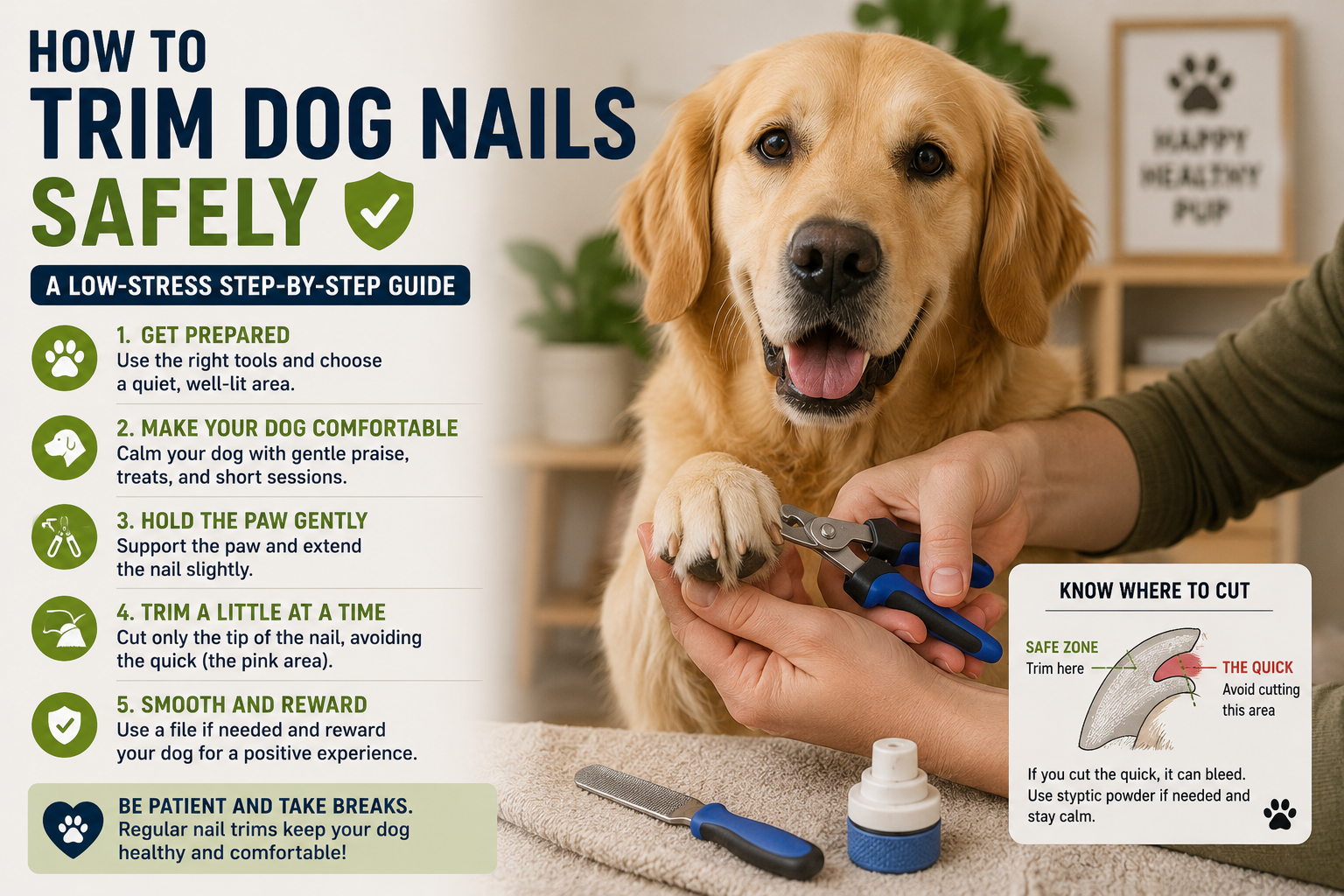
Use cat-specific nail clippers or small scissor-style pet clippers, good lighting, treats, and optional styptic powder in case a nail is accidentally cut too short. Do not use dull tools that crush the nail.
Step 1: Teach Paw Handling First
Before trimming, touch the shoulder, leg, and paw briefly while the cat is relaxed. Reward calm behavior. Over several sessions, progress to gently pressing a toe pad so the claw extends.
Step 2: Identify the Quick
In light-colored claws, the quick is the pink area containing blood vessels and nerves. The safe cutting zone is the sharp transparent tip beyond it. With dark claws, remove only a small amount at a time.
Step 3: Position the Cat Comfortably
Choose a quiet location and a position the cat already tolerates. Some cats are comfortable on a lap, while others do better standing on a nonslip surface. Avoid scruffing or forceful restraint.
Step 4: Clip the Hooked Tip
Extend one claw and make a quick clean cut through the narrow tip. Do not trim close to the quick merely to make the nail shorter. Conservative trimming is safer.
Step 5: Stop Before the Cat Becomes Frustrated
One or two paws per session is perfectly acceptable. Ending while the cat is still calm helps future trims become easier.
If You Cut the Quick
Apply gentle pressure with gauze and use styptic powder if available. Minor bleeding often stops quickly, but persistent bleeding, severe pain, or a torn nail requires veterinary attention.
How Often Do Cats Need Nail Trims?
Many indoor cats need trimming every few weeks, but growth rates vary. Check nails regularly rather than following a rigid schedule. Senior cats may need more frequent checks because they may scratch less and develop overgrown claws.
Do Scratching Posts Replace Nail Trimming?
Scratching helps remove outer claw layers and supports normal behavior, but it does not always keep nails short enough. Both scratching surfaces and periodic nail checks are useful.
When a Professional Should Help
Ask a veterinarian or groomer for help if the cat becomes extremely fearful, if nails are embedded in paw pads, if a claw is split or infected, or if handling causes pain.
Bottom Line
Safe trimming is about removing only the sharp tip and keeping the experience low stress. Slow training and conservative cuts are more important than finishing every nail in one session.