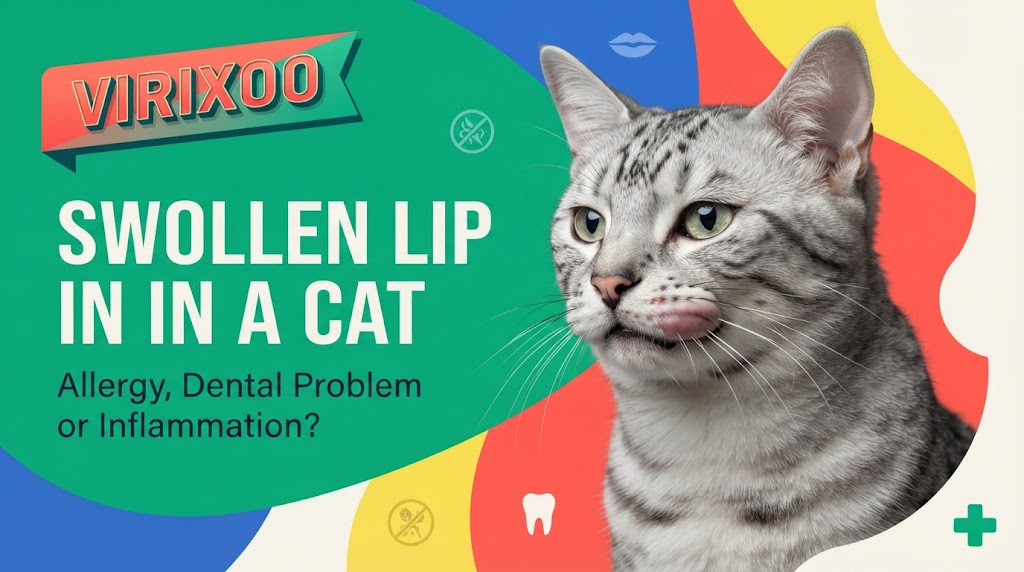
A swollen lip in a cat can come from allergy, insect exposure, dental disease, trauma, infection, or eosinophilic granuloma complex. Because several conditions can look similar, the location, duration, discomfort level, and other symptoms matter more than appearance alone.
Quick Answer
If the lip swelling is rapidly spreading, affects breathing, or occurs with collapse, severe weakness, or repeated vomiting, seek emergency care. If the cat is stable but swelling persists, recurs, ulcerates, or interferes with eating, arrange veterinary evaluation.
Allergic and Inflammatory Causes
Allergic reactions can cause sudden swelling around the lips or face. Eosinophilic granuloma complex can also create swelling or raised lesions on the lips, often associated with underlying allergic disease.
Dental Disease
Tooth-root infection, gum inflammation, or oral disease can make one side of the lip look swollen. Bad breath, drooling, chewing changes, or sensitivity around the mouth provide additional clues.
Trauma and Bites
Outdoor fights, scratches, falls, or accidental bites can injure the lip. A tiny puncture can seal quickly and later become infected.
What to Look For
Note whether the swelling is on the upper or lower lip, one side or both, and whether there is a visible ulcer, crust, puncture, tooth problem, or insect sting. Do not squeeze the area or force the mouth open.
Eosinophilic Granuloma Complex
This group of inflammatory skin and oral lesions can affect the lips, chin, thighs, or other areas. Some lesions are linked to flea allergy, food allergy, or environmental allergy. Veterinary diagnosis is important because treatment depends on the underlying trigger and lesion type.
Red Flags
| Finding | Concern |
|---|---|
| Breathing difficulty | Emergency |
| Rapidly expanding facial swelling | Possible serious allergic reaction |
| Painful oral swelling | Dental or inflammatory disease |
| Ulcerated lip lesion | Needs examination |
| Reduced appetite | Possible oral pain |
What Not to Do
- Do not apply human skin cream.
- Do not give antihistamines without veterinary direction.
- Do not squeeze or puncture the swelling.
- Do not ignore recurrent lip lesions.
What the Veterinarian May Do
The veterinarian may examine the mouth and teeth, look for fleas or skin disease, and sample a lesion if needed. Dental imaging, cytology, biopsy, or allergy management may be considered depending on the pattern.
Why Recurrence Matters
A lip lesion that repeatedly improves and returns may reflect an unresolved allergic trigger or chronic oral problem. Track food, flea control, seasonal patterns, and previous treatments.
Bottom Line
A swollen lip is not always an emergency, but persistent or recurring swelling deserves a diagnosis. Allergy, dental disease, trauma, infection, and eosinophilic granuloma can overlap in appearance, so veterinary assessment is the safest way to identify the cause.
Flea Allergy Can Be Part of the Pattern
Some eosinophilic lesions are associated with allergic disease, and flea allergy is an important trigger in cats. Reliable flea prevention may therefore be part of the long-term plan when your veterinarian suspects an allergic component.
When Biopsy May Be Discussed
Persistent, unusual, ulcerated, or recurrent lip lesions may require tissue sampling to distinguish inflammatory disease from infection or tumor. This is especially important in older cats or lesions that do not respond as expected.
What to Record Before the Appointment
For swollen lip in a cat, write down when the sign first appeared, whether onset was sudden or gradual, and whether it is getting better, worse, or staying the same. Record appetite, water intake, urination, stool, grooming, sleep, breathing, activity, and behavior. Include recent trauma, fights, outdoor access, medication changes, toxin exposure, vomiting, diarrhea, or weight loss when relevant.
If the problem is intermittent, a short natural photo or video can be useful. Do not provoke pain, force movement, manipulate an injured area, or delay urgent care just to document the sign.
How to Decide Whether Monitoring Is Still Reasonable
Monitoring is only reasonable when the cat is comfortable, the sign is mild, there is a plausible non-urgent explanation, and no red flags are present. If the cat becomes weaker, stops eating, breathes abnormally, develops severe pain, cannot urinate, collapses, or the sign rapidly worsens, the situation has changed and needs prompt veterinary reassessment.
How Swollen-Lip Patterns Can Differ
A rapidly puffy lip that appears after an insect sting or new exposure may behave differently from a chronic firm lesion that slowly enlarges. Eosinophilic lesions may look raised, thickened, or ulcerated and can recur. Dental swelling may be more one-sided and accompanied by bad breath or chewing changes.
Why Flea Control Is Often Discussed
Flea allergy can trigger significant inflammation in sensitive cats even when owners do not see fleas. If eosinophilic disease is suspected, the veterinarian may recommend consistent flea prevention as part of the diagnostic and treatment plan.
Food and Environmental Allergy
Some cats with recurrent eosinophilic lesions are evaluated for food or environmental allergy. A proper food trial must use a veterinarian-selected diet consistently for the full recommended period. Randomly changing foods every few days makes the pattern harder to interpret.
When a Lip Lesion Needs Sampling
Persistent, unusual, rapidly growing, or ulcerated lesions may require cytology or biopsy. This is especially important in older cats or when a lesion fails to respond as expected. Sampling can distinguish inflammatory disease from infection or tumor.
What Improvement Should Look Like
The lip should become less swollen and less irritated, and the cat should eat, groom, and behave normally. A lesion that temporarily shrinks but repeatedly returns is not fully resolved and deserves follow-up.
A Practical Decision Guide
When evaluating swollen lip in a cat, start with the cat’s overall function. A cat that can breathe comfortably, walk normally, eat, drink, urinate, and respond to the environment is different from one that is weak, painful, hiding, confused, or unable to perform a normal function. Next consider speed: a change that developed over minutes or hours generally deserves more urgency than a stable finding that has been unchanged for months.
Combinations of signs matter. Pain plus food refusal, weakness plus pale gums, swelling plus breathing difficulty, or neurologic change plus collapse are more concerning than one mild isolated feature. If you are uncertain, call the veterinary clinic and describe the cat’s current condition rather than only naming the symptom.
How to Keep the Cat Comfortable While Waiting
Use a quiet indoor room, minimize unnecessary handling, and keep food, water, and the litter box easy to reach. Prevent access to stairs or high furniture if mobility is abnormal. For suspected trauma, reduce activity. Do not force food, water, exercise, or handling when the cat is distressed.
What Follow-Up Should Focus On
After treatment begins, track whether the cat is returning toward its normal baseline. Improvement should include comfort, appetite, grooming, movement, and normal litter-box habits—not just a smaller swelling or less visible lesion. Contact the clinic if the original problem returns, new signs appear, or the cat worsens after initially improving.
Why the Chin and Skin Should Also Be Checked
A cat with a swollen lip may have other inflammatory lesions on the chin, thighs, abdomen, or skin. Flea allergy, food sensitivity, and environmental allergy can affect more than one location. Tell the veterinarian about itching, overgrooming, scabs, or recurrent skin problems.
Dental and Oral Examination Still Matters
Even when the swelling looks like a skin problem, the veterinarian may inspect teeth and gums because tooth-root infection or oral inflammation can create similar one-sided changes. A cat can have both dental disease and an allergic lesion at the same time.
Why Self-Treatment Can Hide the Pattern
Applying steroid creams, antibiotics, or antihistamines without guidance can partially change the appearance and make diagnosis harder. Some products are also unsafe if licked. Photograph the lesion before treatment and use only medication specifically prescribed for the cat.
When to Recheck Even After Initial Improvement
A cat can look better for a few hours while the underlying problem is still present. Recheck is appropriate when the sign returns, appetite falls, the cat hides more, breathing changes, mobility worsens, or new pain appears. Follow any scheduled veterinary recheck even if the visible sign seems smaller or less dramatic.
Keep treatment consistent and do not stop prescribed medication early unless the veterinarian tells you to. If a new symptom appears after treatment begins, report both the symptom and the timing relative to medication or feeding changes.
What to Photograph for Follow-Up
Take one clear photo showing the entire muzzle and one closer view of the affected lip in similar lighting. This makes it easier to judge whether the swelling is spreading, changing color, or becoming ulcerated. If the cat resists, stop rather than forcing the mouth or face into position.
Also note whether the lesion interferes with eating, grooming, or closing the mouth normally. Functional changes often matter more than a small difference in appearance.
Continue monitoring the cat’s overall comfort, appetite, breathing, mobility, and litter-box habits while following veterinary advice. A worsening change in any basic function is more important than one isolated symptom appearing slightly better.