Quick Answer
Bright red gums can mean different things depending on whether redness is limited to the gumline or affects the mouth more broadly. Dental inflammation is common, but diffuse abnormal redness in a sick or overheated cat can signal a more urgent systemic problem.
Gingivitis Often Starts at the Gumline
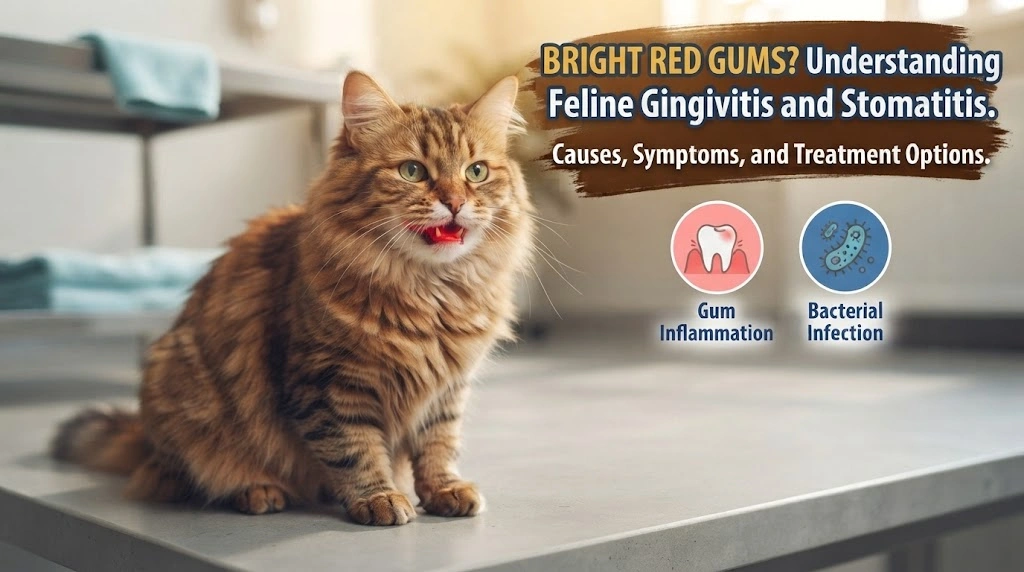
Dental plaque and periodontal disease can inflame the margin where the gum meets the tooth. Owners may also notice bad breath, reluctance to chew, drooling, or preference for softer food. Redness around individual teeth is different from an entire mouth that suddenly looks unusually red.
Stomatitis Can Cause Severe Oral Redness
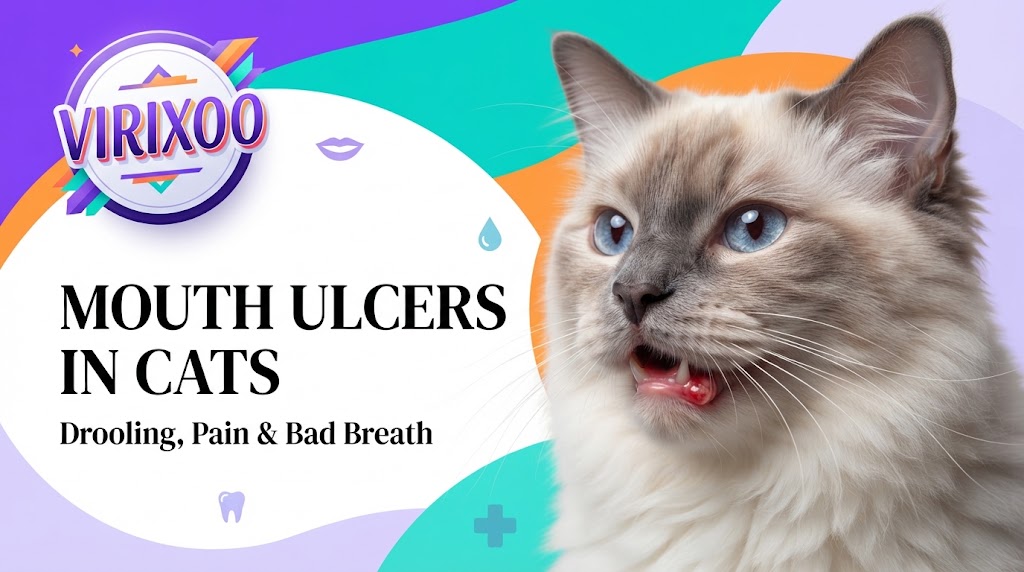
Feline chronic gingivostomatitis can produce intense inflammation and pain involving larger areas of the mouth. Cats may approach food but cry, drop food, drool, lose weight, or paw at the mouth. A veterinary oral examination is necessary because severe mouth pain should not be treated with human oral products.
Heat Illness Changes the Urgency
An overheated cat may pant, drool, become weak, or develop abnormal mucous-membrane color. Cats with suspected heatstroke need emergency veterinary care. Move the cat to a cooler environment and contact a clinic while avoiding ice baths or aggressive cooling that can cause additional problems.
Toxins and Circulatory Problems
Certain toxins and severe systemic disorders can alter mucous-membrane color. Because color interpretation is imprecise at home, the presence of weakness, collapse, breathing changes, vomiting, seizures, or known toxin exposure is more important than trying to identify an exact shade.
Check the Pattern, Not Just the Color
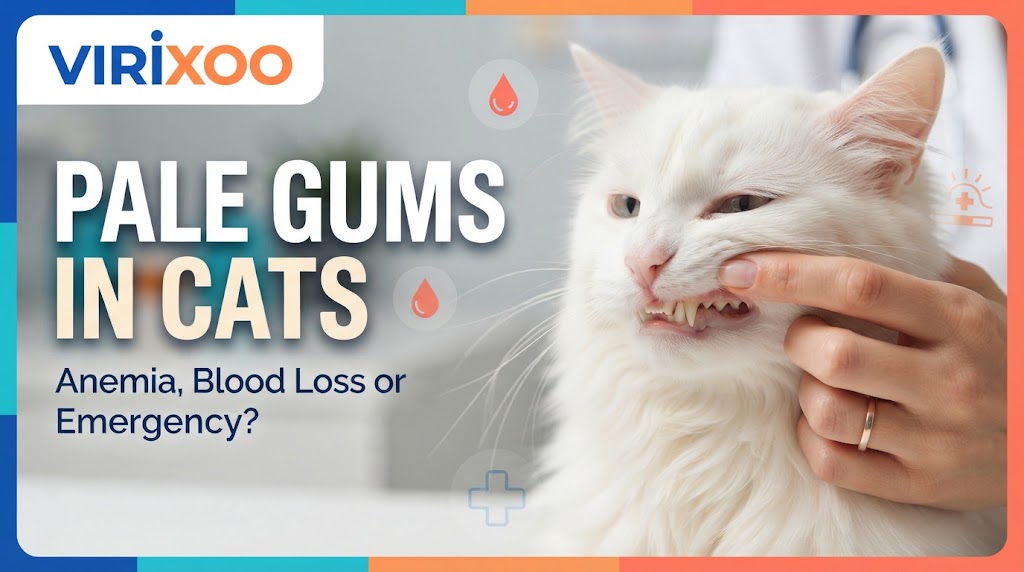
Observe whether redness is around one tooth, along most gum margins, or diffuse throughout nonpigmented oral tissue. Also note swelling, ulcers, bleeding, odor, and pain. Do not scrape the gums or apply peroxide, alcohol, essential oils, or human mouthwash.
What the Vet May Do
The veterinarian may assess hydration, temperature, circulation, teeth, gums, tongue, and the back of the mouth. Dental radiographs can reveal disease below the gumline. Blood testing or other diagnostics may be needed if the redness appears systemic rather than primarily dental.
When to Seek Urgent Care
Urgent evaluation is appropriate for red gums with heat exposure, panting, collapse, severe weakness, breathing difficulty, seizures, suspected poisoning, or significant oral bleeding. Severe mouth pain with inability to eat also deserves prompt care.
Dental Redness Can Hide Disease Below the Gumline
A tooth can look relatively intact above the gum while painful disease exists around the root or beneath the surface. Feline tooth resorption is an important example. Dental radiographs taken under anesthesia are often necessary to assess the entire tooth and plan treatment.
Why Appetite Is an Imperfect Pain Measure
Cats with significant oral disease may continue eating because hunger is strong. They may compensate by swallowing food with less chewing, eating on one side, or preferring softer textures. Normal appetite therefore does not rule out substantial dental pain.
What Improvement Should Look Like
After appropriate treatment, the cat should become more comfortable eating and grooming, oral odor may improve, and inflamed tissues should become less painful. Persistent redness, bleeding, drooling, or food avoidance after treatment warrants re-evaluation rather than repeated home cleaning.
Bottom Line
Bright red gums are not a diagnosis. Localized gumline redness commonly points toward dental inflammation, while diffuse redness in a systemically ill or overheated cat can be more urgent. Use the distribution and accompanying signs to guide how quickly veterinary care is needed.