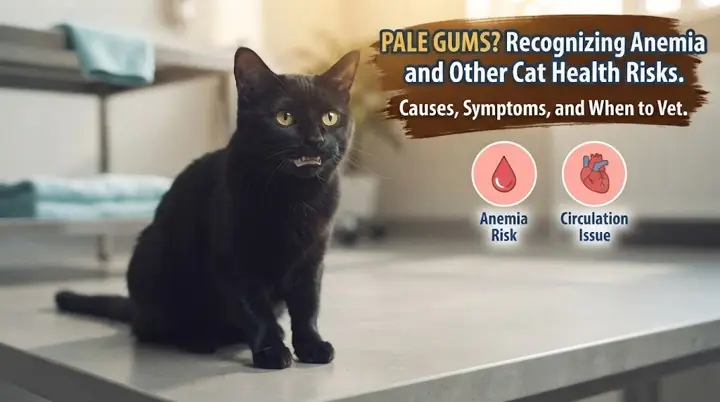
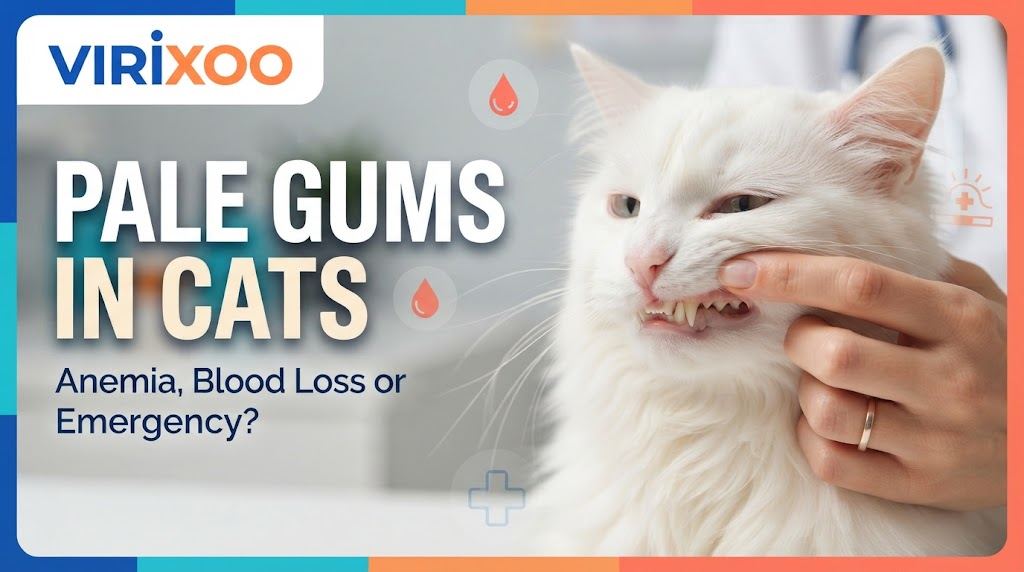
Pale, white, or washed-out gums can be a sign of anemia, blood loss, poor circulation, or shock. Gum color is not a perfect diagnostic test, especially in cats with naturally dark oral pigment, but a clear change away from the cat’s normal color deserves attention.
Very Pale or White Gums Can Signal Poor Oxygen Delivery or Blood Loss
If your cat’s gums suddenly look pale or white, especially with weakness, collapse, rapid breathing, bleeding, or black stool, urgent veterinary evaluation is appropriate. Pale gums can indicate reduced oxygen-carrying capacity or poor circulation and should not be treated as a minor color variation.
What Pale Gums May Mean
- Anemia from blood loss or disease affecting red blood cells
- Internal or external bleeding
- Poor circulation or shock
- Severe systemic illness causing collapse or weakness
How to Check Gum Color Safely
Lift the lip gently in good natural or indoor light when the cat is calm. Compare the color with what is normal for your cat if you know it. Also note whether the gums feel tacky or dry and whether the cat is breathing faster than normal.
Signs That Increase Urgency
| Finding | Why it matters |
|---|---|
| Collapse or profound weakness | Emergency concern |
| Rapid breathing or open-mouth breathing | Can indicate poor oxygen delivery |
| Black tarry stool or visible bleeding | Possible blood loss |
| Cold extremities or poor responsiveness | Circulatory compromise |
| Sudden onset after trauma | Urgent evaluation needed |
What Not to Do
Do not assume the cat is merely tired, and do not delay evaluation while trying to correct the problem with food, vitamins, or home remedies. Pale gums are a clue, not a condition you can treat at home.
What the Veterinarian May Evaluate
The veterinarian may assess heart rate, breathing, circulation, hydration, temperature, and overall stability. Diagnostic testing may include packed cell volume, bloodwork, blood pressure measurement, and investigation for bleeding or underlying disease.
Gum Color Is a Sign, Not a Diagnosis
Pale gums can reflect serious disease or circulatory failure. When the change is clear and especially when it is paired with weakness, breathing changes, bleeding, or collapse, urgent veterinary care is the safest response.
Use normal light and compare with your cat’s usual color
Healthy gum color varies between cats, and pigmented gums can make comparison difficult. If there is an unpigmented area, look in ordinary light without repeatedly pressing on the mouth. Very pale, white, gray, or suddenly different gums are more concerning when paired with weakness, rapid breathing, collapse, or obvious bleeding.
Anemia has several possible mechanisms
Merck describes anemia as a reduction in red blood cells that can result from blood loss, destruction of red cells, or reduced production. Those categories lead to very different treatments, which is why gum color alone cannot tell you what to give at home. Cats with chronic anemia may become gradually tired or lose appetite; acute blood loss can cause rapid deterioration.
Do not give iron, vitamins, aspirin, or other medication unless the cause has been diagnosed and a veterinarian recommends it. Severe weakness, collapse, breathing difficulty, ongoing bleeding, black tarry stool, or very white gums warrants urgent or emergency care.
Related Virixoo Guides
Read why black tarry stool in cats is concerning. Read why a cat may suddenly collapse. Read why a cat may become suddenly weak in all four legs.