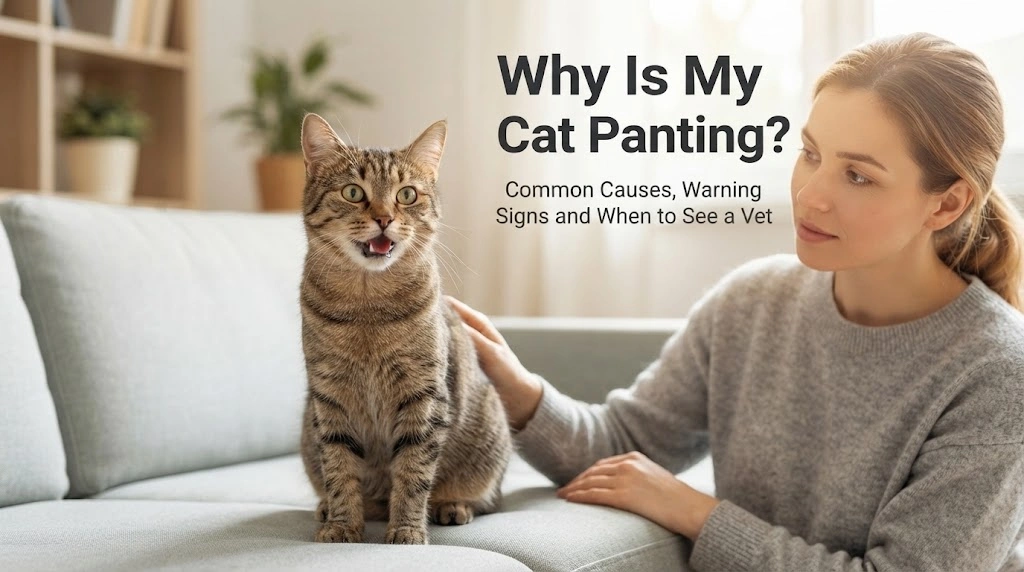
Unlike dogs, cats do not routinely pant to cool themselves. A very brief episode can occur after unusually intense play, severe stress or heat, but open-mouth breathing at rest can also signal respiratory, cardiac, heat-related or other serious problems. Because cats can deteriorate quickly when breathing is compromised, this is a symptom where caution is appropriate.
Quick Answer
Stop activity, move the cat to a quiet cool area and watch whether breathing returns to normal promptly. Do not restrain a breathless cat more than necessary. If panting occurs at rest, persists, repeatedly returns, or comes with marked chest or abdominal effort, blue or gray gums, weakness, drooling, vomiting, collapse or extreme heat exposure, seek urgent veterinary care.
Why a Cat May Pant
Intense exertion
A young cat may briefly open the mouth after a very energetic chase or play burst. The episode should settle quickly with rest. Repeated panting after modest activity is different and deserves evaluation.
Heat stress
Cats can overheat, particularly in hot enclosed spaces, vehicles, sunrooms or poorly ventilated areas. Excessive panting, drooling, weakness, vomiting, diarrhea or collapse during heat exposure are warning signs of heatstroke.
Fear or severe stress
Travel, restraint or a frightening event can trigger rapid breathing and occasional panting. Stress may be part of the picture, but breathing difficulty should never be dismissed as anxiety simply because the cat is frightened.
Airway or lung disease
Asthma, pneumonia and other respiratory disorders can make a cat breathe faster or with the mouth open. Coughing, wheezing, neck extension or increased abdominal effort increases concern.
Heart or systemic disease
Heart disease, anemia, pain and other systemic problems can affect breathing. There is no reliable way to identify the cause from panting alone, so persistent or unexplained episodes require examination.
How to Judge the Urgency
Focus on recovery and effort. A cat that cannot quickly return to quiet closed-mouth breathing needs more attention than one brief post-play episode.
| Situation | What to Do |
|---|---|
| Seconds after extreme play, resolves fully with rest | Stop play and monitor closely |
| Repeated after ordinary activity | Arrange veterinary assessment |
| During significant heat exposure | Cool safely and contact a veterinarian |
| Open-mouth breathing while resting | Treat as urgent |
| Blue/gray gums, collapse or severe effort | Emergency care immediately |
Safe First Steps
Breathing cats need calm handling. Stress and physical restraint can increase oxygen demand.
- Stop exercise and place the cat in a quiet, well-ventilated space.
- If overheated, move to a cool area and use cool—not ice-cold—water on the fur while arranging veterinary advice.
- Avoid covering the carrier tightly if airflow is limited.
- Record a short video only if doing so does not delay care.
- Keep the cat away from smoke, aerosols and strong fumes.
What to Track Before the Vet Visit
If the episode resolves and your veterinarian advises monitoring, document the circumstances rather than relying on memory.
- What the cat was doing immediately before panting.
- How long open-mouth breathing lasted.
- Room temperature and possible heat exposure.
- Coughing, wheezing, drooling, vomiting or weakness.
- Whether similar episodes have occurred before.
What Not to Do
Do not force water into a panting cat's mouth, apply ice directly to the body, or give human respiratory medication. Do not spend several minutes trying to count breaths or take photographs if the cat is clearly struggling to breathe.
When to Contact a Veterinarian
Any recurrent panting, panting after mild activity, or unexplained change in breathing should be discussed with a veterinarian even if the cat appears normal later. Cats with known heart or lung disease may need individualized emergency instructions.
When It Is an Emergency
Open-mouth breathing at rest, pronounced abdominal effort, blue or gray gums, collapse, severe weakness, inability to settle, or signs of heatstroke are emergencies. Transport the cat with as little stress as possible and call the veterinary clinic while traveling if someone else can safely make the call.
Related Virixoo Guides
For coughing or wheezing, see Why Is My Cat Coughing?. For hydration during ordinary weather, read How to Get Your Cat to Drink More Water.
Check Resting Breathing When the Cat Is Calm
If an isolated panting episode has completely resolved and your veterinarian advises monitoring, observe breathing later when the cat is deeply asleep—not purring, grooming or dreaming actively. Watch the chest rise and fall and note whether breathing appears smooth and effortless. A trend toward faster resting breathing, increased abdominal movement or new inability to lie comfortably is more informative than repeatedly checking a frightened awake cat. Your veterinarian can tell you what rate and trend are appropriate for your individual cat, especially if heart or lung disease is already known.
Heat Safety Requires Prevention
During hot weather, make sure the cat cannot become trapped in garages, sheds, enclosed balconies or unventilated rooms. Provide cool indoor areas and unrestricted fresh water. Long-haired, overweight, flat-faced, very young, senior and medically fragile cats may have less reserve during heat stress. Never leave a cat in a parked vehicle, even for a short errand. If overheating is suspected, begin safe cooling while contacting veterinary care; do not wait for collapse.
Do Not Use Excitement as a Diagnosis
A cat may pant during a frightening car ride or after an intense chase, but the presence of a trigger does not prove the episode is harmless. Ask whether the recovery was fast and complete and whether the same thing is happening more easily than before. A lower threshold for panting over time is a reason for veterinary assessment.
Bottom Line
Panting is not routine resting behavior for cats. Brief recovery after extreme exertion may be benign, but persistent or resting open-mouth breathing should be treated as a potentially serious respiratory sign.