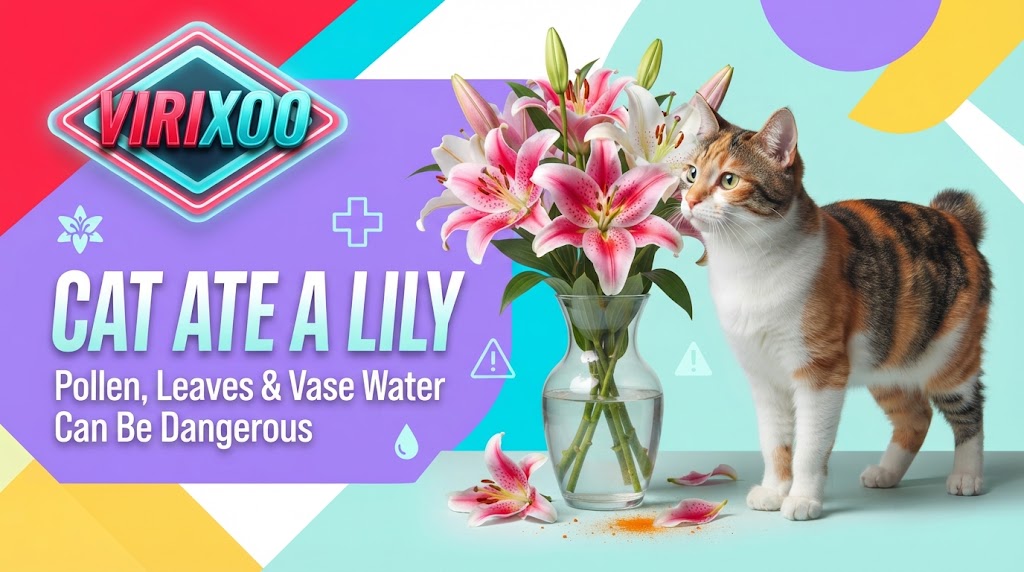
Exposure to true lilies and daylilies is a medical emergency in cats. Eating part of a leaf, chewing a petal, licking pollen from the coat, or drinking water from a vase containing certain lilies can lead to severe kidney injury. Because early treatment is most effective, waiting for symptoms is dangerous.
Quick Answer
If your cat may have contacted a true lily or daylily, remove access to the plant and contact an emergency veterinarian or animal poison service immediately. Do not wait for vomiting, lethargy, or reduced urination. If pollen is visibly on the coat, prevent grooming and ask the veterinary team how to handle decontamination while you are preparing to leave.
Which Lilies Are the Major Concern?
Species in the genera Lilium and Hemerocallis are especially dangerous to cats. Common examples include Easter lilies, tiger lilies, Asiatic lilies, Oriental lilies, and daylilies. Other plants with “lily” in the common name may cause different problems, so plant identification matters.
Why Pollen Is Dangerous
A cat does not need to chew an entire flower. Pollen can fall onto the face or coat and then be swallowed during grooming. Even small exposures are treated seriously because the toxic dose is not reliably predictable at home.
Vase Water Can Also Be a Risk
Water that has held toxic lilies may contain plant material. Cats that like drinking from flower vases should be kept away from lily arrangements completely.
Early Signs
Vomiting, drooling, reduced appetite, lethargy, and dehydration may appear within hours. Later, signs of kidney injury can develop, including changes in thirst and urination, weakness, and worsening illness.
Why Waiting Is Dangerous
The kidneys may be injured before owners see severe symptoms. Treatment started early after exposure offers the best chance of preventing or limiting kidney failure.
What to Bring
If safe, take a photo of the plant or bring a sample in a sealed bag without delaying transport. Tell the clinic whether the cat chewed the plant, contacted pollen, or drank vase water and when the exposure may have occurred.
What Not to Do
- Do not wait for symptoms.
- Do not induce vomiting unless instructed by a veterinarian or poison professional.
- Do not give milk, oil, charcoal, or home remedies without guidance.
- Do not let a cat groom visible pollen from the coat.
What Veterinary Treatment May Include
Depending on timing, treatment can include decontamination, intravenous fluids, monitoring kidney values, urine output, and supportive care. The exact plan depends on the exposure and how quickly treatment begins.
Prevention
The safest approach is to keep true lilies and daylilies completely out of homes with cats. This includes bouquets, cut flowers, garden plants, and arrangements received as gifts.
Bottom Line
Lily exposure is one of the most time-sensitive plant toxicities in cats. Pollen, leaves, petals, and vase water can all be dangerous. If exposure is possible, contact emergency veterinary care immediately rather than waiting for illness signs.
What If You Do Not Know the Lily Species?
Do not delay care while trying to identify the flower perfectly. Take clear photos of the bloom, leaves, stem, and label if available and send them to the clinic or poison service. When true-lily exposure cannot be ruled out, professionals may recommend treating the situation cautiously.
Why Grooming Makes Pollen Exposure Worse
Pollen stuck to fur can be swallowed when the cat cleans itself. Prevent grooming as much as safely possible while getting veterinary instructions. Do not create additional stress by aggressively scrubbing a sick cat at home.
Kidney Monitoring
Veterinary teams may recheck kidney values and urine output over time because changes may not be obvious immediately after exposure. Follow all recommended rechecks even if the cat appears normal.
What to Record Before You Call
For cat ate a lily, write down the exact time the problem or exposure began, what you saw, and whether the cat is getting better, worse, or staying the same. Record appetite, drinking, urination, stool, vomiting, breathing, movement, awareness, and any unusual behavior. For poisoning or foreign-body concerns, keep the product package, plant photo, object description, or medication label available.
Do not delay urgent care to collect perfect information. When a cat is weak, collapsing, struggling to breathe, seizing, repeatedly vomiting, unable to urinate, or rapidly deteriorating, transport takes priority over documentation.
How to Decide Whether Monitoring Is Still Safe
Monitoring is only reasonable when the cat is comfortable, the exposure or behavior has been professionally judged low-risk, and no red flags are present. A cat that becomes quieter may not simply be resting; it may be becoming weaker. Look at the whole cat rather than one visible sign.
If new pain, breathing changes, neurologic signs, food refusal, repeated vomiting, or abnormal urination develops, contact the veterinarian again even if the original sign appears slightly improved.
Common Mistakes to Avoid
- Waiting for severe symptoms after a known high-risk exposure.
- Giving a home remedy before identifying the substance or object.
- Using medication prescribed for another pet.
- Forcing food, water, or handling when the cat is distressed.
- Assuming that normal walking or eating rules out a serious problem.
What Follow-Up Should Focus On
After treatment or professional advice, track whether the cat returns toward its normal baseline. Appetite, grooming, breathing, movement, litter-box habits, and interaction should all be considered. Follow recheck recommendations even when the visible problem seems better, because some toxicities and internal injuries can evolve after the first examination.
Why Early Advice Often Changes the Outcome
Many feline emergencies are easier to treat before severe symptoms develop. Early veterinary or poison-control guidance can determine whether decontamination, imaging, observation, or immediate treatment is appropriate. Waiting until the cat is obviously ill can remove safer or less invasive options.
When in doubt, describe the exact exposure or behavior, the timeline, and the cat’s current condition rather than trying to diagnose the problem yourself.
Why Florist Bouquets Are a Common Source of Exposure
Owners may not intentionally buy lilies, but mixed bouquets can contain them. A single flower among roses or other plants can create risk. Before bringing flowers into a home with cats, check the plant species or choose cat-safe arrangements.
What If the Cat Only Brushed Against the Flower?
If pollen is visible on the coat, face, or whiskers, assume ingestion could occur through grooming. Prevent grooming as much as safely possible and call for immediate veterinary advice. Do not rely on whether you actually saw the cat lick the pollen.
Why Early Blood Tests Can Be Normal
Kidney values may not rise immediately after exposure. A normal early test does not always mean the kidneys are safe. This is why treatment decisions are based on the exposure history and timing as well as laboratory results.
Safe Flower Choices Matter
The easiest prevention strategy is to avoid true lilies and daylilies entirely in homes with cats. When receiving bouquets, remove unidentified flowers until you can confirm they are safe. This avoids relying on constant supervision.
What Improvement Should Look Like
For cat ate a lily, improvement means the cat is returning toward its normal baseline rather than showing only one isolated change. Appetite, grooming, movement, breathing, litter-box habits, awareness, and social behavior should all be considered. If the original sign looks better but the cat becomes weaker, more withdrawn, painful, or unable to perform a normal function, the overall situation is not improving.
Follow any veterinary instructions exactly and complete recommended rechecks. Do not add supplements, human medication, or home remedies unless the veterinary team specifically approves them.
Why Cats May Be Exposed Without Chewing the Plant
A cat can brush against a flower, collect pollen on the face or coat, and later swallow it while grooming. This is why owners should treat visible pollen contamination as a meaningful exposure even if no bite marks are seen on the plant.
What Recovery Monitoring May Include
After treatment, veterinary teams may continue checking kidney values, hydration, urine production, appetite, and overall behavior. Follow-up matters because kidney injury can evolve over time. Do not skip rechecks simply because the cat looks normal at home.
When to Call Again After Initial Advice
For cat ate a lily, call the veterinary team again if the cat develops a new symptom, the original sign becomes more frequent or severe, or basic functions change. Important changes include repeated vomiting, food refusal, weakness, abnormal breathing, inability to urinate, severe pain, tremors, seizures, or collapse.
Describe what changed and when it changed. A clear timeline helps the clinic decide whether home monitoring is still appropriate or whether the cat should be examined sooner.
What to Tell the Emergency Team
Explain the flower type if known, the part of the plant involved, whether pollen was on the coat, whether vase water was accessible, and the earliest possible exposure time. Also report vomiting, appetite changes, and urination. These details help the team choose decontamination and monitoring steps quickly.