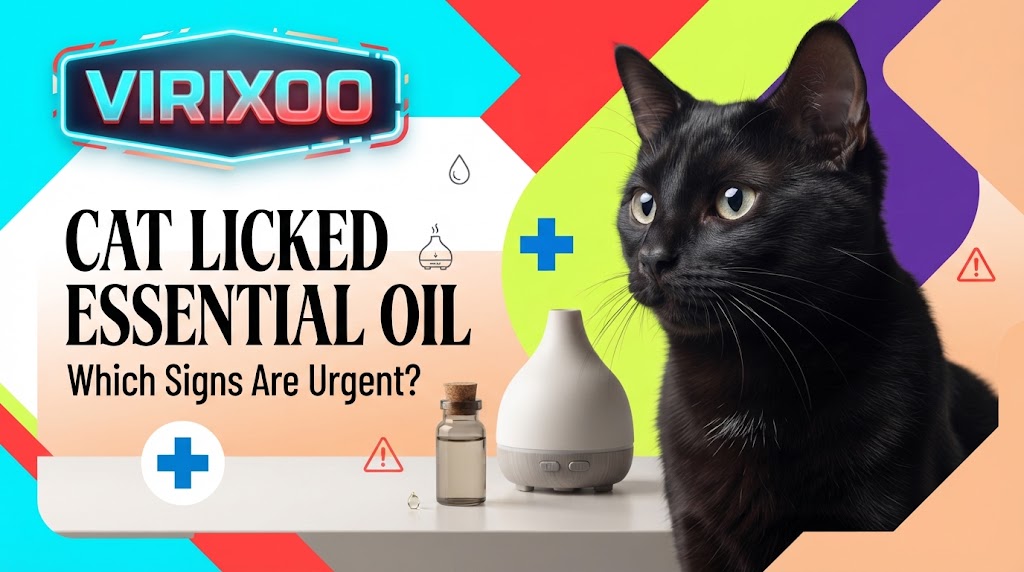
Concentrated essential oils can be dangerous to cats if swallowed, applied to the skin, or heavily inhaled. Cats have limited ability to metabolize some compounds found in essential oils, and risk depends on the oil, concentration, amount, route of exposure, and the cat’s health.
Quick Answer
If your cat licked concentrated essential oil, had oil spilled on the coat, or is showing drooling, vomiting, weakness, tremors, wobbliness, breathing changes, or unusual behavior after exposure, contact a veterinarian or animal poison service promptly. Do not induce vomiting or give home remedies.
Why Concentration Matters
A tiny amount of fragrance dispersed in a large room is not the same exposure as licking concentrated oil from a bottle. Undiluted products placed directly on the coat or paws can also be swallowed during grooming.
Common Exposure Routes
- Licking a spilled oil
- Walking through oil and grooming the paws
- Direct application to the skin
- Chewing a diffuser wick
- Heavy exposure in a poorly ventilated room
Possible Signs
Drooling, vomiting, lethargy, wobbliness, tremors, weakness, low body temperature, breathing difficulty, and changes in behavior can occur depending on the product and dose.
Diffusers and Inhalation
Strong fragrance and aerosolized droplets can irritate the respiratory tract. Cats with asthma or other respiratory disease may be more sensitive. If a cat coughs, wheezes, or breathes abnormally around a diffuser, move the cat to fresh air and contact a veterinarian.
Oil on the Fur or Skin
Prevent grooming and call for guidance. Some oils may need to be removed from the coat, but the safest method depends on the product and the cat’s condition. Avoid using solvents or harsh cleaners.
Why the Bottle Label Matters
Essential-oil blends may contain multiple ingredients. Take a clear photo of the label and note the approximate amount, time of exposure, and whether the cat swallowed the oil or only contacted it.
What Not to Do
- Do not induce vomiting.
- Do not give milk, oil, or activated charcoal without professional advice.
- Do not apply more essential oil as a remedy.
- Do not force-bathe a weak or trembling cat without veterinary guidance.
What Veterinary Treatment May Include
Treatment is supportive and depends on the exposure. The veterinarian may address vomiting, dehydration, neurologic signs, respiratory irritation, or temperature abnormalities and may recommend monitoring of organ function when appropriate.
Safer Home Practice
Store essential oils securely, avoid applying them directly to cats unless specifically prescribed by a veterinarian, and use diffusers only with excellent ventilation and a way for the cat to leave the room.
Bottom Line
Essential-oil exposure should be taken seriously because concentrated products can be toxic to cats. Product identification and rapid veterinary or poison-control guidance are more useful than guessing from the scent or waiting for symptoms.
Why Tea Tree and Other Concentrated Oils Draw Attention
Some oils are repeatedly associated with feline toxicity when concentrated or applied directly. The safest rule is not to assume that “natural” means safe. Product concentration and route of exposure are critical.
Why Liver Function May Be Monitored
Some compounds in essential oils are metabolized by the liver. Depending on the exposure and symptoms, the veterinary team may recommend blood testing to monitor organ function.
What to Record
Write down the product, concentration, ingredients, amount missing, time of exposure, and whether the cat licked, inhaled, or had skin contact. This information helps poison professionals assess risk more accurately.
What to Record Before You Call
For cat licked essential oil, write down the exact time the problem or exposure began, what you saw, and whether the cat is getting better, worse, or staying the same. Record appetite, drinking, urination, stool, vomiting, breathing, movement, awareness, and any unusual behavior. For poisoning or foreign-body concerns, keep the product package, plant photo, object description, or medication label available.
Do not delay urgent care to collect perfect information. When a cat is weak, collapsing, struggling to breathe, seizing, repeatedly vomiting, unable to urinate, or rapidly deteriorating, transport takes priority over documentation.
How to Decide Whether Monitoring Is Still Safe
Monitoring is only reasonable when the cat is comfortable, the exposure or behavior has been professionally judged low-risk, and no red flags are present. A cat that becomes quieter may not simply be resting; it may be becoming weaker. Look at the whole cat rather than one visible sign.
If new pain, breathing changes, neurologic signs, food refusal, repeated vomiting, or abnormal urination develops, contact the veterinarian again even if the original sign appears slightly improved.
Common Mistakes to Avoid
- Waiting for severe symptoms after a known high-risk exposure.
- Giving a home remedy before identifying the substance or object.
- Using medication prescribed for another pet.
- Forcing food, water, or handling when the cat is distressed.
- Assuming that normal walking or eating rules out a serious problem.
What Follow-Up Should Focus On
After treatment or professional advice, track whether the cat returns toward its normal baseline. Appetite, grooming, breathing, movement, litter-box habits, and interaction should all be considered. Follow recheck recommendations even when the visible problem seems better, because some toxicities and internal injuries can evolve after the first examination.
Why Early Advice Often Changes the Outcome
Many feline emergencies are easier to treat before severe symptoms develop. Early veterinary or poison-control guidance can determine whether decontamination, imaging, observation, or immediate treatment is appropriate. Waiting until the cat is obviously ill can remove safer or less invasive options.
When in doubt, describe the exact exposure or behavior, the timeline, and the cat’s current condition rather than trying to diagnose the problem yourself.
Why “Natural” Does Not Mean Harmless
Essential oils are concentrated plant compounds. Their natural origin does not guarantee safety, especially when applied directly to skin or swallowed. Cats metabolize some aromatic compounds less efficiently than people and dogs.
Why Diffuser Type Matters
Passive diffusers mainly release fragrance, while some active diffusers can disperse tiny droplets into the air. Droplets can settle on fur and later be swallowed during grooming. Good ventilation and the cat’s ability to leave the room are important.
Respiratory Disease Increases Concern
Cats with asthma or chronic airway disease may react more strongly to airborne irritants. Coughing, wheezing, open-mouth breathing, or obvious increased effort after fragrance exposure requires prompt veterinary attention.
How to Store Oils Safely
Keep bottles upright in closed cabinets, wipe spills immediately, and do not leave diffuser reservoirs where cats can knock them over. Avoid storing oils beside food or medication where accidental mix-ups can occur.
What Improvement Should Look Like
For cat licked essential oil, improvement means the cat is returning toward its normal baseline rather than showing only one isolated change. Appetite, grooming, movement, breathing, litter-box habits, awareness, and social behavior should all be considered. If the original sign looks better but the cat becomes weaker, more withdrawn, painful, or unable to perform a normal function, the overall situation is not improving.
Follow any veterinary instructions exactly and complete recommended rechecks. Do not add supplements, human medication, or home remedies unless the veterinary team specifically approves them.
Why Skin Exposure Can Turn Into Oral Exposure
Cats groom frequently, so oil placed on a paw, chest, or back can be swallowed later. This makes topical exposure more important than it might appear. Prevent grooming until you receive decontamination advice.
When Repeated Low-Level Exposure Matters
Repeated use of strong diffusers or concentrated oils in small poorly ventilated spaces may create ongoing irritation or exposure. If a cat repeatedly coughs, avoids a room, drools, or acts abnormal around fragrance products, stop exposure and discuss the pattern with a veterinarian.
When to Call Again After Initial Advice
For cat licked essential oil, call the veterinary team again if the cat develops a new symptom, the original sign becomes more frequent or severe, or basic functions change. Important changes include repeated vomiting, food refusal, weakness, abnormal breathing, inability to urinate, severe pain, tremors, seizures, or collapse.
Describe what changed and when it changed. A clear timeline helps the clinic decide whether home monitoring is still appropriate or whether the cat should be examined sooner.
What Makes an Exposure More Concerning
Undiluted oil, larger amounts, direct skin application, oral ingestion, prolonged exposure in a confined space, and existing respiratory or liver disease can all increase concern. Give the veterinary team the exact product rather than only the common name of the oil.
Final Safety Check
Before deciding to continue home observation, confirm that the cat is breathing comfortably, walking normally, responsive, and able to eat, drink, urinate, and use the litter box. A change in any of these basic functions can be more important than the original symptom itself. When the situation is time-sensitive or the exposure is known to be high-risk, professional advice should take priority over waiting for visible deterioration.