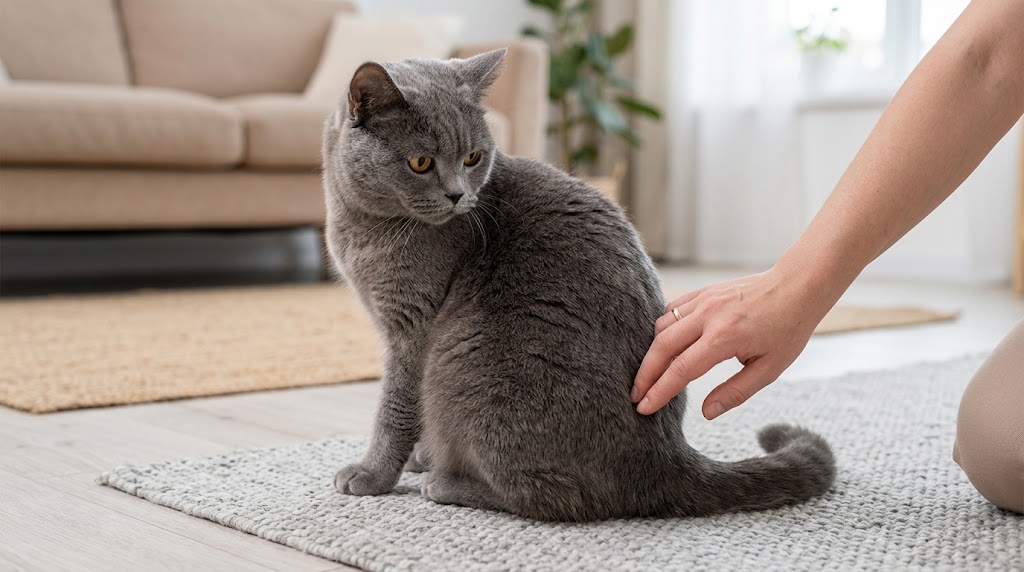

If your cat suddenly flinches, cries, turns to bite, or moves away when the tail-base area is touched, treat the response as possible pain or irritation. Fleas, skin disease, a bite wound, muscle or spinal pain, arthritis, and direct tail injury can all make this region sensitive.
Quick Answer
Stop repeatedly touching the area. Look for flea dirt, scabs, swelling, hair loss, wounds, or a change in tail movement. Watch the cat walk, jump, groom, urinate, and defecate. Persistent new sensitivity deserves veterinary evaluation. Seek prompt or urgent care after a tail pull, door injury, or fall, especially if the tail becomes limp, the hind legs weaken, or bladder control changes.
Fleas Often Target the Tail Base
The lower back and tail base are classic areas for flea-related itching. A sensitive cat may lick, chew, ripple the skin, or suddenly react when touched there. Flea dirt can appear as black specks in the coat.
If the cat is also losing hair, see Why Is My Cat Losing Hair?.
A Hidden Bite or Abscess
Bite wounds can be tiny and easy to miss. Infection may build beneath the skin, causing warmth, swelling, pain, fever, or reduced appetite. Cats that go outdoors or recently fought with another animal are at higher risk.
Lower-Back and Pelvic Pain
Arthritis, muscle strain, or spinal pain can make the tail-base area feel tender even when the skin looks normal. Cats may jump less, walk stiffly after rest, avoid stairs, or groom the lower back less.
If pain extends farther forward over the lower back, see Why Does My Cat Cry When I Touch Its Lower Back?.
Tail Injury and Nerve Damage
The nerves around the tail base are important for tail movement and can also affect bladder and bowel control. A tail-pull injury can occur if the tail is caught, stepped on, or pulled during trauma. A suddenly limp tail, inability to urinate, urine leakage, or hind-limb weakness changes the urgency.
The related guide Cat’s Tail Suddenly Limp explains these warning signs in more detail.
Skin Twitching Is Not Always a Diagnosis
Some cats ripple the skin normally when touched. Strong repeated twitching with distress can occur with fleas, pain, skin disease, or other causes. Do not assume a specific neurologic syndrome before simpler painful and dermatologic problems are ruled out.
What to Observe
- Tail position and movement.
- Hair loss, scabs, flea dirt, redness, swelling, or discharge.
- Whether the cat licks or bites the area.
- Jumping and stair use.
- Urination and stool habits.
- Recent fights, falls, or tail accidents.
What Not to Do
- Do not lift or bend a painful tail repeatedly.
- Do not squeeze a swelling.
- Do not apply essential oils or human creams.
- Do not give human pain medication.
When to Seek Care
| Finding | Response |
|---|---|
| Mild sensitivity with obvious flea irritation, otherwise normal | Arrange parasite control and monitor |
| Persistent pain, grooming change, stiffness | Veterinary appointment |
| Swelling, pus, fever, bite wound, marked pain | Prompt care |
| Limp tail after trauma, inability to urinate, hind-limb weakness | Urgent or emergency care |
Bottom Line
Tail-base sensitivity can come from the skin, soft tissues, spine, pelvis, or tail nerves. The safest approach is to stop provoking the reaction, inspect visually, and watch movement and bladder function. Trauma-related tail or neurologic changes should never be dismissed as simple sensitivity.