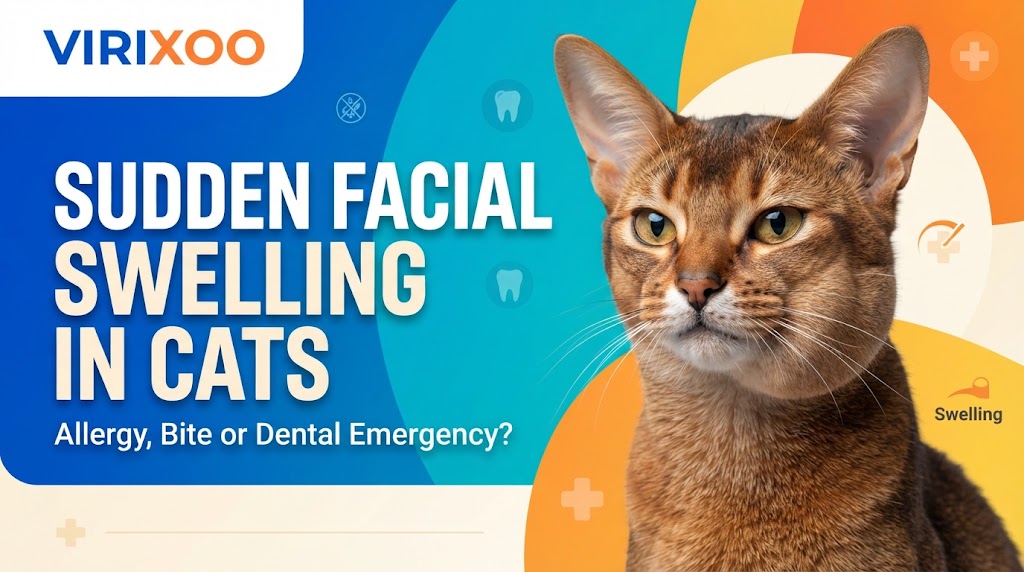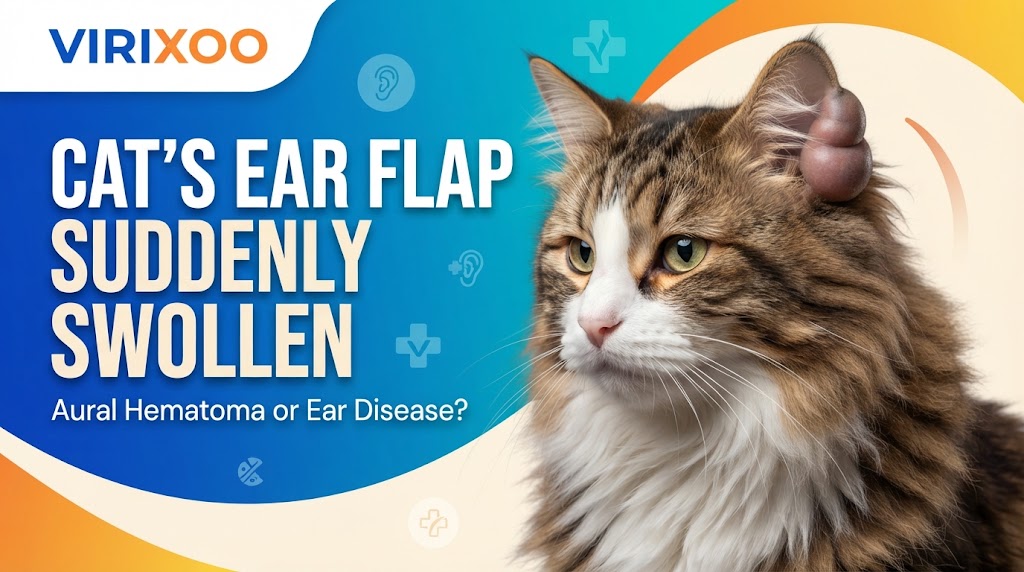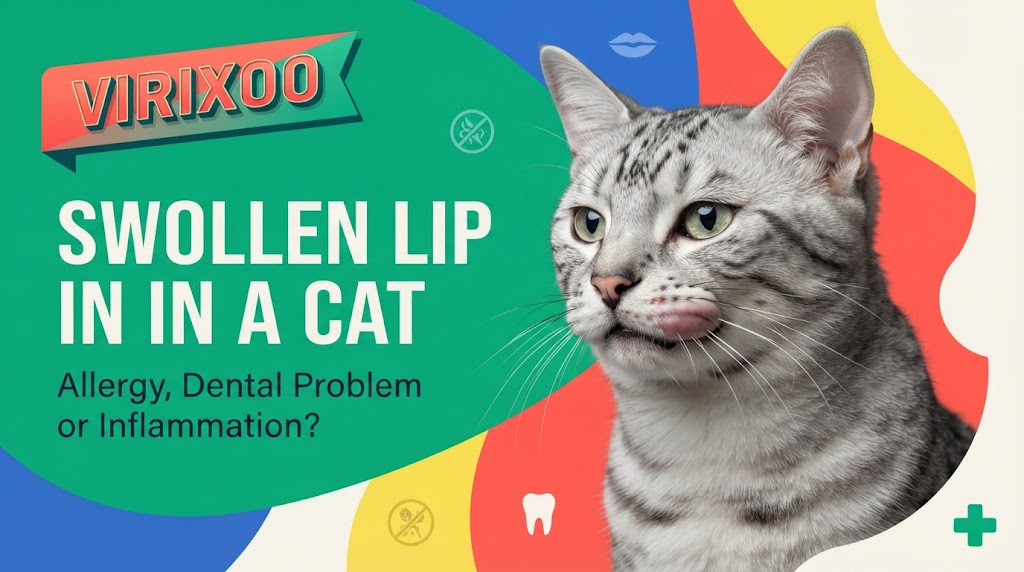
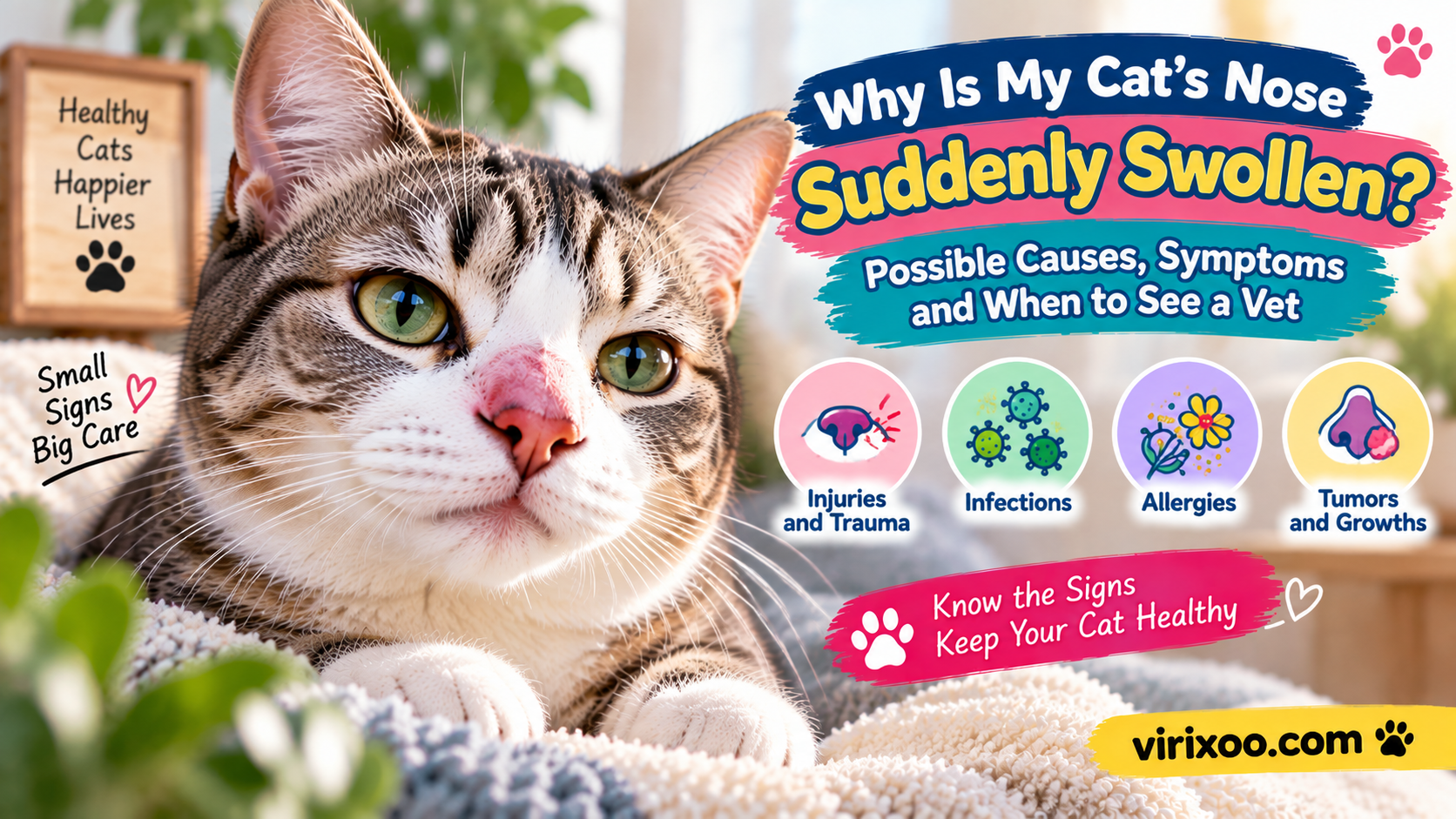
A cat’s nose or muzzle that suddenly looks swollen deserves attention because the cause can range from a minor local reaction to infection, trauma, dental disease, or a problem inside the nasal cavity. The first question is not “what is the lump?” but “is the cat breathing normally?” Any swelling that interferes with airflow, progresses rapidly, or occurs with collapse or severe distress needs emergency care.
Start by Describing the Swelling Precisely
Notice whether the change is on the bridge of the nose, around one nostril, on the muzzle, under an eye, or across the whole face. Compare both sides. Is the area soft, firm, warm, painful, itchy, crusted, or ulcerated? Is there nasal discharge, and if so, is it from one nostril or both? This information helps separate superficial skin problems from deeper nasal or dental disease.
Trauma and Local Injury
Cats can bump the face, fall, get scratched, or be bitten without an owner witnessing the event. Trauma may cause tenderness, bruising, bleeding from the nose, swelling, or reluctance to eat if the mouth is also painful. Significant facial trauma, difficulty breathing, persistent bleeding, or an abnormal jaw position should be assessed urgently.
Insect Stings and Acute Reactions
A sting or bite can cause localized facial swelling. Mild swelling may stay confined to one spot, but rapidly expanding facial swelling, vomiting, weakness, breathing difficulty, or collapse can indicate a serious allergic reaction. Do not give human antihistamines or other medication unless a veterinarian has provided the exact product and dose for your cat.
Infection or Abscess
Cat bites and puncture wounds can seal over while bacteria remain trapped under the skin. An abscess may become warm, painful, soft, or eventually drain. Swelling near the nose can also be associated with dental infection or disease involving nearby tissues. Antibiotics alone are not always enough if pus or damaged tissue needs to be addressed.
Dental Disease Can Appear as Facial Swelling
Roots of upper teeth lie close to facial structures. A tooth-root problem can sometimes create swelling on the face rather than an obvious problem inside the mouth. Clues include bad breath, reluctance to chew, dropping food, pawing at the mouth, or tenderness when the face is touched. A proper oral examination and dental imaging may be needed.
Nasal Disease and Fungal Infection
Some diseases originate inside the nasal cavity. Cornell notes that feline cryptococcosis commonly starts in the nasal region and can cause chronic discharge, sneezing, noisy breathing, swelling of the nose or face, nonhealing lesions, or visible masses. Cryptococcosis is only one possible cause, but it illustrates why persistent swelling should not be treated as a simple surface bump without examination.
What About Tumors?
Growths are less likely to explain a swelling that appeared within minutes, but a slowly enlarging, firm, persistent, or ulcerated nasal mass needs investigation. A veterinarian may recommend imaging or sampling depending on its location and appearance. Owners cannot reliably distinguish inflammation, infection, cysts, and tumors by touch alone.
When the Pattern Suggests Higher Urgency
| Pattern | Recommended response |
|---|---|
| Rapidly expanding facial swelling with breathing trouble | Emergency care. |
| Swelling after significant trauma or with heavy nosebleed | Urgent veterinary assessment. |
| Painful swelling, fever, reduced appetite, or drainage | Prompt appointment for possible infection or abscess. |
| Persistent one-sided swelling with chronic nasal discharge | Veterinary examination; deeper nasal disease should be considered. |
| Small swelling that quickly resolves and cat remains completely normal | Continue close observation, but seek advice if it returns or enlarges. |
Safe Home Observation
Take a photo from the front and from above so you can compare size over time. Note appetite, breathing sounds, sneezing, discharge, pawing at the face, and whether the cat can comfortably close the mouth. Do not squeeze or puncture the swelling. A painful abscess can rupture unpredictably, and squeezing a mass provides little diagnostic value.
What the Veterinarian May Need to Check
Depending on location, the veterinarian may examine the mouth and teeth, inspect the nostrils and skin, palpate the face, check lymph nodes, and recommend dental radiographs, skull imaging, cytology, culture, fungal testing, or biopsy. The workup is guided by whether the problem looks superficial, dental, nasal, inflammatory, infectious, or mass-like.
One-Sided Nasal Discharge Is a Useful Detail
When swelling is accompanied by discharge from only one nostril, tell the veterinarian. One-sided signs can occur with a localized nasal problem, dental disease, foreign material, fungal disease, or a mass, whereas bilateral discharge is more common in some diffuse respiratory conditions. This is not a rule that diagnoses the cause, but it helps guide the examination and possible imaging.
Why Appetite May Fall Even When the Mouth Is Not Painful
Cats rely heavily on smell when eating. Nasal disease that blocks airflow or creates chronic discharge can reduce interest in food simply because the cat cannot smell normally. Pain, fever, or dental involvement can further reduce appetite. A cat with facial swelling that stops eating deserves prompt veterinary attention because cats can become medically compromised when food intake remains poor.
Do Not Confuse Swelling With Normal Facial Shape
Flat-faced breeds can have naturally broad nasal contours, and some cats have mild lifelong asymmetry after old injuries. The concern is a change from the individual cat’s baseline. Compare recent photographs if available. A new bulge, altered nostril shape, or progressive distortion carries more weight than a feature that has looked the same for years.
What Improvement Should Look Like
With a resolving local reaction, swelling should become smaller, breathing should remain quiet, appetite should be normal, and pain should decrease. A mass that remains the same size or enlarges despite time, or swelling that returns after temporary improvement, needs reassessment. Do not continue repeating empirical home treatments when the pattern is persistent.
Swelling Under the Eye May Point Toward the Mouth
Owners often assume every facial swelling is nasal. Swelling directly under an eye can sometimes originate from an upper tooth or surrounding tissues. If the cat also has bad breath, prefers soft food, chews on one side, or drops food, mention those oral clues. Dental radiographs may reveal disease that is not visible during a quick look at the mouth.
Why Chronic Sneezing Changes the Workup
A nose that has been gradually enlarging alongside weeks of sneezing or discharge is different from a face that swelled in one hour. Chronic signs make structural nasal disease, fungal infection, chronic inflammation, or a mass more relevant. The veterinarian may recommend imaging or sampling rather than treating repeated episodes empirically.
Keep the Cat From Rubbing the Swollen Area
Pawing and rubbing can create secondary skin damage, especially when the swelling is itchy or painful. Keep nails trimmed only if the cat tolerates normal nail care; do not attempt trimming during a painful episode. If self-trauma is significant, ask the clinic whether a protective collar is appropriate before the visit.
Bottom Line
A swollen nose in a cat is a visible sign with many possible causes. Rapid swelling plus breathing difficulty is an emergency. Painful, persistent, one-sided, draining, or chronically progressive swelling should be examined rather than treated at home. Photos and a clear timeline can help your veterinarian understand how quickly the change developed.