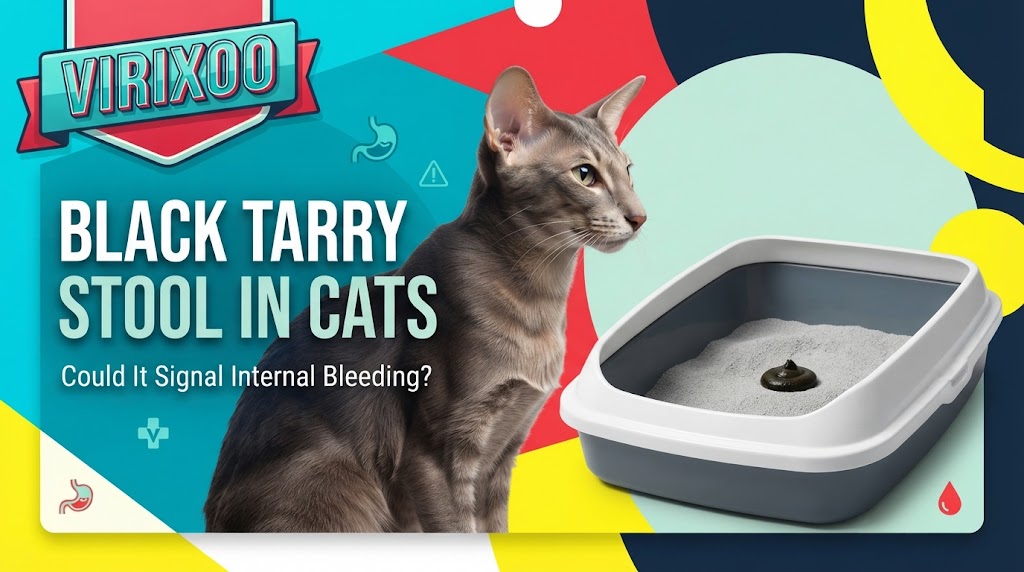
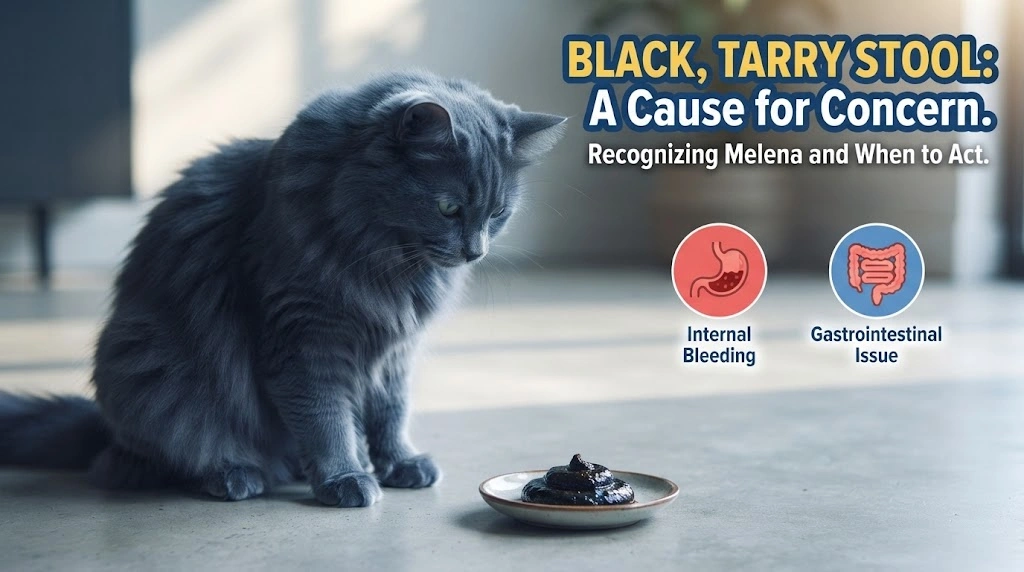
Black, sticky, tar-like stool can be a sign of digested blood and deserves veterinary attention. This appearance is called melena. It usually develops when blood enters the stomach or upper small intestine and is altered during digestion before it reaches the litter box. Not every dark stool is melena, but truly black, shiny, sticky, unusually foul stool should not be ignored.
How Melena Differs From Ordinary Dark Stool
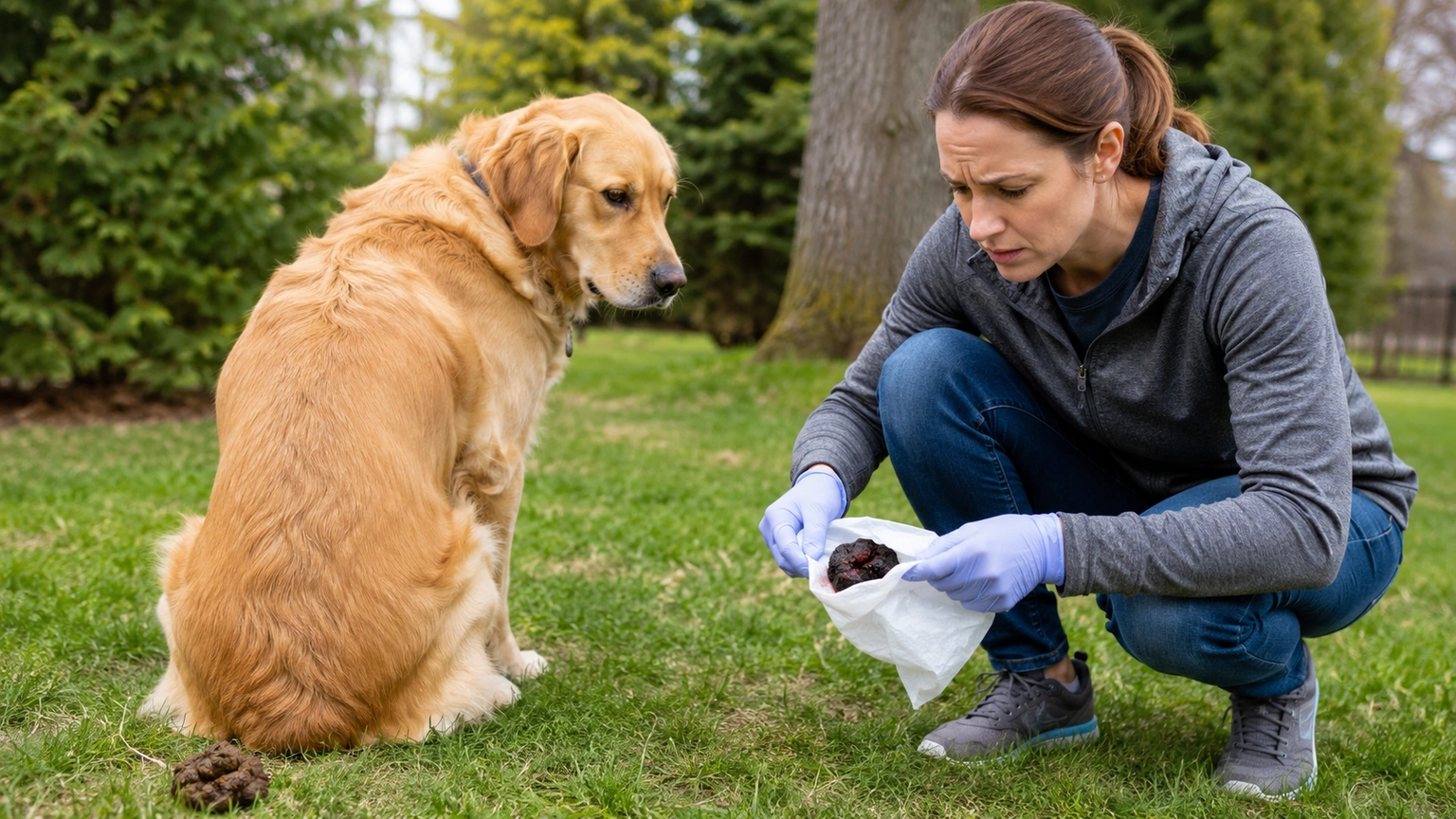
Normal stool can vary from medium to dark brown depending on diet. Melena is typically described as jet-black, tarry, shiny, or sticky rather than simply “dark.” It may smear differently from normal formed feces and can have a strong odor. A photograph in normal lighting can help your veterinarian judge the description.
Where the Blood May Be Coming From
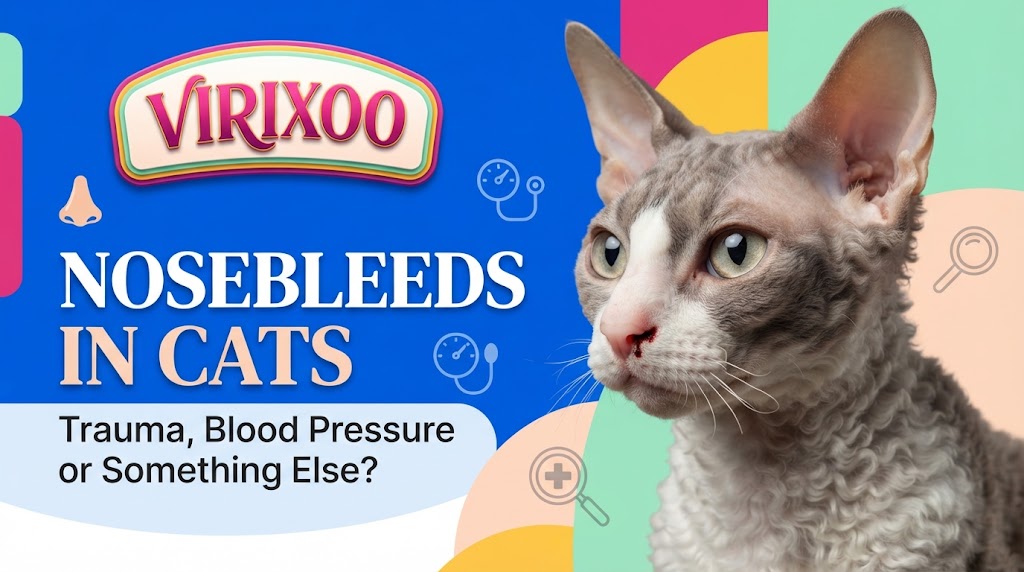
Because the blood is digested, melena often points toward bleeding in the stomach or upper intestinal tract. Ulcers, severe inflammation, foreign material, tumors, clotting disorders, and certain medications are among the possible causes. Swallowed blood from significant oral or nasal bleeding can also darken stool.
Medication History Matters
Some human pain relievers can cause life-threatening toxicity and gastrointestinal injury in cats. Never give aspirin, ibuprofen, naproxen, or other over-the-counter pain medication unless a veterinarian has specifically instructed you to use an exact product and dose. If your cat may have swallowed medication, tell the veterinarian immediately.
Look for Signs of Blood Loss
Significant bleeding can cause pale gums, weakness, rapid breathing, fast heart rate, lethargy, collapse, or reduced appetite. These signs make the situation more urgent. Pale gums are particularly concerning when they are new and occur with black stool.
Vomiting Changes the Picture
Vomiting blood can appear bright red or resemble coffee grounds after partial digestion. Black stool plus bloody vomit, repeated vomiting, abdominal pain, or severe weakness warrants urgent veterinary care.
Could Food or Supplements Make Stool Dark?
Diet can alter stool color, and some substances can make feces look unusually dark. That is why color alone is not enough to diagnose bleeding. The tarry texture, stickiness, associated illness, and repeated appearance matter. Do not use diet as an explanation when the stool is genuinely black and the cat is unwell.
What to Bring to the Appointment
If possible, bring a fresh stool sample in a sealed container and take clear photos. Provide a complete medication and supplement list, including anything the cat could have accessed accidentally. Mention recent vomiting, diarrhea, appetite loss, weight loss, nosebleeds, mouth bleeding, trauma, and any known toxin exposure.
What the Veterinarian May Test
The veterinarian may check gum color, hydration, heart rate, abdominal comfort, and rectal or fecal appearance. Blood tests can assess anemia, platelet numbers, organ function, and other clues. Depending on the case, fecal tests, coagulation testing, radiographs, ultrasound, or endoscopy may be recommended.
Why Home Treatment Is Risky
Do not give human antacids, bismuth products, iron, pain relievers, or “stomach protectants” without veterinary guidance. Some products can be unsafe for cats, alter stool color, interact with other medications, or mask important signs while bleeding continues.
When Black Stool Is an Emergency
Seek urgent or emergency care when black tarry stool occurs with pale gums, weakness, collapse, repeated vomiting, abdominal pain, rapid breathing, known toxin or medication exposure, or obvious blood loss. A cat that appears stable still deserves timely veterinary assessment if melena is suspected.
Iron Supplements and Bismuth Can Confuse the Picture
Some substances can darken stool without gastrointestinal bleeding. Iron-containing products and bismuth compounds are examples. However, owners should never use that possibility to dismiss a truly tarry stool in an ill cat. Tell the veterinarian about every supplement and medication because these products can alter stool appearance and affect interpretation.
Why Gum Color Is a Useful Home Observation
Healthy gums are usually pink, though pigmentation varies among cats. If normally pink gums become very pale or nearly white, especially with weakness or black stool, blood loss or anemia becomes more concerning. Do not repeatedly press or manipulate the gums; a quick look in good light is enough.
One Black Stool vs. Repeated Melena
A single questionable dark stool may be difficult to interpret, especially after a diet change. Repeated black tarry stools are more concerning and provide a stronger pattern. Photograph each abnormal stool if possible and note the time, appetite, vomiting, and medications taken that day.
Upper Gastrointestinal Bleeding Can Be Intermittent
Bleeding may stop and restart, so a normal stool after one black stool does not always prove the problem is over. If the cat has risk factors, recurrent vomiting, abdominal pain, anemia, or exposure to ulcer-causing medication, the veterinarian may still recommend testing.
Why Bloodwork May Need to Be Repeated
Early blood loss may not always produce dramatic anemia on the first test, depending on timing and hydration. If melena continues or the cat’s condition changes, repeat testing can be important. Follow the veterinarian’s recheck plan even if the first laboratory results were only mildly abnormal.
Why Gastrointestinal Bleeding Needs a Cause, Not Just a Symptom Treatment
Melena tells the veterinarian that blood may have been digested somewhere before reaching the colon, but it does not reveal why bleeding occurred. Ulceration, severe inflammation, foreign material, clotting disorders, tumors, swallowed blood, and medication toxicity are among the possibilities. Treatment therefore depends on identifying the source and the cat’s stability.
Blood tests may evaluate red-cell count, protein levels, platelets, kidney and liver values, and other markers. Imaging can look for foreign bodies, masses, or intestinal abnormalities. Endoscopy may be considered when stomach or upper intestinal lesions are suspected. In a severely anemic or unstable cat, stabilization can take priority over definitive diagnostics.
Owners can help by bringing the exact names of all medications, including supplements and products given only occasionally. Human pain relievers are especially important to disclose because some can be highly toxic to cats. Never withhold exposure information out of concern about being judged; accurate history can change treatment immediately.
Bottom Line
True black tarry stool can indicate digested blood from gastrointestinal bleeding. Take a photo, save a sample if practical, review medication and toxin exposure, and contact a veterinarian. Do not assume the color is dietary if the texture is tar-like or the cat is showing other signs of illness.