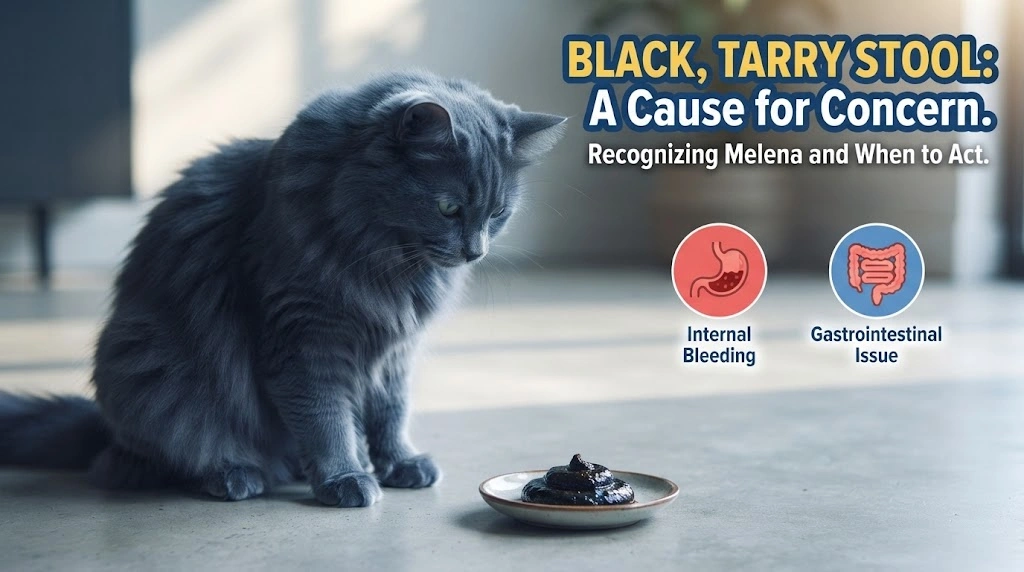
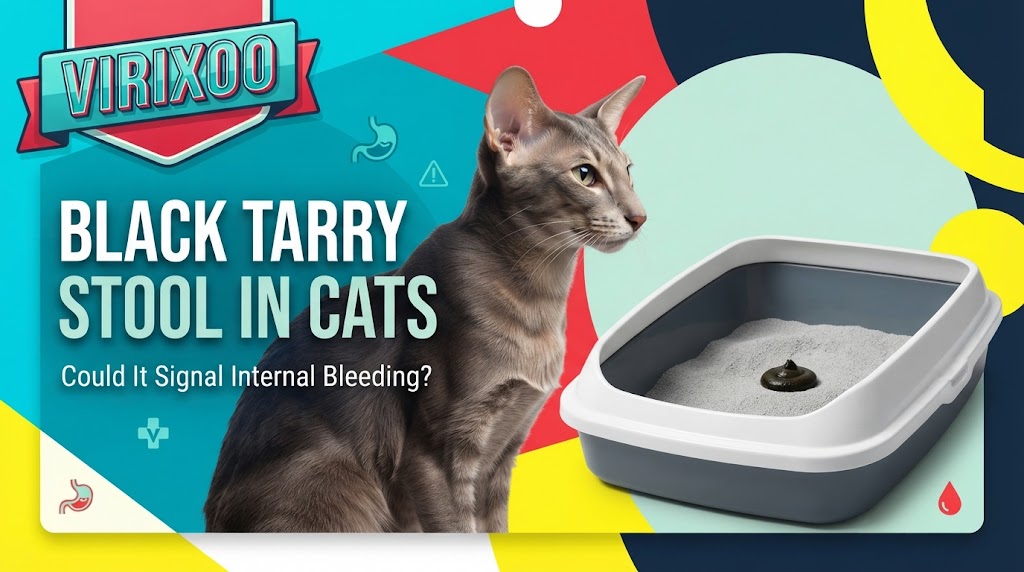
Black, sticky, tar-like stool can represent melena, which is digested blood from the upper gastrointestinal tract. It is different from naturally dark brown stool. Melena often looks shiny, very dark, and unusually sticky and may have a strong odor.
Quick Answer
If your cat produces truly black tar-like stool, contact a veterinarian. Seek urgent care if it occurs with weakness, pale gums, repeated vomiting, collapse, abdominal pain, or known toxin or medication exposure.
Why Blood Turns Black
Blood from the stomach or small intestine can be partially digested as it travels through the gastrointestinal tract. This changes the color and texture, creating the classic dark tar appearance.
Possible Causes
Stomach or intestinal ulcers, severe inflammation, tumors, swallowed blood, clotting disorders, certain toxins, trauma, and some medications can lead to gastrointestinal bleeding. The stool appearance alone cannot identify the cause.
Could Diet Make Stool Dark?
Some foods, supplements, or ingested materials can darken stool. The key is the combination of jet-black color, sticky tar-like texture, and other illness signs. If uncertain, take a photo and contact the veterinarian rather than assuming it is food-related.
Signs of Blood Loss
| Sign | Why It Matters |
|---|---|
| Pale gums | Possible anemia or blood loss |
| Weakness | May indicate significant illness |
| Rapid breathing | Can occur with anemia |
| Vomiting blood or coffee-ground material | Urgent gastrointestinal bleeding |
| Collapse | Emergency |
Medication History Matters
Tell the veterinarian about all medications, supplements, and possible toxin exposures. Do not give human anti-inflammatory drugs to cats; many are dangerous and can contribute to serious gastrointestinal or kidney injury.
What to Bring
A fresh stool sample or clear photo can help. Note how many times the abnormal stool occurred and whether appetite, vomiting, behavior, or gum color changed.
What Not to Do
- Do not give Pepto-Bismol or other human stomach medications without veterinary direction.
- Do not assume black stool is harmless if the cat is weak.
- Do not delay care when pale gums or collapse are present.
What the Veterinarian May Check
Evaluation may include a complete blood count, chemistry panel, clotting tests, fecal testing, imaging, and other diagnostics depending on the cat’s age and history.
Bottom Line
True black tarry stool is a warning sign because it can indicate digested blood. Veterinary assessment is appropriate, and weakness, pale gums, collapse, repeated vomiting, or obvious blood loss increases urgency.
Swallowed Blood Can Also Darken Stool
A cat that swallowed blood from a nosebleed or oral injury can sometimes produce dark stool. That does not automatically make the situation harmless; the original bleeding source still matters.
Why Repeated Episodes Matter
One suspicious stool should be documented, but repeated black tarry stools increase concern for ongoing gastrointestinal bleeding. Track stool color, appetite, vomiting, gum color, and energy while arranging veterinary care.
What to Record Before the Appointment
For black tarry stool in cats, write down when the sign first appeared, whether onset was sudden or gradual, and whether it is getting better, worse, or staying the same. Record appetite, water intake, urination, stool, grooming, sleep, breathing, activity, and behavior. Include recent trauma, fights, outdoor access, medication changes, toxin exposure, vomiting, diarrhea, or weight loss when relevant.
If the problem is intermittent, a short natural photo or video can be useful. Do not provoke pain, force movement, manipulate an injured area, or delay urgent care just to document the sign.
How to Decide Whether Monitoring Is Still Reasonable
Monitoring is only reasonable when the cat is comfortable, the sign is mild, there is a plausible non-urgent explanation, and no red flags are present. If the cat becomes weaker, stops eating, breathes abnormally, develops severe pain, cannot urinate, collapses, or the sign rapidly worsens, the situation has changed and needs prompt veterinary reassessment.
How to Distinguish Dark Brown From True Tarry Stool
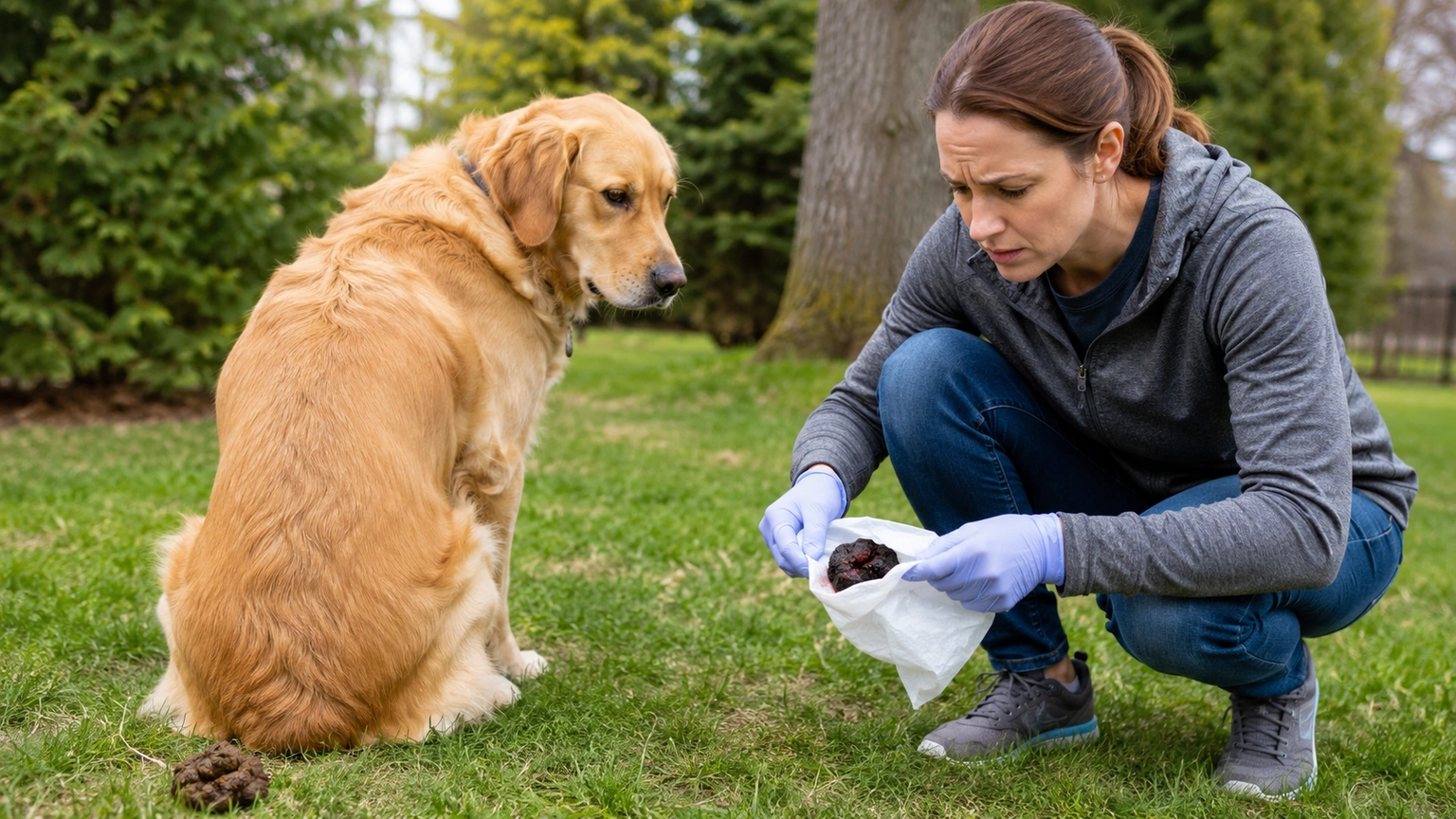
Normal stool can vary from medium to very dark brown. Melena is typically black, shiny, sticky, and may smear like tar. Lighting can be misleading, so a clear photo in natural light or a fresh sample can help the veterinarian interpret what you saw.
Why Gum Color Should Be Checked
Ongoing gastrointestinal bleeding can cause anemia. If the cat is calm, gently lift the lip and compare gum color with normal. Very pale gums, weakness, or rapid breathing increase urgency. Do not rely on one normal-looking gum check to rule out blood loss.
Ulcers and Gastrointestinal Inflammation
Ulceration of the stomach or upper intestine can cause melena. Severe inflammatory disease, certain medications, toxins, and systemic illness may contribute. Treatment depends on the cause rather than on stool color alone.
When Vomit Provides Another Clue
Vomiting fresh blood or dark material that resembles coffee grounds can also indicate upper gastrointestinal bleeding. This combination with black stool is more concerning and deserves prompt evaluation.
Why One Normal Stool Afterward Does Not Always End the Concern
Bleeding can be intermittent. If the cat had a convincing tar-like stool and is also weak, vomiting, or pale, a later normal bowel movement does not erase the earlier warning sign.
What Follow-Up May Involve
The veterinarian may monitor red blood cell values, hydration, stool appearance, and response to treatment. Return promptly if black stool recurs or the cat becomes weaker.
A Practical Decision Guide
When evaluating black tarry stool in cats, start with the cat’s overall function. A cat that can breathe comfortably, walk normally, eat, drink, urinate, and respond to the environment is different from one that is weak, painful, hiding, confused, or unable to perform a normal function. Next consider speed: a change that developed over minutes or hours generally deserves more urgency than a stable finding that has been unchanged for months.
Combinations of signs matter. Pain plus food refusal, weakness plus pale gums, swelling plus breathing difficulty, or neurologic change plus collapse are more concerning than one mild isolated feature. If you are uncertain, call the veterinary clinic and describe the cat’s current condition rather than only naming the symptom.
How to Keep the Cat Comfortable While Waiting
Use a quiet indoor room, minimize unnecessary handling, and keep food, water, and the litter box easy to reach. Prevent access to stairs or high furniture if mobility is abnormal. For suspected trauma, reduce activity. Do not force food, water, exercise, or handling when the cat is distressed.
What Follow-Up Should Focus On
After treatment begins, track whether the cat is returning toward its normal baseline. Improvement should include comfort, appetite, grooming, movement, and normal litter-box habits—not just a smaller swelling or less visible lesion. Contact the clinic if the original problem returns, new signs appear, or the cat worsens after initially improving.
Why Iron Supplements Are Not a Home Treatment
If melena has caused anemia, the priority is finding and stopping the bleeding. Giving iron without a diagnosis does not treat an ulcer, clotting problem, tumor, or toxin exposure and can complicate care. Supplements should only be used when a veterinarian confirms they are appropriate.
What If the Cat Is Still Eating?
Normal appetite does not rule out gastrointestinal bleeding. Some cats continue eating early in the course of disease. Pay attention to energy, gum color, breathing, vomiting, and repeated stool changes rather than using appetite as the only measure of severity.
Why a Timeline Helps
Record when the first black stool appeared, how many abnormal stools followed, whether vomiting occurred, and any recent medication or toxin exposure. This helps the veterinarian decide whether bleeding is ongoing and which tests should be prioritized.
When to Recheck Even After Initial Improvement
A cat can look better for a few hours while the underlying problem is still present. Recheck is appropriate when the sign returns, appetite falls, the cat hides more, breathing changes, mobility worsens, or new pain appears. Follow any scheduled veterinary recheck even if the visible sign seems smaller or less dramatic.
Keep treatment consistent and do not stop prescribed medication early unless the veterinarian tells you to. If a new symptom appears after treatment begins, report both the symptom and the timing relative to medication or feeding changes.
Why Dehydration Can Complicate the Picture
Vomiting, diarrhea, and gastrointestinal bleeding can all reduce hydration. A dehydrated cat may become weak and less interested in food, making it harder to judge whether blood loss or dehydration is driving the decline. Veterinary assessment can evaluate both problems at the same time.
Do not force large amounts of water into a nauseated cat, especially if vomiting is ongoing.
Continue monitoring the cat’s overall comfort, appetite, breathing, mobility, and litter-box habits while following veterinary advice. A worsening change in any basic function is more important than one isolated symptom appearing slightly better.
When Stool Changes Should Be Rechecked
If the stool returns to normal but weakness, pale gums, vomiting, or poor appetite continues, the cat still needs reassessment. The bleeding source may be intermittent, and one normal bowel movement does not prove the problem has resolved.
Keep the cat indoors, minimize stress, and continue to follow the veterinary plan. Repeated black stools, worsening lethargy, or new vomiting should be reported promptly.