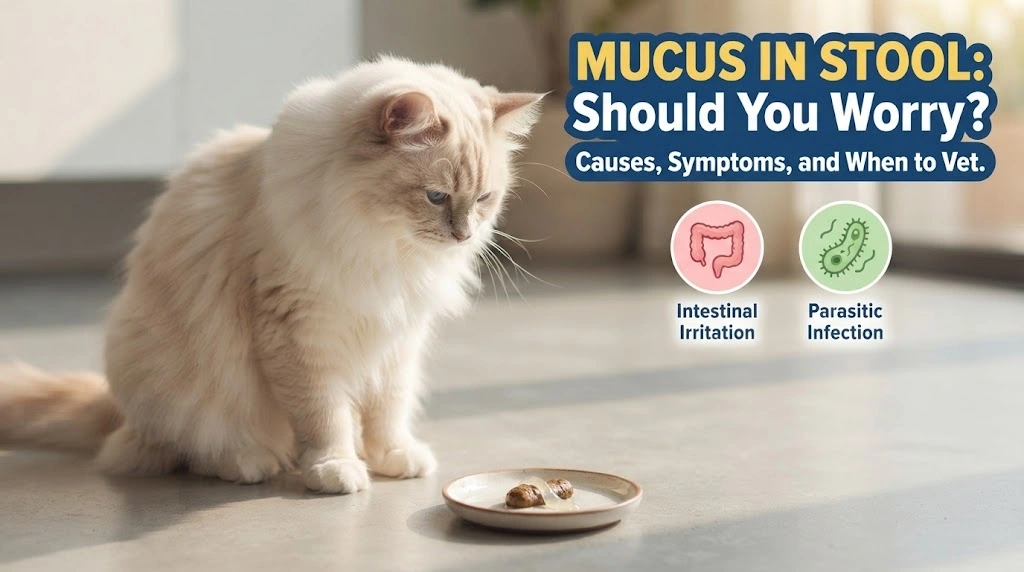
Mucus on a cat’s stool usually means the lower intestinal tract—especially the colon—is irritated. The colon normally produces mucus to lubricate stool, but visible jelly-like or slippery material can increase with inflammation. One isolated episode in a completely normal cat may settle, but repeated mucus deserves attention to the larger stool pattern.
What Mucus Looks Like
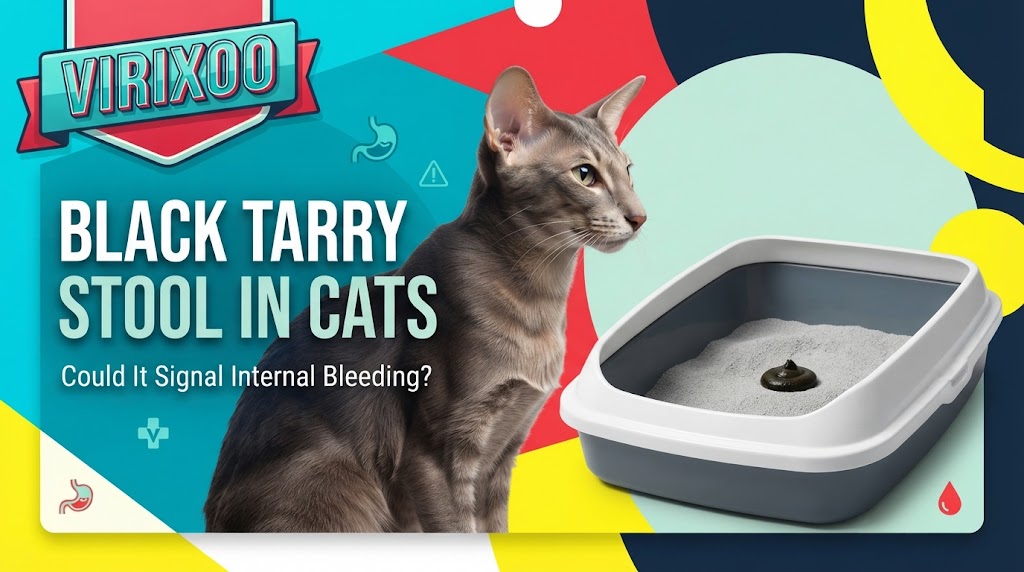
Owners often describe it as clear, white, yellowish, or jelly-like material coating the stool. It can appear on formed stool or with diarrhea. Fresh red blood may sometimes be mixed with mucus when the colon is irritated. This differs from black tarry stool, which suggests digested blood from farther up the digestive tract.
Why the Colon Produces More Mucus
When the large intestine is inflamed, mucus production increases and the cat may feel an urgent need to defecate. Large-bowel diarrhea often produces frequent small amounts of stool, straining, mucus, and sometimes bright red blood. The cat may visit the litter box repeatedly even when little stool is produced.
Diet Change and Food Intolerance
Abrupt diet changes can upset the gastrointestinal tract. Some cats also have adverse reactions to specific dietary ingredients. Avoid switching foods repeatedly every few days in response to mucus because constant changes can make the pattern harder to interpret. If a diet trial is recommended, it should be structured and long enough to be meaningful.
Parasites and Infectious Causes
Intestinal parasites and protozoa can contribute to mucus, diarrhea, and straining. Risk can be higher in kittens, recently adopted cats, multi-cat environments, and cats with outdoor exposure. A fecal sample may be needed because many parasites are not visible to the naked eye.
Stress Can Affect the Gut
Some cats develop gastrointestinal signs during stressful events such as moving, boarding, introduction of a new pet, or major routine disruption. Stress may contribute to colon inflammation, but it should not be assumed to be the only cause when mucus is persistent or accompanied by weight loss, vomiting, or illness.
Inflammatory and Chronic Intestinal Disease
Persistent mucus can occur with chronic inflammatory enteropathy and other gastrointestinal disorders. When signs last for weeks, recur frequently, or occur with weight loss, poor appetite, vomiting, or abnormal bloodwork, a veterinarian may recommend a more complete gastrointestinal investigation.
Why Straining Needs Careful Interpretation
Straining in the litter box is not always constipation. Cats with colitis may strain while passing frequent small soft stools. More importantly, urinary obstruction can also look like repeated unsuccessful litter-box visits. If you are unsure whether your cat is passing urine, treat the situation as urgent, particularly in a male cat.
What to Track for Several Days
- Number of bowel movements each day.
- Whether stool is formed, soft, or watery.
- Presence of mucus or bright red blood.
- Straining or urgency.
- Vomiting, appetite, and body weight.
- Any recent diet, medication, stress, or environment change.
When to Bring a Stool Sample
For recurring mucus or diarrhea, ask the clinic whether to bring a fresh fecal sample. Store it according to clinic instructions and label it with the collection time. Parasite testing, cytology, or other fecal diagnostics may be useful depending on the history.
When to Seek Care Promptly
Prompt veterinary care is appropriate when mucus persists, diarrhea is frequent, there is significant blood, the cat is vomiting, losing weight, dehydrated, painful, or not eating. Kittens, seniors, and cats with chronic disease can become compromised more quickly.
Bright Red Blood Can Accompany Mucus
Fresh blood on the outside of stool often points toward the colon, rectum, or anus rather than the upper gastrointestinal tract. Small streaks can occur with colitis or straining, but repeated blood should still be evaluated. Large-volume bleeding, weakness, or pale gums increases urgency.
Why Frequent Small Stools Point Toward the Colon
Large-bowel disease often creates urgency and frequent attempts to defecate, each producing only a small amount. Small-bowel diarrhea more often produces larger volumes with less straining. Owners do not need to classify the diarrhea perfectly, but counting litter-box visits and estimating stool volume can help the veterinarian localize the problem.
Diet Trials Should Be Controlled
If food sensitivity is suspected, a veterinarian may recommend a hydrolyzed or novel-protein diet trial. The trial only provides useful information if the cat eats the selected diet consistently and does not receive unapproved treats or flavored medications. Randomly changing among several foods is less informative.
Multi-Cat Homes Need Individual Monitoring
When several cats share litter boxes, it can be difficult to know which cat produced the abnormal stool. Temporary separation with a dedicated box may be necessary to identify the affected cat. This is especially important if one cat is losing weight or acting ill.
When Chronic Mucus Needs More Than Fecal Testing
If basic fecal tests are negative but mucus and diarrhea continue, the veterinarian may consider blood tests, ultrasound, diet trials, or intestinal sampling. Chronic inflammatory disease and intestinal lymphoma can overlap in appearance, particularly in older cats, so persistent signs deserve a methodical workup.
Why Chronic Large-Bowel Signs Deserve a Structured Workup
When mucus, frequent small stools, and straining continue for weeks, repeatedly changing food or giving random supplements can make the case harder to interpret. A more useful approach is stepwise. The veterinarian may begin with fecal testing and deworming based on risk, then evaluate diet, bloodwork, and abdominal findings. Persistent disease may justify ultrasound or more advanced intestinal testing.
Age matters. In a young cat, parasites and dietary causes may rank higher. In an older cat with weight loss, chronic vomiting, or abnormal bloodwork, inflammatory intestinal disease and intestinal lymphoma become more important considerations. Clinical signs can overlap, which is why diagnosis sometimes requires more than one test.
During the workup, maintain a stool diary. Record frequency, consistency, mucus, visible blood, urgency, accidents, and any diet changes. This creates a much clearer picture than relying on memory and can show whether a treatment is truly improving the pattern.
Bottom Line
Visible mucus usually reflects irritation of the lower intestinal tract, but diet, parasites, infection, stress, and chronic intestinal disease can all contribute. Track the full stool pattern, do not confuse straining with constipation automatically, and arrange testing when mucus is recurrent or accompanied by other illness.