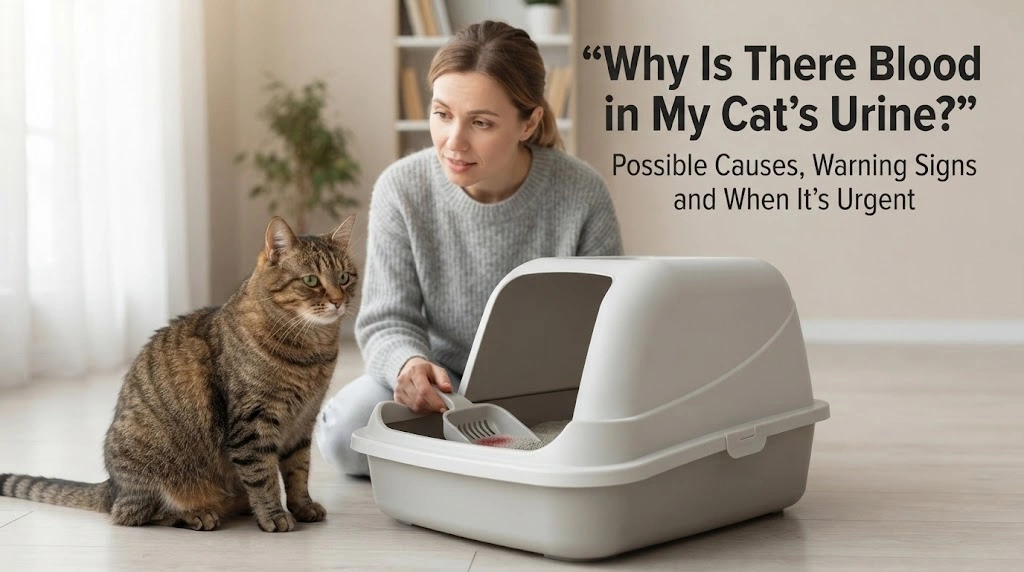
Pink, red or blood-tinged urine is never a normal litter-box finding. Cats can pass blood with bladder inflammation, stones, infection, trauma and other urinary disorders. The greatest immediate concern is not the color by itself but whether urine can leave the body. A cat that repeatedly strains, cries or produces little to no urine—especially a male cat—may have a urethral obstruction, which can become life-threatening quickly.
Quick Answer
Confirm that the blood appears to be in urine rather than stool or a wound, but do not spend hours investigating at home. Watch whether your cat passes a normal stream or only tiny drops. Blood plus frequent urination, pain or accidents needs veterinary assessment. Repeated straining with little or no urine, vomiting, profound lethargy or worsening distress is an emergency.
Why Blood May Appear in Cat Urine
Feline idiopathic cystitis
Inflammation of the bladder without another identified cause is common in cats with lower urinary tract signs. Cats may urinate frequently, strain, lick the genital area or urinate outside the box. Stress can be associated with flare-ups, but diagnosis requires ruling out other causes.
Urinary stones or mineral material
Stones can irritate the bladder lining and cause pain or bleeding. In some cats they may contribute to obstruction. Imaging and urine testing help a veterinarian determine whether stones are involved.
Urethral obstruction
A plug, stone or other material can block urine flow. Male cats are at higher risk because their urethra is narrower. Early signs may look like ordinary cystitis, which is why owners should pay close attention to actual urine production.
Bacterial infection
Urinary infection can cause blood and discomfort, though it is not the most common explanation in all age groups. Culture may be appropriate when infection is suspected, especially in older cats or those with underlying disease.
Trauma or other urinary disease
Injury, bladder or kidney disease, clotting problems and less common conditions can also cause urinary bleeding. Visible blood cannot tell you where in the urinary tract the problem began.
The Most Important Question: Is Urine Coming Out?
Urine flow determines urgency more than the shade of pink or red.
| What You Observe | Why It Matters | Action |
|---|---|---|
| Pink urine but normal stream | Urinary disease still likely | Contact veterinarian promptly |
| Frequent small urinations with blood | Bladder/urethral pain likely | Same-day veterinary advice |
| Straining and only drops | Obstruction possible | Urgent evaluation |
| Repeated straining and no urine | Likely emergency | Emergency clinic now |
| Blood with vomiting or collapse | Systemic deterioration possible | Emergency care |
What to Do Before the Appointment
Keep the cat comfortable and gather information without manipulating the bladder.
- Keep the cat indoors with a clean accessible litter box.
- Observe one or two actual attempts so you know whether urine is produced.
- Photograph abnormal urine if this does not delay care.
- Keep fresh water available.
- Prepare a list of recent diet changes, urinary history, medications and stressful household events.
What to Track Before the Vet Visit
A precise urinary history can help your veterinarian choose the right tests.
- How often the cat attempts to urinate.
- Whether each attempt produces normal urine, drops or nothing.
- Urine color and any visible clots.
- Crying, genital licking or urination outside the box.
- Previous urinary stones, cystitis or obstruction.
What Not to Do
Do not squeeze or palpate the bladder, force water, give human painkillers, start leftover antibiotics or wait for supplements to work. Do not assume a straining cat is constipated until you have confirmed that urine is passing.
When to Contact a Veterinarian
Any confirmed blood in urine merits veterinary assessment. The veterinarian may recommend urinalysis, urine culture, blood tests, X-rays or ultrasound depending on age, history and signs.
When It Is an Emergency
A cat that cannot urinate normally needs emergency care. Repeated unproductive straining, increasing agitation, vomiting, lethargy, weakness or collapse can occur with urethral obstruction. Male cats are at particular risk, but any cat with no urine output should be treated urgently.
Related Virixoo Guides
For the difference between frequency and volume, see Why Is My Cat Peeing So Much?. For litter-box avoidance, read Why Is My Cat Not Using the Litter Box?.
What Testing May Be Needed
Because blood is shared by several urinary disorders, treatment should not be chosen from color alone. A veterinarian may examine a urine sample for concentration, blood, crystals and inflammatory cells; culture may be recommended in selected cases. Bloodwork can evaluate kidney function and systemic health, while X-rays or ultrasound can help identify stones or structural changes. Cats with recurrent signs may need a broader plan that considers hydration, diet, body weight, litter resources and environmental stress as well as the immediate episode.
Why “Urinary Tract Infection” Is Not Always the Answer
Owners often use UTI as a general label for straining and blood, but younger adult cats commonly have lower urinary signs without a bacterial infection. Giving leftover antibiotics can delay the correct diagnosis and contributes to inappropriate antibiotic use. The safest approach is to test when infection is suspected and treat the specific cause identified by the veterinarian.
Prepare for Recurrence Even After Signs Improve
Urinary signs can improve and later return. Keep litter boxes clean and easy to access, maintain fresh water, follow any prescribed diet exactly, and know the emergency signs before another episode begins. If your veterinarian gives a recurrence plan, keep it with clinic and emergency contact information so the household does not have to make decisions from scratch during a stressful night.
Bottom Line
Blood in urine is a reason to call the vet; inability to pass urine is a reason to go urgently. Watch output, not just color, and never delay an obstructed cat while trying home remedies.