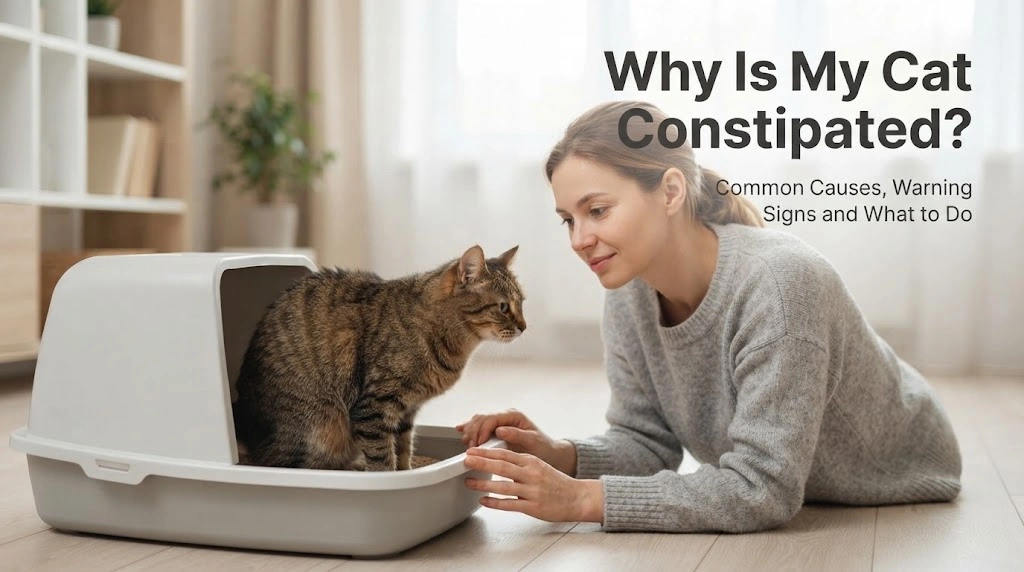
Constipation means stool is passing too slowly or becoming difficult to eliminate. Owners may notice hard dry stool, smaller amounts, fewer bowel movements or repeated straining. Dehydration, pain, reduced activity, hair ingestion, pelvic or colon problems, medication and other illness can contribute. One important trap is confusing urinary straining with constipation: a cat unable to pass urine may have a life-threatening obstruction.
Quick Answer
Check whether your cat is passing both urine and stool. If the cat repeatedly strains in the box, confirm there are normal urine clumps. Keep water available and maintain normal food unless your veterinarian advises otherwise. Do not give human enemas or laxatives. Contact a veterinarian for persistent straining, hard painful stools, vomiting, reduced appetite or no bowel movement beyond your cat's normal pattern. No urine output is an emergency.
Why Cats Become Constipated
Dehydration
When the body conserves water, stool can become drier and harder. Cats with kidney disease or other illnesses that affect hydration may be more vulnerable, but simply adding water does not solve every cause of constipation.
Reduced movement or pain
Arthritis, injury or other pain can reduce activity and make the posture needed for defecation uncomfortable. Older cats may avoid a high-sided box or delay using stairs to reach it.
Hair and diet factors
Swallowed hair and diet composition can influence stool in some cats. However, recurrent constipation should not automatically be labeled a hairball problem; an individual dietary plan may be needed.
Colon or pelvic problems
A narrowed pelvic canal, impaired colon movement, megacolon or a mass can interfere with stool passage. These problems require veterinary diagnosis and may become chronic.
Medication and systemic illness
Some medications and neurologic, metabolic or other diseases can affect intestinal motility or hydration. A full medication and health history is useful when constipation begins unexpectedly.
Constipation or Urinary Straining?
Because both problems can look like repeated litter-box attempts, check output carefully.
| Observation | More Consistent With | Action |
|---|---|---|
| Hard dry stool; normal urine | Constipation possible | Monitor briefly and call vet if persistent |
| Repeated stool attempts with pain | Constipation/obstipation possible | Veterinary assessment |
| Repeated attempts with tiny/no urine | Urinary obstruction possible | Emergency |
| Constipation plus vomiting or no appetite | More significant illness possible | Prompt veterinary care |
| Older cat avoids high-sided box | Mobility may contribute | Improve access and assess pain |
Safe Support While You Arrange Care
Mild constipation may improve with supportive changes, but treatment should match the cause.
- Keep multiple clean, easy-to-enter litter boxes available.
- Maintain fresh water and consider moisture-rich food if it is already appropriate for your cat.
- Encourage gentle normal activity rather than forcing exercise.
- Record the date, size and consistency of the last normal stool.
- Ask your veterinarian before using fiber, laxatives, enemas or supplements.
What to Track Before the Vet Visit
Bowel history helps determine whether this is an isolated episode or a chronic motility problem.
- Last normal bowel movement.
- Stool size, hardness and any blood or mucus.
- Appetite, vomiting and water intake.
- Normal urine production.
- Mobility, pain, medication and previous constipation.
What Not to Do
Do not use human enemas; some products can be dangerously toxic to cats. Do not give mineral oil by mouth because aspiration can be harmful. Avoid repeatedly increasing fiber without guidance, because not every type of constipation responds to the same dietary approach.
When to Contact a Veterinarian
Contact a veterinarian for constipation that persists, repeated painful straining, recurrent episodes, reduced appetite, vomiting, abdominal discomfort or weight loss. Chronic constipation can progress to obstipation or megacolon and may need medication, fluids, enemas given appropriately, imaging or other treatment.
When It Is an Emergency
Seek urgent care if your cat repeatedly strains but cannot pass urine, becomes very lethargic, repeatedly vomits, develops a painful distended abdomen or appears severely unwell.
Related Virixoo Guides
If stool is loose rather than hard, see Why Does My Cat Have Diarrhea?. For urinary frequency and obstruction signs, read Why Is My Cat Peeing So Much?.
Make the Litter Box Easier for a Stiff Cat
Constipation can be worsened when an older or painful cat delays defecation because getting into the box is difficult. Provide a large box with a low entry, place it on the same level where the cat spends most of its time, and keep the path free of slippery flooring or obstacles. If you see hesitation before stepping in, stiffness after rest or reduced jumping, tell your veterinarian. Treating arthritis or another source of pain can be an important part of restoring normal bathroom habits.
Why Chronic Constipation Needs a Long-Term Plan
Repeated episodes can stretch the colon and make future stool passage harder. A veterinary plan may include hydration support, an individualized diet, prescribed stool-softening medication and monitoring of stool frequency. Some cats need imaging to look for pelvic narrowing or megacolon. Keep a simple calendar rather than waiting until several difficult days have passed; early intervention is often easier than treating severe obstipation.
Do Not Judge Stool by Frequency Alone
Some healthy cats defecate less often than others, so compare with the individual's established pattern. A missed day without discomfort is different from repeated unproductive straining, small hard pellets or a cat that stops eating. Stool quality, effort and overall behavior together give a much clearer picture than a calendar count by itself.
Bottom Line
Constipation is best judged by stool, comfort and duration—not by one missed bowel movement. Confirm that urine is normal, avoid human laxative products and get help when straining, vomiting or appetite loss enters the picture.