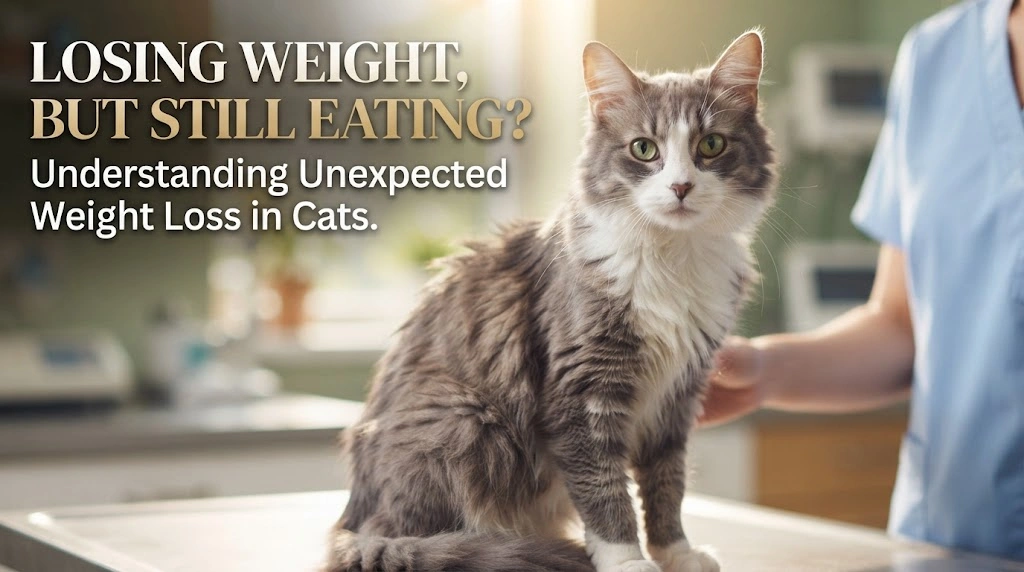
Weight loss despite a normal or strong appetite is an important medical clue in cats. It means the body is losing tissue even though food is still being consumed. That can happen when metabolism speeds up, nutrients are not absorbed normally, calories are lost through disease, or the body cannot use energy properly. Diabetes and hyperthyroidism are two well-known examples, but they are not the only causes.
Confirm That Weight Loss Is Real
Owners see their cats every day, so gradual loss can be easy to miss. Use the same scale and similar timing when possible. A baby scale can be helpful for small changes. Also watch muscle over the spine, hips, and shoulders. A cat can lose muscle while body fat makes the overall shape look deceptively normal.
If a veterinarian has previous weights, compare them. A clear downward trend is more informative than one isolated number.
Diabetes Can Cause Weight Loss With a Good Appetite
Cornell lists weight loss despite a good appetite along with increased thirst and urination as common signs of feline diabetes. When cells cannot use glucose normally, the body turns to fat and protein for energy. The cat may eat well or even seem hungrier while continuing to lose weight.
If you also notice larger urine clumps, more frequent drinking, dehydration, weakness, or a change in walking on the hind legs, tell the veterinarian.
Hyperthyroidism Is Another Classic Cause
Hyperthyroidism is common in older cats. Excess thyroid hormone increases metabolic rate, so affected cats may lose weight despite increased appetite. Other signs can include restlessness, increased vocalization, vomiting, diarrhea, increased thirst, a fast heart rate, or an unkempt coat. Some cats show only subtle changes early on.
Intestinal Disease Can Reduce Nutrient Absorption
Chronic enteropathy, inflammatory intestinal disease, intestinal lymphoma, pancreatic disorders, and some parasite burdens can interfere with digestion or absorption. Appetite may remain normal while calories are not being used effectively. Vomiting or diarrhea may be present, but some cats lose weight without dramatic gastrointestinal signs.
Dental or Oral Problems Can Be Misleading
A cat may appear interested in food yet fail to consume enough. Watch actual intake, not just the trip to the bowl. Cats with mouth pain can approach food eagerly, chew slowly, drop pieces, swallow awkwardly, or walk away after a few bites. This is different from true increased appetite with adequate intake.
Cancer and Other Chronic Disease
Unintended weight loss can accompany cancer, kidney disease, chronic infection, and many other disorders. Cornell notes that unexplained weight loss should raise concern even when appetite remains good. The pattern is nonspecific, which is why laboratory testing is usually more useful than trying to guess from appetite alone.
What to Record for the Vet
- Current and previous body weights.
- Whether appetite is normal, increased, or variable.
- Actual amount of food eaten each day.
- Water intake and urine-clump size.
- Vomiting, diarrhea, stool changes, or coughing.
- Behavior changes such as restlessness or hiding.
- Any new medication or diet change.
Why Simply Feeding More May Not Solve It
Extra calories may slow visible loss in some cats, but they do not treat hyperthyroidism, diabetes, malabsorption, cancer, or other disease. Increasing food without investigating persistent weight loss can delay diagnosis. Sudden diet changes can also upset the gastrointestinal tract.
What the Veterinary Workup May Include
A veterinarian will assess body and muscle condition, hydration, heart rate, thyroid region, mouth, abdomen, and other systems. Blood tests, urinalysis, thyroid testing, fecal testing, blood glucose, and imaging may be recommended depending on age and accompanying signs. The goal is to identify why calories are being lost or inadequately used.
When Weight Loss Becomes More Urgent
Prompt care is warranted when weight loss is rapid or accompanied by weakness, vomiting, diarrhea, dehydration, breathing changes, severe thirst, markedly increased urination, inability to eat, or collapse. A cat that stops eating entirely also needs timely care because prolonged anorexia can lead to serious complications.
Muscle Loss Can Precede Obvious Thinness
Cats may lose lean muscle before an owner notices dramatic fat loss. Run your hand gently over the spine, shoulders, and hips during normal petting. More prominent bones, a sharper spine, or hollowing around the shoulders can indicate muscle loss even when the belly still looks rounded. Veterinarians use muscle-condition scoring for this reason.
Increased Hunger Is Not Required
Some diseases associated with weight loss produce a strong appetite, but others leave appetite unchanged or variable. Do not wait for obvious hunger before taking the weight loss seriously. The more important fact is that the cat is consuming a reasonable amount yet body weight continues to fall.
Older Cats Need a Lower Threshold for Testing
Hyperthyroidism, kidney disease, diabetes, intestinal disease, and cancer become more common with age. A senior cat that loses weight over a few months deserves a medical assessment even if behavior seems normal. Early disease can be subtle, and bloodwork or urinalysis may identify a problem before more dramatic signs appear.
Why Stool Quality Can Help
Large-volume stool, diarrhea, mucus, unusual odor, or increased frequency can support gastrointestinal causes. A cat with chronic intestinal disease may still have stretches of normal-looking stool, so one normal litter-box day does not exclude the problem. Mention intermittent vomiting and stool changes even if they are not happening at the appointment.
What Improvement Should Look Like
Once the underlying problem is treated, the goal is not simply a higher number on the scale. The cat should also maintain or rebuild muscle, eat appropriately, stay hydrated, and show stable energy. Rapid weight gain from fluid or fat is not the same as healthy recovery. Your veterinarian may recommend periodic weight checks to confirm the trend.
Why a Normal Appetite Does Not Rule Out Serious Disease
Many owners feel reassured when a cat still comes enthusiastically to meals, but appetite is only one part of nutritional health. Hyperthyroidism can accelerate metabolism. Diabetes can prevent cells from using glucose normally. Intestinal disease can impair digestion or absorption. Cancer and chronic inflammatory disease can increase metabolic demands. In each case, the cat may continue eating while body tissue is lost.
This is why objective weight measurement is so valuable. A change of a few hundred grams can be meaningful in a small cat, especially when the trend continues month after month. Photographing the cat from above and the side can help document loss of muscle over the back and hips, but the scale remains more reliable than visual impression alone.
Do not wait for dramatic thinness before seeking care. Earlier investigation is usually easier on the cat and may identify treatable disease sooner. Bring a diet history, actual daily intake, recent weights, stool and urine changes, and a list of medications. That information helps the veterinarian decide which laboratory tests are most useful first.
Bottom Line
A cat that is eating but losing weight deserves a medical explanation. Diabetes, hyperthyroidism, gastrointestinal disease, cancer, oral problems, and other disorders can all produce this pattern. Confirm the trend with objective weights, record other signs, and arrange veterinary evaluation rather than simply adding calories.