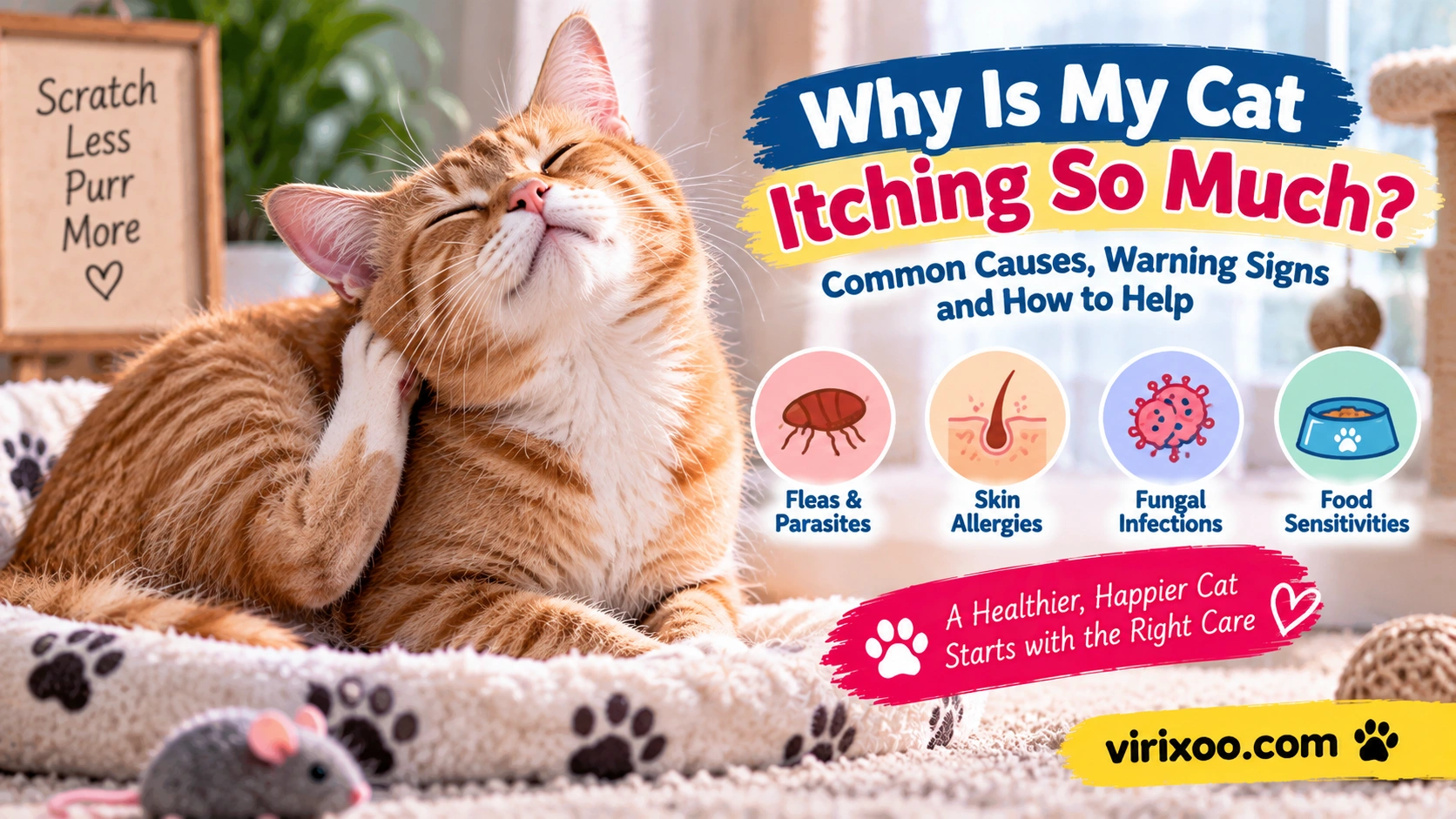
Finding a bald patch or noticing more loose fur can be alarming. Cat hair loss has many possible causes, including overgrooming, parasites, skin irritation, allergies, infection, stress, and other medical problems.
Quick Answer
Look for the pattern of hair loss, skin changes, itching, grooming behavior, and recent environmental changes. Avoid guessing at the cause or applying human creams. A veterinarian should evaluate persistent, spreading, itchy, painful, or unexplained hair loss.
Common Causes
Overgrooming
A cat may lick or chew an area repeatedly because of itch, pain, skin irritation, or stress. The underlying trigger needs to be considered rather than treating the missing fur alone.
Parasites
Fleas and other parasites can cause itching and hair loss. Some cats are particularly sensitive, and parasites may not always be obvious at a glance.
Skin Infections
Some infections can cause patches of hair loss, scaling, redness, or crusting. These require appropriate diagnosis and treatment.
Allergies or Irritation
Environmental or dietary factors may contribute to skin irritation in some cats. Diagnosis can require a structured veterinary workup.
Stress
Stress can contribute to excessive grooming in some cats. Household changes, conflict, boredom, or disrupted routines may be relevant, but stress should not be assumed to be the cause without considering medical issues.
What to Check at Home
- Where the hair loss occurs.
- Whether the skin is red, scaly, crusted, moist, or swollen.
- How often your cat scratches or grooms the area.
- Whether appetite, weight, or activity has changed.
- Recent changes in food, flea control, household routines, or other pets.
What Not to Do
Do not shave large areas, apply human medications, use essential oils, or start multiple treatments at once without veterinary guidance. These steps can irritate skin or obscure the original problem.
When Veterinary Care Is Needed
Arrange an examination for spreading bald patches, intense itching, wounds, crusting, swelling, discharge, pain, repeated licking, or hair loss accompanied by appetite or behavior changes. A veterinarian may need to examine the skin and consider parasites, infection, allergies, or other causes.
Supporting a Healthy Coat
Provide an appropriate complete diet, routine grooming suited to your cat's coat, parasite prevention as recommended by your veterinarian, and a stable environment. Avoid changing several products simultaneously when trying to identify a trigger.
Frequently Asked Questions
Is shedding the same as hair loss?
Normal shedding usually produces loose fur without obvious bald areas or damaged skin. Distinct patches, broken hairs, or excessive grooming deserve closer attention.
Can stress make a cat lose hair?
Stress can contribute to overgrooming in some cats, but medical causes should be considered before assuming stress is responsible.
Should I treat fleas if I do not see any?
Fleas can be difficult to spot, but treatment should be chosen with veterinary guidance, especially for cats because some products intended for other species can be dangerous.
Final Thoughts
Cat hair loss is a sign, not a diagnosis. Observe the pattern and skin carefully, avoid unsafe home treatments, and seek veterinary advice when the problem is persistent or accompanied by other symptoms.