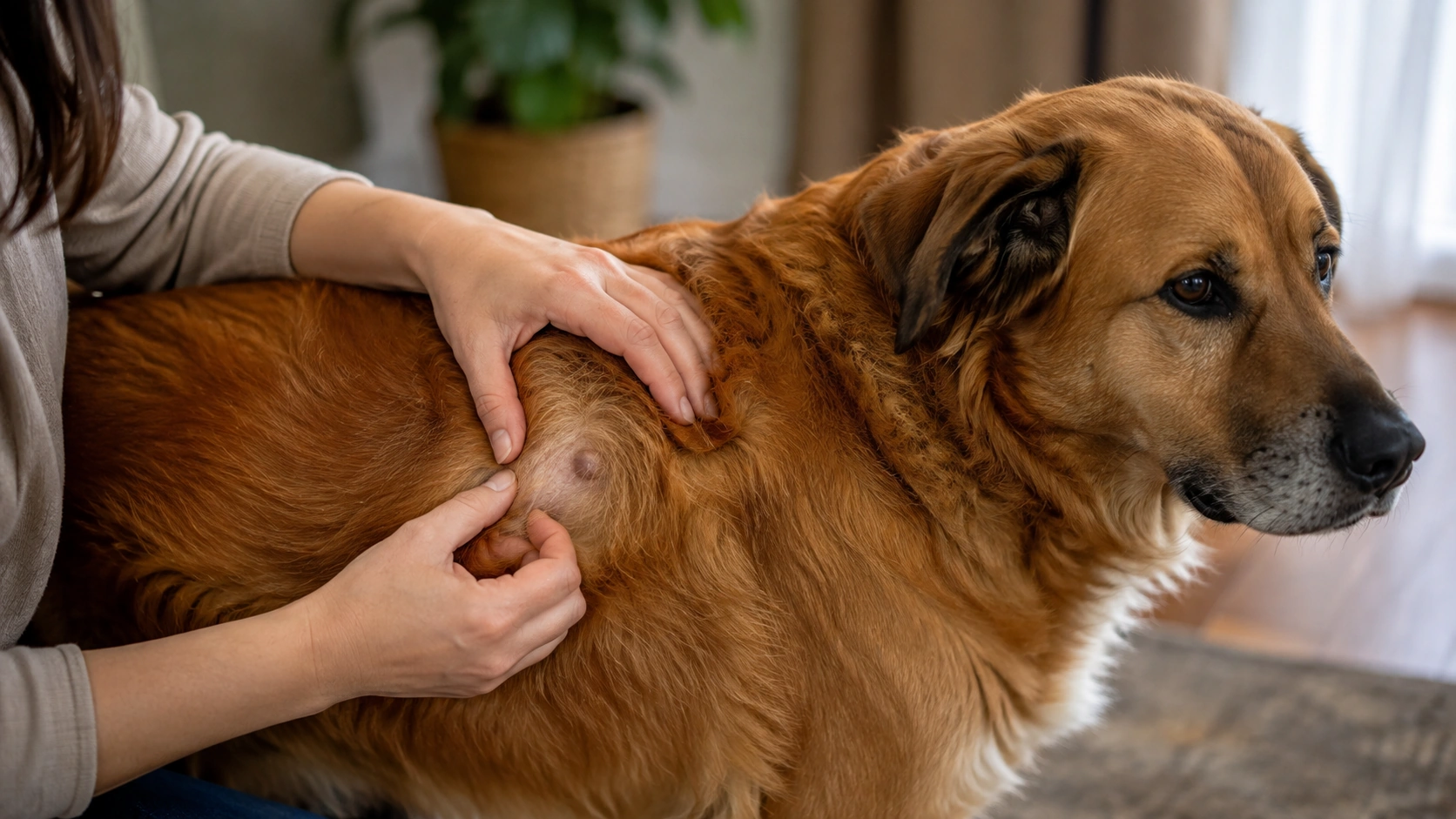

Finding a new lump under your cat’s skin is a reason to document it and arrange veterinary assessment, not a reason to assume cancer—or to assume it is harmless. Abscesses, cysts, inflammatory nodules, benign tumors, malignant tumors, and other tissue changes can feel surprisingly similar. The veterinarian often needs a sample to know what a lump actually is.
Start With a Baseline Instead of Guessing the Diagnosis
Record the exact location, approximate diameter, date first noticed, and whether the lump seems to be growing. A photograph with a ruler beside the area can be helpful, although some subcutaneous lumps are easier to feel than see. Note whether the skin over it is normal, red, hairless, ulcerated, bruised, or draining.
Does a Soft Lump Mean It Is Benign?
No. Texture alone is not reliable. Some benign growths are soft, some malignant masses are firm, and inflammation can feel either way. Likewise, a lump that moves under the skin is not automatically safe, and a fixed lump is not automatically cancer. These features help the veterinarian plan the workup but do not replace tissue sampling.
Abscesses and Inflammatory Lumps
A painful, warm, rapidly developing swelling may be an abscess or inflammatory lesion, especially after a cat fight or bite. Cat punctures can be tiny and easy to miss. Fever, hiding, poor appetite, tenderness, or drainage increase suspicion for infection. Do not squeeze or lance the swelling at home.
Cysts and Benign Skin Growths
Cats can develop cysts and a variety of benign skin tumors. Some remain small for long periods; others enlarge or become irritated. Even when a mass eventually proves benign, the diagnosis should be based on veterinary assessment rather than appearance alone.
Skin and Subcutaneous Tumors
Merck notes that tumors affecting the skin and tissue beneath the skin are common findings in cats and can take many forms. Some are benign, while others invade local tissue or spread. A skin tumor may appear as a small bump, a hairless mass, a discolored patch, or even a nonhealing sore. Because appearance is variable, testing is often necessary.
Injection-Site Lumps Deserve Specific Attention
Cats can occasionally develop post-injection swelling, and most small temporary reactions are not malignant. However, persistent or enlarging masses at previous injection sites deserve veterinary evaluation. Tell the veterinarian if the lump is in an area where your cat recently received a vaccine, medication, microchip, or other injection and provide the approximate date if you know it.
Growth Rate Matters
A mass that is getting noticeably larger over days or weeks should move up the priority list. Slow growth does not guarantee benign behavior, but rapid change is an important clue. Likewise, a lump that suddenly becomes painful, ulcerated, or starts bleeding needs reassessment even if it had been stable for months.
Locations That Can Affect Function
Small masses may still matter if they interfere with the eyelid, mouth, paw, joint movement, swallowing, urination, or defecation. Lumps near the mammary glands also warrant veterinary evaluation because mammary tumors in cats can be clinically important. Location influences both urgency and the options for obtaining a sample.
What Owners Should Never Do
Do not squeeze, puncture, cut, or repeatedly massage a lump. Do not apply heat, essential oils, drawing salves, steroid cream, or human cyst products without veterinary instruction. Manipulation can cause pain, bleeding, inflammation, or infection and still will not tell you what tissue is present.
How Veterinarians Identify a Lump
The physical examination assesses size, depth, attachment, surface changes, nearby lymph nodes, and the rest of the cat. Fine-needle aspiration may allow cells to be examined under a microscope. Some masses require biopsy for a definitive diagnosis. Imaging can help if the lump is deep or appears to involve muscle, bone, or internal structures.
When to Arrange Care Quickly
- The lump is rapidly enlarging.
- It is painful, hot, draining, bleeding, or ulcerated.
- The cat has fever, lethargy, poor appetite, or weight loss.
- The mass interferes with walking, eating, breathing, urination, or defecation.
- It is in a sensitive area such as an eyelid, mouth, mammary chain, or paw.
- A previously stable lump suddenly changes.
What if the Lump Has Been There for Years?
Long-term stability is reassuring information but not a guarantee. Mention old lumps during routine veterinary examinations so changes can be detected. A mass that remains unchanged may need a different level of urgency from a new rapidly growing lesion, but the decision should be individualized.
Measure in More Than One Direction
For a visible lump, record length and width rather than writing only “small” or “large.” If it is deep, note whether it seems attached to the skin, freely movable, or fixed to deeper tissue, but avoid repeatedly manipulating it. Consistent measurements make future growth easier to recognize and reduce reliance on memory.
Painful Lumps and Painless Lumps Both Matter
Pain can suggest inflammation, infection, or pressure on surrounding tissues, but some tumors are painless. Conversely, an abscess can become less painful after it starts draining even though infection remains. Do not use comfort level alone to decide whether a lump is safe to ignore.
Why Sampling Early Can Be Helpful
A fine-needle aspirate is often minimally invasive and may provide useful information about the types of cells in a mass. Not every lump yields a definitive answer this way, and some require biopsy, but early sampling can prevent months of uncertain observation. It can also help the veterinarian plan surgery more appropriately if removal is recommended.
Keep a Lump Map for Cats With Multiple Masses
Older cats may accumulate more than one bump. Create a simple body map or photo record so each mass is tracked separately. Otherwise, owners can accidentally monitor the wrong lump or miss a new one near an old lesion. Bring the map to routine examinations and update it when the veterinarian measures or samples a mass.
Previous Injections Are Useful History
If the lump is near a recent vaccine or medication site, note the date and product if known. Most post-injection swellings are not malignant, but persistent or enlarging masses require veterinary assessment. Do not massage the site in an attempt to make the lump disappear, and do not assume every injection-site mass is simply scar tissue.
Why Waiting for a Lump to Become Huge Is a Poor Strategy
Smaller masses are often easier to evaluate and, if removal is needed, may be easier to manage surgically. Early assessment does not mean every lump needs surgery. It means obtaining enough information to make a rational plan before size, ulceration, or attachment to deeper tissues complicates the situation.
What a “Watch and Measure” Plan Should Include
If the veterinarian recommends monitoring, ask what changes should trigger re-evaluation and when the next measurement should occur. A true monitoring plan has a defined interval and objective criteria. Indefinite observation without measurements can allow gradual growth to go unnoticed.
Bottom Line
A new lump under a cat’s skin is a finding to document and investigate, not diagnose by touch. Abscesses, cysts, benign growths, and cancers can overlap in appearance. Measure it, photograph it, avoid squeezing, and have a veterinarian decide whether monitoring, aspiration, imaging, or biopsy is appropriate.