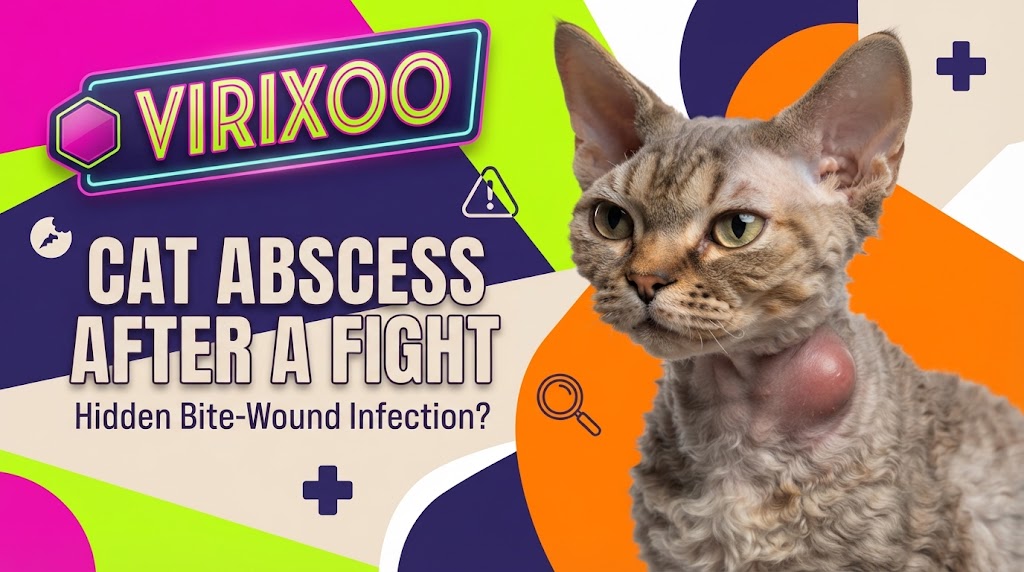

A new lump under your cat’s jaw can be an enlarged lymph node, but it can also come from a salivary gland, tooth-root problem, abscess, cyst, skin mass, or another nearby structure. Lymph nodes are part of the immune system and can enlarge when they react to infection or inflammation. They can also enlarge with certain cancers. Because several very different problems can feel similar through fur and skin, the safest approach is to document the change and let a veterinarian identify the structure.
Where Cats Have Lymph Nodes You May Notice
Some lymph nodes sit close enough to the body surface that veterinarians can feel them during a physical examination. Those under the jaw, in front of the shoulders, in the armpit region, in the groin, and behind the knees are examples. Owners most commonly notice a swelling under the jaw because it is easy to feel while petting the head and neck.
Not every structure you can feel is abnormal. A veterinarian compares size, symmetry, texture, mobility, and the nodes in other locations. That whole-body pattern matters more than one measurement taken at home.
Why Infection Can Make a Lymph Node Bigger
Lymph nodes filter fluid draining from nearby tissues and participate in immune responses. Infection in the mouth, skin, respiratory tract, or other nearby region can cause a local node to react and enlarge. For example, severe dental disease or an oral infection can contribute to swelling under the jaw. Skin wounds or abscesses may cause enlargement of nodes that drain the affected area.
When infection is involved, the cat may also have fever, reduced appetite, mouth pain, bad breath, skin wounds, nasal discharge, or lethargy. The node itself may be tender, but painless enlargement does not rule infection in or out.
When Several Nodes Are Enlarged
Enlargement in more than one body region can point toward a process affecting the cat more broadly rather than a single local wound. Systemic infection, inflammatory or immune-mediated disease, and some cancers are among the possibilities. A veterinarian may recommend blood tests and sampling of one of the enlarged nodes when the pattern is generalized.
Could It Be Cancer?
Lymphoma and other cancers can involve lymph nodes, but a swollen node is not automatically cancer. Infection and inflammation are also important causes. Features such as persistence, progressive growth, multiple enlarged nodes, weight loss, poor appetite, or other unexplained illness increase the need for a complete workup, but they still do not diagnose the cause.
What You Can Record at Home
- The exact location of the lump.
- The date you first noticed it.
- Whether it is on one side or both sides.
- Whether it seems to be growing.
- Any pain when the cat naturally moves or chews.
- Changes in appetite, weight, energy, breathing, or grooming.
Do not squeeze the lump repeatedly. Frequent manipulation can irritate tissue and still will not tell you what it is. If visible, take a photo and note approximate size without pressing hard.
Why the Mouth Deserves Attention
A swelling under the jaw should be considered together with oral signs. Watch for dropping food, chewing on one side, bad breath, drooling, reluctance to eat hard food, pawing at the mouth, or visible gum inflammation. A dental source may require oral examination and dental imaging rather than treatment aimed at the lump itself.
What the Veterinarian May Do
The physical examination usually includes checking lymph nodes in several regions, examining the mouth, looking for skin wounds or infection, and assessing body condition. Fine-needle aspiration can often collect cells from an enlarged node with minimal invasiveness. Cytology may distinguish reactive inflammation from some cancers or point toward infection. In selected cases, biopsy, blood tests, imaging, or infectious-disease testing may be recommended.
When to Arrange an Appointment Promptly
Seek veterinary care if the swelling persists, grows, becomes painful, appears in multiple locations, or occurs with fever, poor appetite, lethargy, weight loss, breathing changes, or difficulty swallowing. Rapid facial or throat swelling that interferes with breathing is an emergency.
Do Not Treat a “Swollen Gland” With Human Medication
Human antibiotics, anti-inflammatory drugs, and pain relievers can be unsafe for cats and can also make diagnosis harder. Treatment should target the actual cause, not the assumption that a lump represents infection.
How Location Helps Narrow the Source
A node under the jaw primarily receives drainage from structures in the head and mouth, so oral disease, dental infection, throat inflammation, and facial wounds deserve careful attention. A swelling behind a knee or in the groin points the examination toward a different region. This does not mean the nearby tissue is always the cause, but it gives the veterinarian a logical place to look first.
Reactive Lymph Nodes Can Stay Enlarged for a While
Even after an infection begins to improve, a reactive lymph node may not return to its previous size immediately. That is why the trend matters. A node that is becoming smaller while the cat is recovering is more reassuring than one that continues to enlarge or new nodes that appear elsewhere. If your veterinarian recommends a recheck rather than immediate biopsy, follow the planned interval so the change is measured objectively.
Why Weight and Appetite Belong in the Same Story
Generalized lymph-node enlargement paired with unexplained weight loss, poor appetite, fever, or reduced energy raises the need for a broader workup. These signs can occur with infection, inflammatory disease, and cancer. Record body weight if possible and note whether the cat is truly eating less or simply finishing meals more slowly.
Fine-Needle Aspiration Is Often the First Diagnostic Step
A fine needle can collect cells from many enlarged lymph nodes without requiring major surgery. The sample is examined under a microscope and may show a reactive pattern, inflammation, infection, or cells suspicious for lymphoma or another cancer. Sometimes the sample is nondiagnostic, in which case repeat aspiration, flow cytometry, biopsy, or other testing may be recommended.
What a Monitoring Plan Should Include
If the veterinarian believes monitoring is appropriate, ask which node is being followed, how large it is, and when it should be rechecked. A useful plan has a defined time frame and clear triggers for earlier review—such as rapid enlargement, reduced appetite, fever, pain, or development of additional lumps. “Wait and see” should still be structured observation, not indefinite delay.
How Veterinarians Separate Local From Systemic Disease
The examination often starts by asking whether only one lymph node is enlarged or whether several regions are involved. A single node near an obvious dental infection or skin wound may be reacting locally. Multiple enlarged nodes, especially with fever, weight loss, or lethargy, make systemic causes more important. Bloodwork can look for anemia, inflammatory changes, organ abnormalities, and clues to infection. Depending on history and geographic risk, specific infectious-disease tests may also be appropriate.
Imaging can be useful when a swelling is deep, fixed, or difficult to distinguish from salivary tissue or another mass. Ultrasound may help show whether a lump has the architecture of a lymph node and can sometimes guide a needle sample. If cytology does not provide a clear answer, biopsy may be the next step. The sequence is individualized; not every cat needs every test.
The key point for owners is that a new “gland” should not be judged only by tenderness or texture. Reactive nodes, abscesses, and cancers can overlap in feel. The most useful home contribution is an accurate timeline, photographs when visible, and a record of appetite, weight, oral signs, and any recent infections or wounds.
Bottom Line
Swollen lymph nodes are a sign, not a diagnosis. A new lump under the jaw may be lymphatic, dental, salivary, inflammatory, or something else entirely. Document the location and change over time, avoid squeezing it, and arrange veterinary assessment if it persists, enlarges, or occurs with other signs of illness.